
AI news ·
YouTube hosts AI-narrated John Grisham audiobook despite author's objections
An AI-narrated John Grisham novel racked up 80,000 YouTube listens before anyone filed a takedown. YouTube's Content ID can't detect AI audiobooks-it matches audio waveforms, not text.
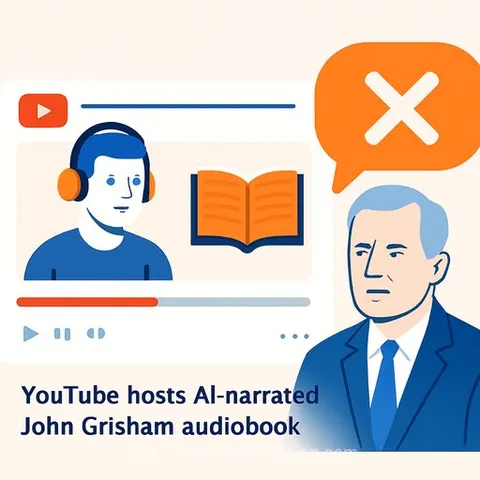
YouTube's AI Audiobook Problem Exposes Copyright System Gaps
Eighty thousand people listened to a John Grisham novel on YouTube narrated by artificial intelligence, displayed over 13 hours of fake vacation footage. The author is angry. YouTube says it hasn't received a takedown request.
This gap between what's happening and what gets removed reveals a structural weakness in how YouTube handles copyrighted text converted to AI speech.
Why Content ID Doesn't Catch AI Audiobooks
YouTube's Content ID system works well for music. It scans audio waveforms and automatically detects matches to copyrighted recordings, allowing rights holders to claim or remove content without manual intervention.
AI-narrated audiobooks defeat this system. The audio waveform from an AI narrator doesn't match the publisher's original audiobook recording. The text itself can be slightly altered-rearranged, reformatted-while remaining recognizable to casual listeners. Content ID has no reliable way to flag these variations.
That leaves publishers and authors to file takedown notices manually. For a single YouTube video, this is manageable. For thousands of unauthorized uploads, it becomes a resource problem.
Authors Left to Police Their Own Work
John Grisham told the New York Times that YouTube is "complicit" because it "know[s] what is happening and refuse[s] to stop it." He called for both civil and criminal penalties against those profiting from unauthorized copies.
YouTube's response: the company has "built systems" to help rights holders manage content and says it doesn't proactively police for copyright violations. A YouTube spokesperson said the company invests continuously in evolving those systems.
The practical result is that authors must discover unauthorized versions themselves, then navigate takedown procedures individually.
The Real Cost: Quality
Beyond lost sales, there's a simpler problem. People are listening to poor-quality AI narration over stock footage when professional audiobooks are freely available through library apps like Libby.
A professionally narrated audiobook-read by a skilled voice actor-is a different product entirely. But if the AI version is easier to find, some listeners will take it anyway.
For legal professionals managing intellectual property or working on copyright matters, this case shows how Text-To-Speech technology can outpace existing enforcement mechanisms. The technical capability to convert text to audio exists. The legal and procedural infrastructure to prevent unauthorized use hasn't kept pace.
Authors and publishers now operate in a gap between what their copyrights theoretically protect and what YouTube's systems can actually detect and remove.