Zendesk Advances AI To Improve Customer Service Efficiency
Zendesk announced major updates to its Resolution Platform focused on faster, cleaner resolves at scale. As ticket volume and complexity rise, the new stack aims to reduce repetitive work, improve first contact resolution, and keep quality high without bloating headcount.
"Today's customers want more than just quick responses-they expect issues fully resolved," said Tom Eggemeier, CEO of Zendesk. The platform now supports handling up to 5 billion issues a year and introduces AI Agents capable of managing multi-step workflows through deeper integrations.
What's new and useful for support teams
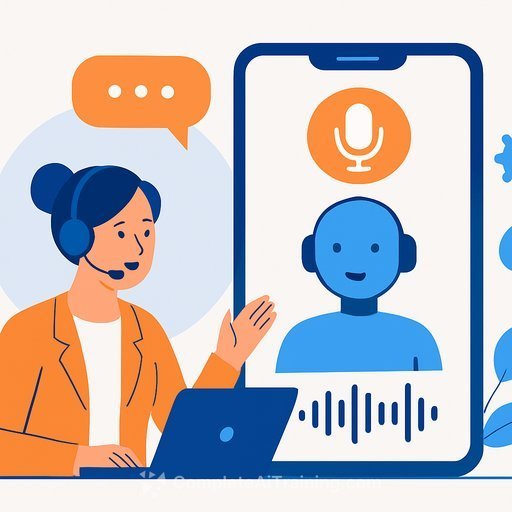
- Voice AI Agents: Autonomous voice agents that hold natural conversations and resolve common issues without handoffs, so human agents can focus on edge cases.
- Real-time Collaboration: Built-in video calling and screen sharing to diagnose and fix problems live, adding empathy and speed to complex cases.
- IT Asset Management: Integrated hardware visibility to speed IT-related resolves and reduce downtime for teams with limited technical staff.
- Workflow Automation: Action Builder and App Builder let non-technical owners create flows and deploy custom apps to remove manual steps.
- Deeper Insights: With HyperArc analytics, leaders get visibility into customer behavior and service trends to guide staffing, deflection, and content strategy.
Why this matters for support leaders
- AI Agents handle multi-step, integrated work, not just FAQs, improving deflection without sacrificing quality.
- Live video and screen sharing cut back-and-forth and shorten time to resolution for technical issues.
- IT asset data gives agents context at the moment of need, improving first contact resolution and reducing escalations.
- No-code builders push routine automation closer to the front line, speeding iteration.
- Analytics turn service patterns into decisions on staffing, channels, and knowledge gaps.
Implementation considerations
- Culture: Position AI as the teammate that handles repetitive work while humans tackle nuance and empathy.
- Training: Upskill agents on prompt design, escalation rules, and troubleshooting AI responses.
- Data and security: Set data retention, PII redaction, and audit practices before scaling automation.
- Expectation management: Tell customers where automation helps and how to reach a human fast.
- Scale readiness: Confirm integrations, observability, and QA are in place before widening rollout.
Practical rollout plan for small teams
- Identify the top 20 intents by volume and create clear resolve paths for each (voice + digital).
- Deploy Voice AI Agents on high-confidence flows with human fallback and transcript review.
- Pilot video and screen sharing for technical issues; track before/after AHT and CSAT.
- Use Action Builder and App Builder to automate repetitive steps like verification, lookups, and status updates.
- Integrate IT Asset Management to surface device details in-context for agents and AI.
- Enable HyperArc analytics; monitor containment, FCR, AHT, and reopens weekly.
- Refresh the knowledge base based on failed intents and unresolved paths.
- Run a 30/60/90-day playbook with targets and a weekly QA review of AI conversations.
What success looks like
- Higher first contact resolution on top intents.
- Lower average handle time for technical queries with live collaboration.
- Containment rate improves without a CSAT drop.
- Agent utilization shifts toward complex, high-value cases.
- Reduced downtime on IT-related tickets.
Expert perspective
Sudhir Rajagopal, Research Director at IDC, highlighted the business upside: "The combination of AI Agents with an integrated platform covering Contact Centers and Employee Service offers more than just innovation; it drives tangible business results."
Next steps
- Review Zendesk's latest platform updates and release notes to plan your pilot. Zendesk Newsroom
- If you're building team skills in AI for support, explore curated training paths by role. Complete AI Training by job
Your membership also unlocks: