AI agent for team leads
Coding Backlog Triage Agent
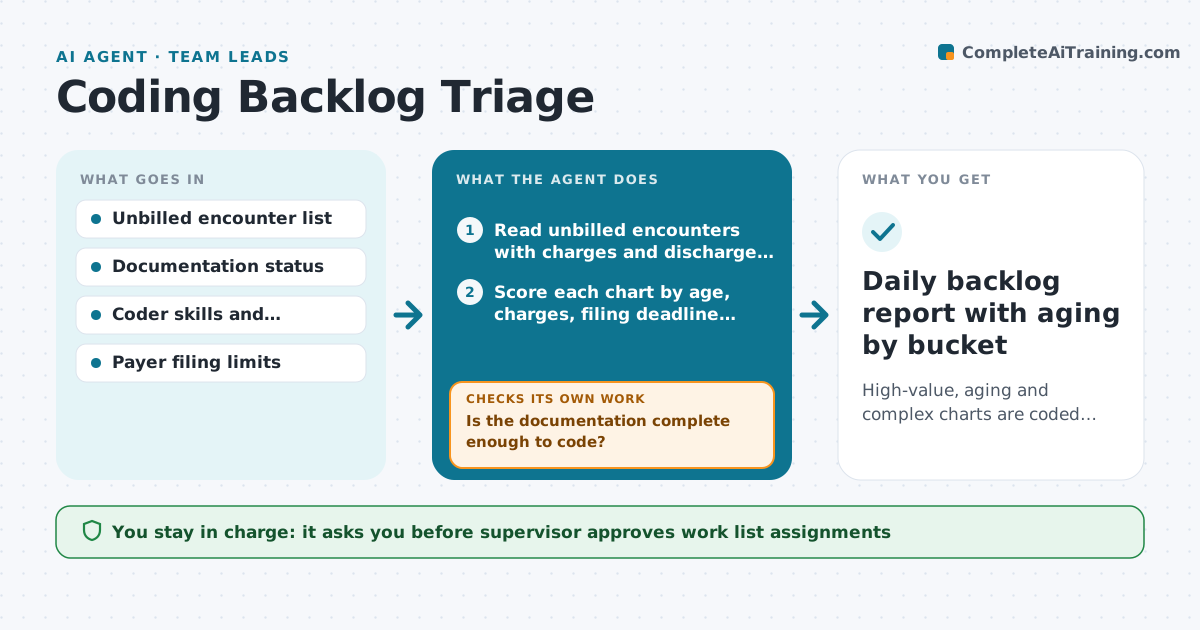
High-value, aging and complex charts are coded first by the right coder
What it does
Coding supervisors watch the discharged-not-final-billed list grow while coders pick charts in the order they appear. This agent sorts the backlog every morning. It reads each uncoded encounter, checks whether documentation is complete, estimates complexity from length of stay, procedure count and service line, and checks days since discharge against the payer filing window. It then builds work lists by coder skill and credential. Charts missing a discharge summary or op note are moved to a documentation-pending list with a reminder draft for the provider. After coders work the lists, it checks midday whether high-priority charts were opened; if not, it rebalances. The supervisor approves every reassignment. Edge case: a trauma chart with ten procedures goes only to coders credentialed for inpatient surgery, even if their list is already longer.
How it works
Follow the arrows from top to bottom. The orange dashed arrow is the loop: when a check fails, the agent goes back and tries again.
Read the steps as a list
- Morning backlog pull at 7 am
- Read unbilled encounters with charges and discharge dates
- Is the documentation complete enough to code?If not: move the chart to documentation pending and draft a provider reminder. Back to step 2.
- Score each chart by age, charges, filing deadline and complexity
- Match charts to coders by credential and skill
- Supervisor approves the work lists and provider remindersThe agent waits here for your OK.
- Publish work lists to the coding queue
- At noon, are top-priority charts opened?If not: rebalance unopened charts to coders with free capacity. Back to step 5.
- Daily backlog report with aging by bucket
How it decides
It scores each chart by days since discharge, estimated charge, filing deadline and complexity, then matches the score to coder skill.
- Charts within 10 days of a filing limit go first
- Inpatient surgical charts go only to credentialed coders
- Charges over $50,000 are worked within 2 days of discharge
- Charts with missing op notes wait in pending, not in a coder list
Make it yours
Every agent is a starting point. You choose these settings for your own situation.
- Scoring weights for age, dollars and deadline
- Days before filing limit that counts as urgent (default 10)
- Rebalance time (default noon)
- Coder capacity per day by chart type
What keeps you in control
It always asks you first
- Supervisor approves work list assignments
- Supervisor approves reminders sent to providers
Hard limits
- Never sends provider reminders without approval
- Never assigns charts outside a coder's credential
- Does not change any codes
It stops when
- Done: every chart assigned or pending
- Stop: encounter feed failed to load
Set it up
We guide you through the set-up, step by step
Members get the full set-up guide for this agent. No technical skills needed: you copy, paste and upload.
- One set of instructions to paste into your AI, with the clicks for ChatGPT, Claude, Microsoft 365 Copilot, Gemini and Grok
- The agent then walks you through connecting your own data, one source at a time
- A downloadable copy with the flow chart, the rules and the full guide