AI agent for actors
Dialect and Accent Coaching Progress Agent
A drill plan that targets the sounds still failing, tracked until each target sound is secure in running speech
What it does
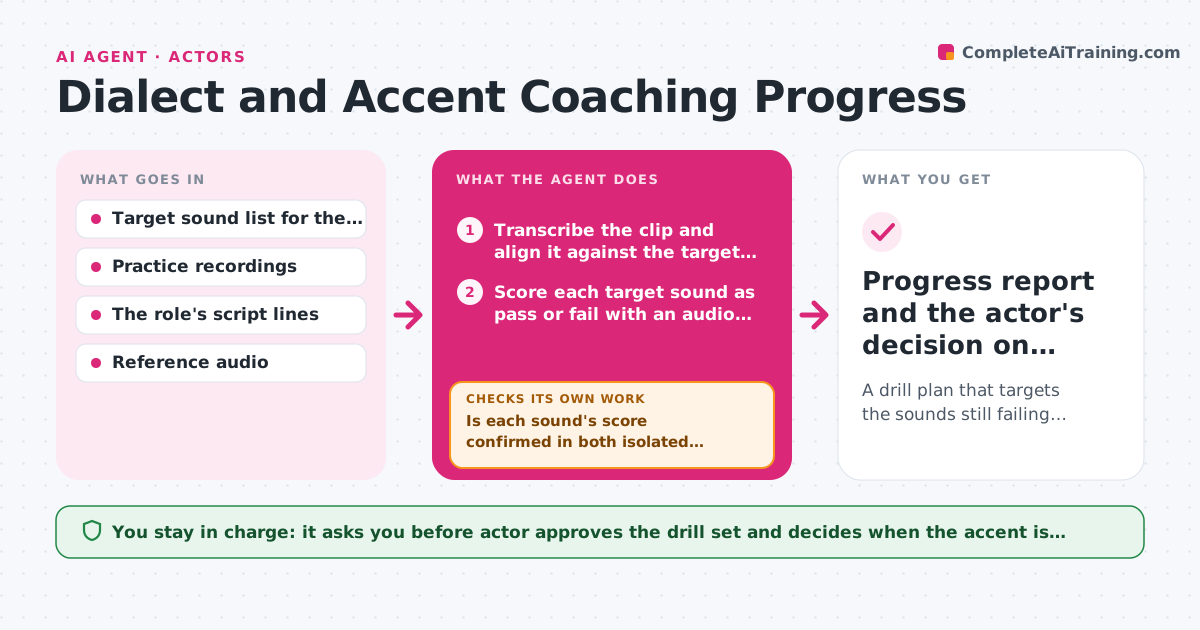
Learning a dialect usually means hours of practice with no clear sense of which sounds are secure and which fall apart under pressure. The actor gives the agent a target sound list, such as vowel shifts, consonant changes and rhythm, along with recordings of practice. The agent scores each clip against the list with an audio check, tracks which sounds fail repeatedly, and builds the next drill set around those weak sounds, using word lists and sentences from the role's script. After each new recording it re-scores and changes the drills, retiring sounds that pass three sessions in a row. It also checks the actor's script lines for words that carry the weak sounds. The actor decides what is good enough for the audition. Edge case: a sound that passes in isolated words but fails in fast speech is moved to sentence drills.
How it works
Follow the arrows from top to bottom. The orange dashed arrow is the loop: when a check fails, the agent goes back and tries again.
Read the steps as a list
- New practice recording uploaded
- Transcribe the clip and align it against the target sound list
- Score each target sound as pass or fail with an audio check
- Update the per-sound history across sessions
- Is each sound's score confirmed in both isolated words and running speech?If not: Re-score the sound in sentences and mark isolated-only passes as not yet secure. Back to step 2.
- Pick the weakest sounds and find matching words in the script
- Build the next drill set with word lists and script sentences
- Actor reviews the drill set and adjusts the focusThe agent waits here for your OK.
- Did the next recording pass the sounds targeted by the last drills?If not: Change the drill type, add slower repetition and rebuild the set. Back to step 6.
- Progress report and the actor's decision on audition readiness
How it decides
It scores each target sound per clip, treats a sound as weak when it fails in at least half of its occurrences across two sessions, and retires it only after it passes in running speech three sessions in a row.
- A sound is weak when at least half its occurrences fail across two sessions
- Retire a sound after three consecutive passing sessions in running speech
- Limit each drill set to the four weakest sounds
- Move a sound to sentence drills when it passes only in single words
Make it yours
Every agent is a starting point. You choose these settings for your own situation.
- Target sound list for the dialect
- Failure rate that marks a sound as weak (default 50 percent)
- Number of passing sessions needed to retire a sound (default 3)
- Drill length and focus size
- Reference recordings used for scoring
What keeps you in control
It always asks you first
- Actor approves the drill set and decides when the accent is ready for an audition
Hard limits
- Scores guide practice only and are never the final judgment of readiness
- Never share recordings outside the actor's folder
It stops when
- Done: Every target sound is retired as secure in running speech
- Stop: A sound has not improved after 5 sessions, so the agent suggests a coach session with the clip evidence
Set it up
We guide you through the set-up, step by step
Members get the full set-up guide for this agent. No technical skills needed: you copy, paste and upload.
- One set of instructions to paste into your AI, with the clicks for ChatGPT, Claude, Microsoft 365 Copilot, Gemini and Grok
- The agent then walks you through connecting your own data, one source at a time
- A downloadable copy with the flow chart, the rules and the full guide