AI agent for grant writers
Grant Proposal Funder Tailoring Agent
A proposal draft where every funder scoring criterion is addressed with evidence from the organization's own records
What it does
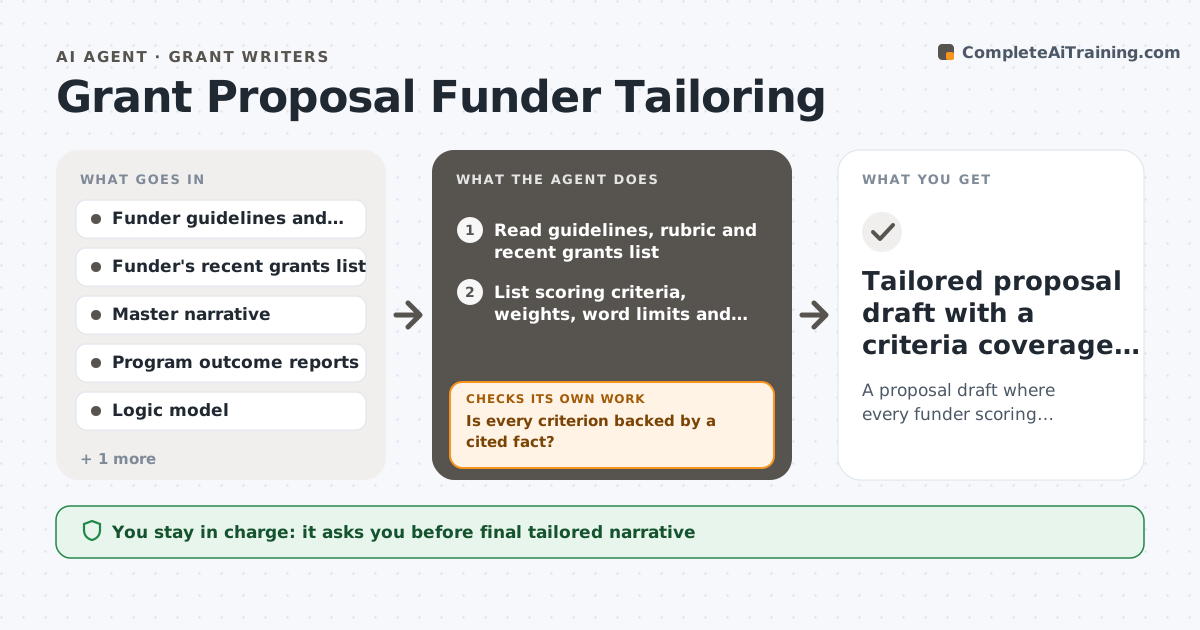
Grant writers rarely start from zero. They adapt a master narrative to each funder, and under deadline pressure the adaptation is often a find-and-replace of the funder name. This agent reads the funder's guidelines, scoring rubric and recent grants list, then breaks them into a list of criteria and stated priorities. It maps each criterion to paragraphs in your master narrative and drafts tailored sections where the fit is weak, using only facts from your program files. After drafting it checks every criterion against the new text. If a criterion has no matching evidence, it searches your outcome reports and logic model again, and if nothing fits it writes a question to the program lead instead of inventing a claim. You approve the final language. Edge case: a funder that weights equity and community voice at 30% gets those sections moved forward, not just mentioned.
How it works
Follow the arrows from top to bottom. The orange dashed arrow is the loop: when a check fails, the agent goes back and tries again.
Read the steps as a list
- New funder opportunity added to the calendar
- Read guidelines, rubric and recent grants list
- List scoring criteria, weights, word limits and stated priorities
- Map each criterion to paragraphs in the master narrative
- Draft tailored sections for weak or missing criteria from program records
- Is every criterion backed by a cited fact?If not: search outcome reports and logic model again, then draft a question to the program lead for gaps. Back to step 4.
- Does each section fit its word or character limit?If not: cut lower-weight detail first and redraft the section. Back to step 5.
- Grant writer approves tailored narrative and open questionsThe agent waits here for your OK.
- Tailored proposal draft with a criteria coverage table
How it decides
A criterion counts as covered only when a paragraph names it and cites a fact from program records. Section order follows rubric weight, highest first.
- Sections are ordered by rubric weight when the funder allows free order
- A claim without a source in program records is never written; it becomes a question
- Sections more than 10% over limit are cut from the lowest-weight content first
- If the funder's recent grants show no awards in your program area, flag a fit warning before drafting
Make it yours
Every agent is a starting point. You choose these settings for your own situation.
- Minimum evidence per criterion (default one cited fact)
- Which content library folders to draw from (default master narrative and last two outcome reports)
- Tone setting for the funder (default plain and direct)
- Whether to include a criteria coverage table in the draft (default yes)
What keeps you in control
It always asks you first
- Final tailored narrative
- Questions sent to program staff
Hard limits
- Never invents outcomes, numbers or partner names
- Never submits anything to a funder portal
It stops when
- Done: every criterion covered and every section within limit
- Stop: funder guidelines missing a rubric and no past award data, ask the writer how to weight sections
Set it up
We guide you through the set-up, step by step
Members get the full set-up guide for this agent. No technical skills needed: you copy, paste and upload.
- One set of instructions to paste into your AI, with the clicks for ChatGPT, Claude, Microsoft 365 Copilot, Gemini and Grok
- The agent then walks you through connecting your own data, one source at a time
- A downloadable copy with the flow chart, the rules and the full guide