AI agent for marketing and communications
Marketing Newsletter Assembly Agent
A fresh, relevant newsletter draft every cycle.
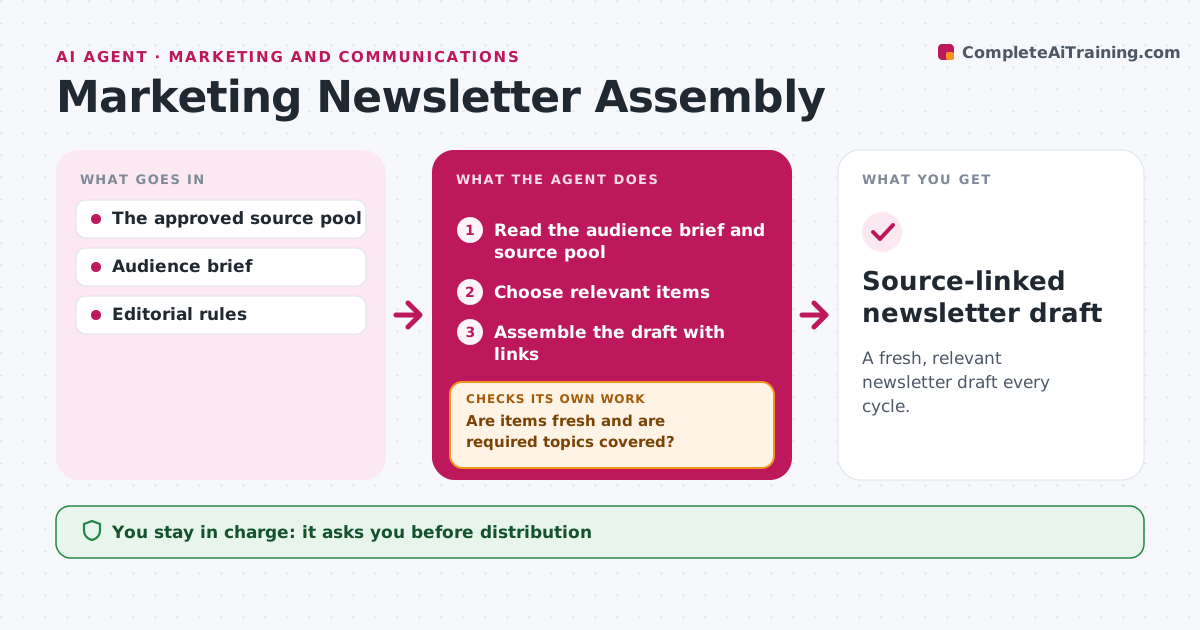
What it does
Recurring newsletters take hours to source, check and assemble. Each cycle this agent reads the audience brief and picks relevant items from the approved source pool. It assembles a draft with a short summary and a source link for each item. It then checks that every item is recent enough and that all required topics are covered. Stale or weak items are replaced from the pool, and missing topics are filled. It also checks that links work. If the pool has nothing on a required topic, it tells the editor instead of padding. The editor approves distribution, and the agent never adds endorsements. Edge case: no item covers the required regulation topic, so the agent adds one from the pool.
How it works
Follow the arrows from top to bottom. The orange dashed arrow is the loop: when a check fails, the agent goes back and tries again.
Read the steps as a list
- Newsletter cycle starts
- Read the audience brief and source pool
- Choose relevant items
- Assemble the draft with links
- Are items fresh and are required topics covered?If not: replace from the pool or tell the editor. Back to step 3.
- Do all links work?If not: replace the broken link. Back to step 4.
- Editor approves distributionThe agent waits here for your OK.
- Source-linked newsletter draft
How it decides
It selects by brief fit and source content, then fills coverage gaps.
- Pick by fit with the brief, not by popularity.
- Every required topic is covered or flagged to the editor.
- No endorsements or promotional claims without approval.
Make it yours
Every agent is a starting point. You choose these settings for your own situation.
- Audience brief and required topics
- Freshness limit (default 14 days)
- Number of items per issue (default 8 to 10)
- Approved source pool
What keeps you in control
It always asks you first
- Distribution
- Endorsements
Hard limits
- Approved sources only.
It stops when
- Done: draft ready.
Set it up
We guide you through the set-up, step by step
Members get the full set-up guide for this agent. No technical skills needed: you copy, paste and upload.
- One set of instructions to paste into your AI, with the clicks for ChatGPT, Claude, Microsoft 365 Copilot, Gemini and Grok
- The agent then walks you through connecting your own data, one source at a time
- A downloadable copy with the flow chart, the rules and the full guide