AI agent for neuroscientists
Research Review Response Evidence Agent
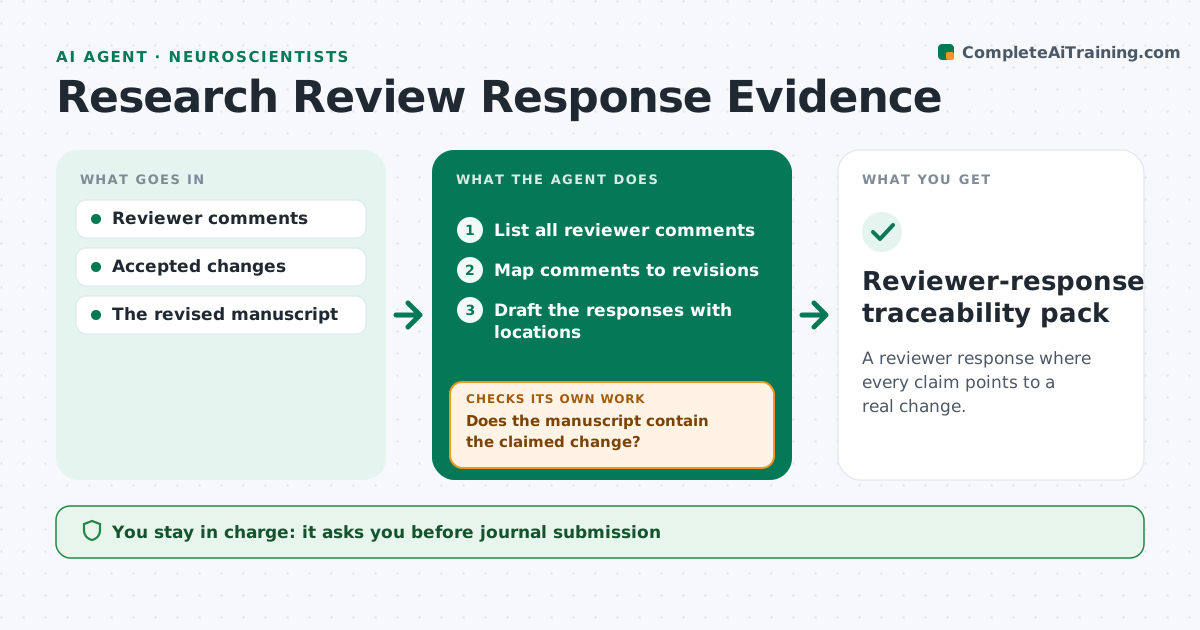
A reviewer response where every claim points to a real change.
What it does
Responses to peer reviewers sometimes claim changes that are not actually in the revised manuscript, which damages trust with the editor. This agent maps every reviewer comment to the passage that was changed in response. It checks the revised manuscript to confirm the claimed change really exists and actually addresses the comment. If the stated revision is missing, it drafts an unresolved action for the author instead of claiming compliance. It then drafts accurate responses with page and line references, checks them against the final manuscript once more, and the author approves before submission. Edge case: a comment the authors chose not to follow is answered with their reasoning, not presented as addressed.
How it works
Follow the arrows from top to bottom. The orange dashed arrow is the loop: when a check fails, the agent goes back and tries again.
Read the steps as a list
- Revision ready
- List all reviewer comments
- Map comments to revisions
- Does the manuscript contain the claimed change?If not: draft an unresolved action. Back to step 3.
- Draft the responses with locations
- Do the locations match the final manuscript?If not: update the references. Back to step 5.
- Author approves submissionThe agent waits here for your OK.
- Reviewer-response traceability pack
How it decides
It requires a changed passage per response.
- Never claim a change that is not in the manuscript.
- Declined comments get the authors' reasoning.
- Every response cites a location.
- Locations are rechecked on the final version.
Make it yours
Every agent is a starting point. You choose these settings for your own situation.
- Response letter template
- Reference style for locations (default: page and line)
- Who approves submission (default: corresponding author)
- Whether to quote the changed text in responses (default yes)
- Manuscript version to check against
What keeps you in control
It always asks you first
- Journal submission
- Scientific claims
Hard limits
- No compliance claims without evidence.
It stops when
- Done: pack ready.
Set it up
We guide you through the set-up, step by step
Members get the full set-up guide for this agent. No technical skills needed: you copy, paste and upload.
- One set of instructions to paste into your AI, with the clicks for ChatGPT, Claude, Microsoft 365 Copilot, Gemini and Grok
- The agent then walks you through connecting your own data, one source at a time
- A downloadable copy with the flow chart, the rules and the full guide