AI tool
Agently
Agently uses a reference-time model to reconcile data conflicts based on actual event times instead of arrival order. It assists developers managing external data feeds where reported timestamps and ingestion order disagree.

About Agently
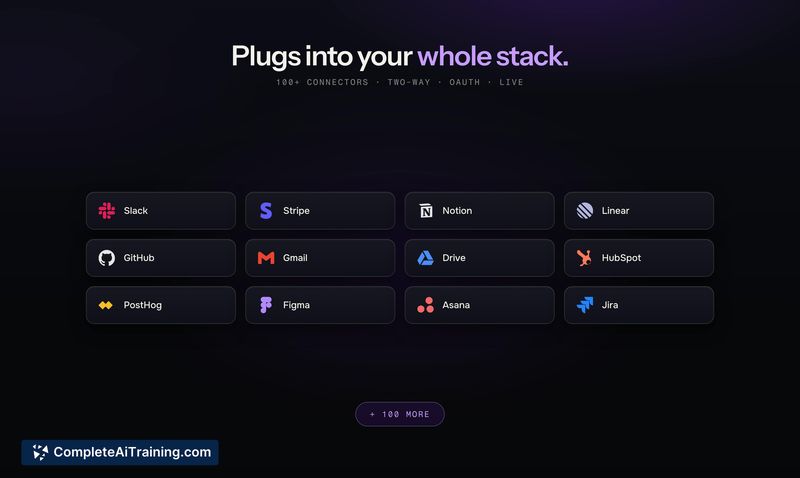
Agently is an AI tool that positions itself as a persistent company brain and autonomous task executor. It connects to over 100 business tools, ingests their data into a temporal knowledge graph, and routes work to agents that can act on that context without manual handoffs. The system describes itself as "the layer between today's AI and tomorrow's AGI," with a focus on linking events across systems and retaining memory indefinitely.
Review
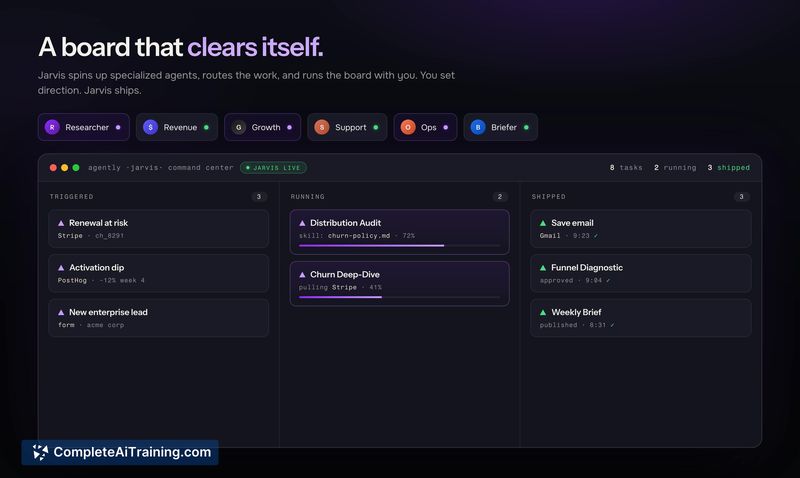
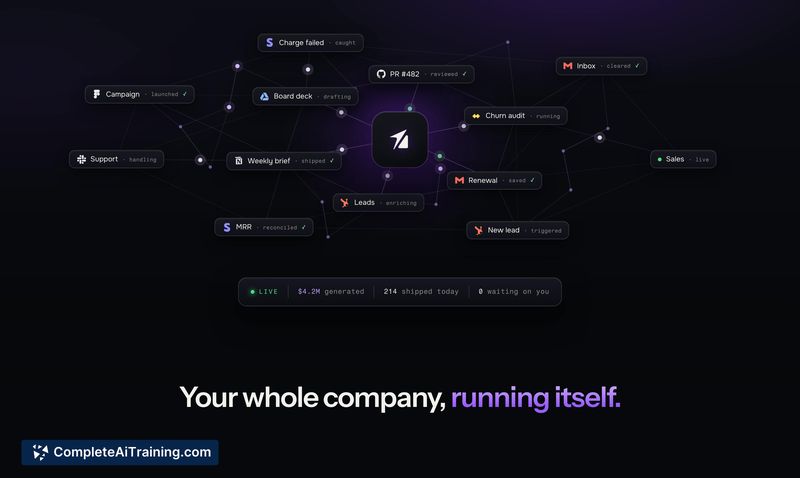
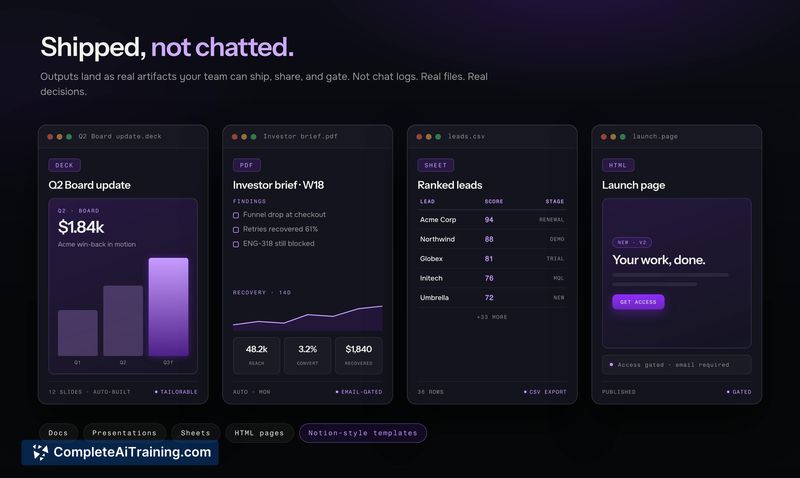
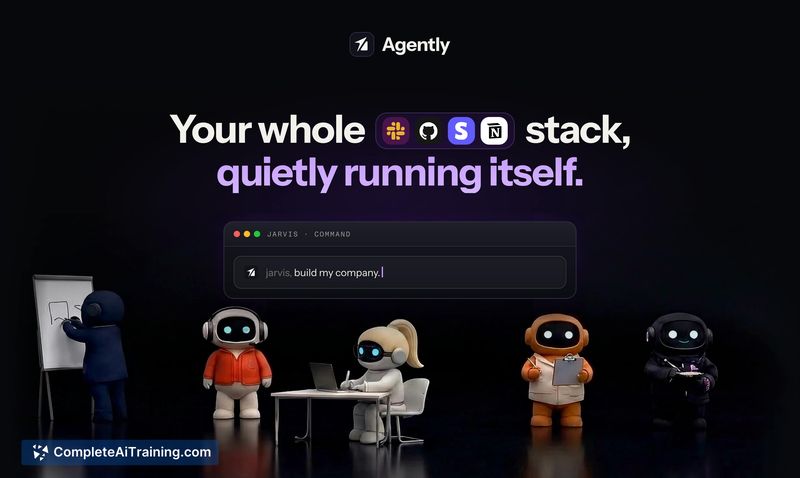

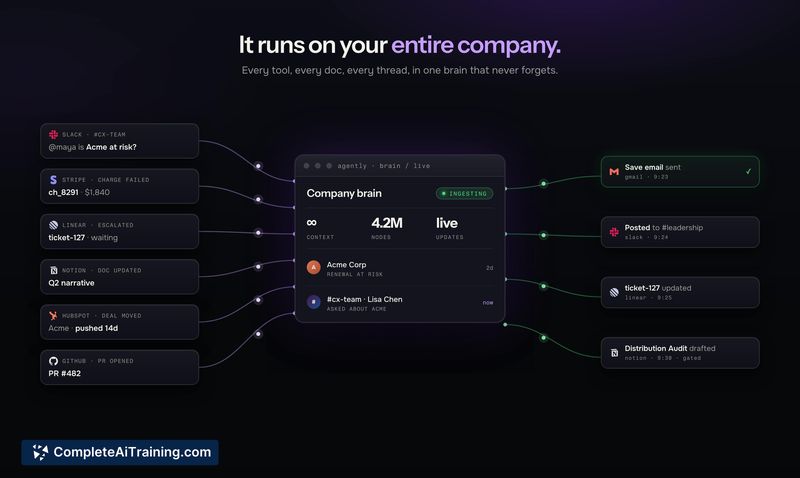
Agently launched this week with a free tier and an ambitious pitch: instead of answering prompts or running brittle automations, it holds your company's operational context and does the work. The tool ingests data from connected sources, resolves entities across them, and uses a routing system called Jarvis to dispatch agents that can execute tasks end to end. The makers are transparent about what's built versus what's on the roadmap, and the discussion around bi-temporal data handling and governance principles reveals a system designed for teams that want AI to own follow-through, not just retrieval.
Key Features
- A persistent memory graph that links events from Stripe, Slack, Linear, and other connectors automatically. The brain backfills history on connection and retains context even after an integration is revoked.
- Temporal knowledge representation with contradiction detection. When a fact changes (e.g., a customer churns), the old state gets a validity interval rather than being deleted, and newer signals supersede stale ones.
- Agent routing via Jarvis. Incoming triggers or manual dispatches from the Command Center are handed off asynchronously to agents that loop through retrieval, inference, and tool calls until a task is complete.
- Approval gates that surface consequential actions for sign-off before execution. The team states that changing a policy limit itself should be permission-gated and logged, though the full recursive governance is still being built out.
- Bi-temporal storage that treats source-reported timestamps as claims and retains ingestion order independently, allowing conflict reconciliation without destructive picks.
Pricing and Value
At launch, Agently is available for free. The makers have not published a long-term pricing model or detailed what future paid tiers might include. For now, users can connect their stack and test the brain and agent loop without cost. The eventual value will depend on how the compounding context-every correction, approval, and decision-improves accuracy over time, which the team describes as a moat that grows with usage rather than plateauing after initial integration.
Pros
- Cross-tool event linking happens without manual wiring, reducing the need for brittle zap-like rules.
- Memory is durable and provenance is tracked: every fact knows its source and timestamp, and outdated information is invalidated rather than silently mixed in.
- The trigger-to-agent handoff is asynchronous and lightweight, with the team sharing real production latency splits upon request.
- Approval gates prevent agents from acting on high-stakes items without human review, and the design intent is to log policy changes with the same audit trail as agent actions.
- The bi-temporal model handles out-of-order and unreliable external timestamps, which matters for feeds like government procurement data.
Cons
- Revoking a connector stops data streaming but does not purge what the brain already learned from that source. Teams with strict deletion requirements or data residency policies may find this insufficient.
- The tool is early-stage, launched this week. Documentation, community patterns, and production hardening are still thin, and some governance features (like recursive policy-change approval) are described as principles rather than fully shipped.
- Contradiction detection relies on model-assisted calls, which the makers acknowledge can be fuzzy for non-clear-cut state transitions. In those cases, the system keeps both facts and leans on recency, which may still require manual oversight.
Agently fits teams that already run on multiple SaaS tools and want a system that not only remembers everything but also acts on that memory with minimal manual orchestration. It's less suited for organizations that need immediate, irreversible data deletion upon disconnecting a source, or those that cannot tolerate any model-assisted ambiguity in fact reconciliation. For early adopters willing to shape a product that's still defining its edges, the free launch window offers a way to test how much follow-through an AI brain can actually handle.
Jobs Agently suits
We checked Agently against 500+ jobs; these get the most out of it.