
Learning path
Learning AI as a Data Engineer
This path helps data engineers use AI to write pipeline code, check data quality, tune queries, and document systems. You will practice with prompts, short videos, and certifications built for the job.

Your path
Everything in the Data Engineer AI kit, in the order that makes sense. Members tick off each step and see their progress.
Set up your AI
We guide you through each click.
Let skills do your everyday tasks
Connect your apps and pick your AI apps
Hand whole tasks to AI agents
Build your own tools
Everything for data engineers
All the courses, certifications, AI tools, MCP servers and apps for data engineers, most relevant first. Open any list to see more.
Take the prompt courses
A short framework course to learn how to ask, then 8 lessons with ready-to-use prompts for data engineers.
Start with this framework: how to talk to AI
For data engineers, context engineering structures prompts so agents generate dbt models, validate schemas, and automate pipeline checks from warehouse context.
Then your prompt course for data engineersWatch the video courses or add them to your Favorites for later
96 video courses our AI picked for data engineers, most useful first. Save the ones you want to watch later with the heart.
Favorites are saved to your account: sign in or get your AI kit first.
Show all 96 video courses
Get certified, or add certifications to your Favorites
Every course ends in an exam and a certificate you can add to LinkedIn. Save the certifications you are aiming for with the heart.
Favorites are saved to your account: sign in or get your AI kit first.
More certifications for data engineersShow all 24 certifications
Try the AI tools for data engineers
24 AI tools our AI matched to the work of data engineers, best fit first. Each review shows what it does, its alternatives and the jobs it suits.
Favorites are saved to your account: sign in or get your AI kit first.
Show all 24 AI tools
Connect your AI to the apps data engineers use
MCP servers let ChatGPT, Claude or Copilot look things up and get work done in other apps, like your email, calendar or bookkeeping software. These 12 fit the work of data engineers best, well-known apps first.

Airflow MCP server
by us-allLets your AI check Apache Airflow DAGs, runs, and task logs, and trigger or clear runs when you allow it.
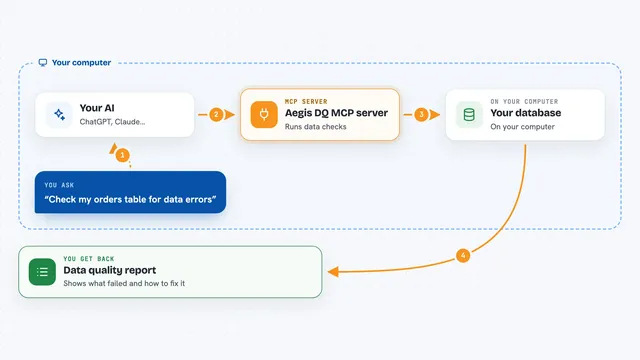
Aegis DQ MCP server
by aegis-dqLets your AI check your data for errors, explain what went wrong, and suggest SQL fixes.
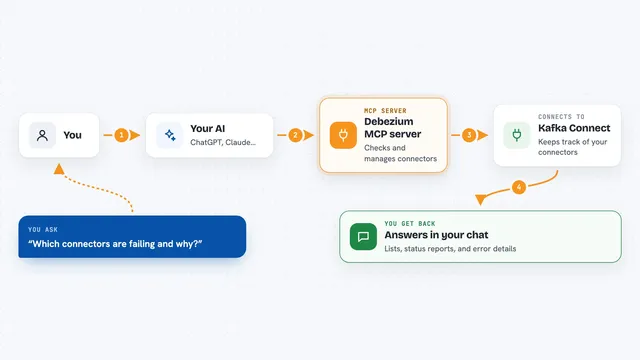
Debezium MCP server
by dockndevaiLet your AI check and manage Debezium and Kafka Connect data connectors for you.

Apache Airflow MCP server
by yangkyeongmoLets your AI check and manage your Apache Airflow workflows for you, right from the chat.

Kafka MCP server
by dockndevaiLets your AI check and manage Kafka topics, partitions and consumer groups, including lag.

Confluent MCP server
by confluentincLets your AI look at and manage your Kafka topics, connectors, and Confluent Cloud resources for you.
Show all 12 MCP servers

DBConvert Streams MCP server
by slotixLet your AI read your databases, files and S3 storage, and run read-only queries across all of them at once.
Analytics Official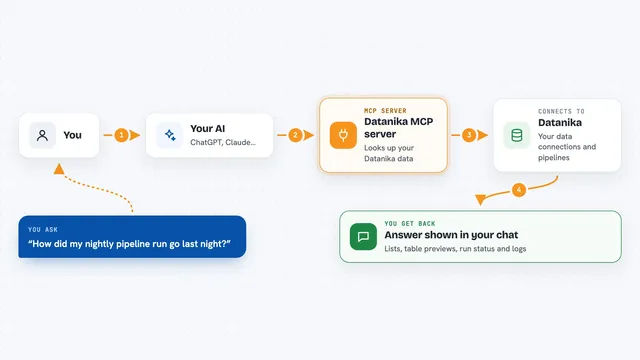
Datanika MCP server
by datanika-ioLet your AI browse your Datanika data connections, preview tables, and check pipeline runs for you.
Analytics Official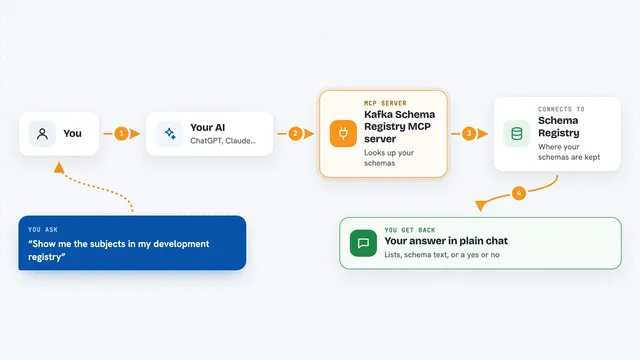
Kafka Schema Registry MCP server
by aywengoLets your AI look at and manage your Kafka schema registries, and move schemas between them.

Aiven MCP server
by Aiven-OpenLets your AI look at and manage your Aiven databases and services, like PostgreSQL, Kafka and ClickHouse.
Analytics Official
Keboola MCP server
by keboolaLets your AI look at and work with your Keboola data, tables, and jobs for you.
AnalyticsNo install
SQL Analyzer MCP server
by j4c0bsCheck, fix and convert SQL queries with your AI before you run them.
Build your own AI apps for data engineers
Apps you build yourself with your own AI, no coding needed and no monthly fee. Our AI picked the 11 that fit the work of data engineers.
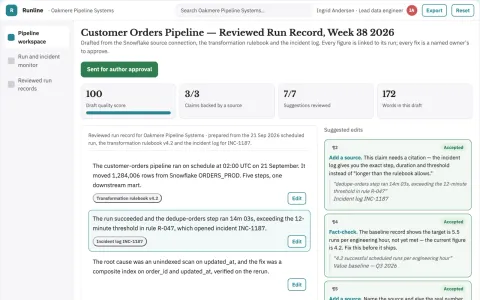
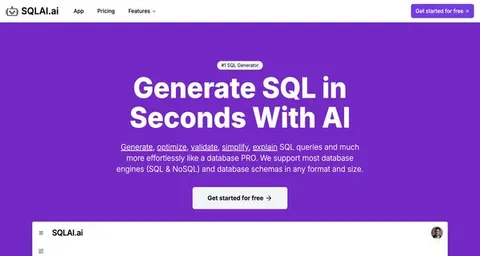
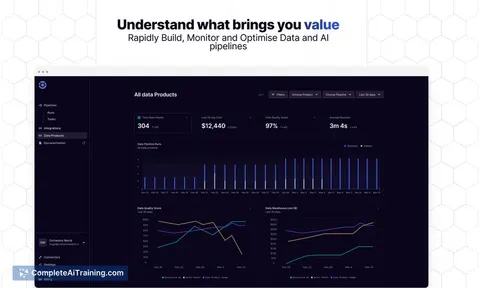
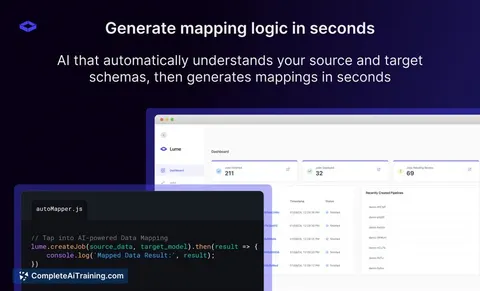
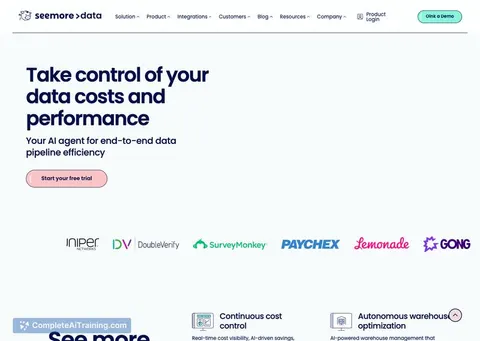
Managed data pipeline delivery workspace
Reduce pipeline coordination effort while keeping data current and reviewed.
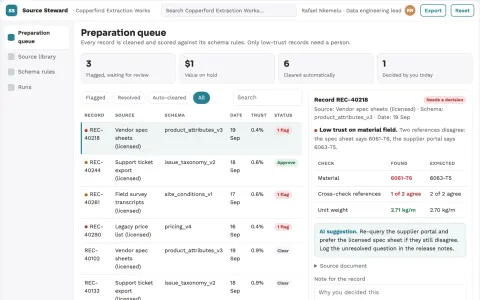
Raw-source data preparation and stewardship library
Reduce repeated data-preparation work while keeping source rights and review visible.
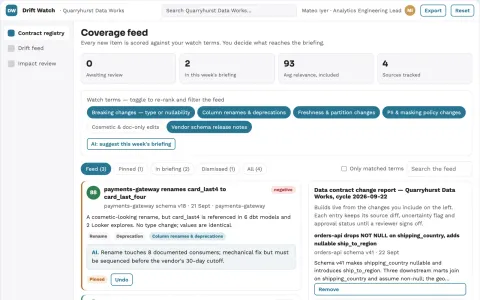
Data contract drift watch
Connect schema drift to documented consumers.
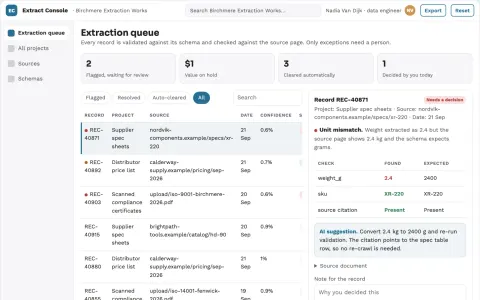
Structured data extraction and stewardship console
Reduce broken extractions and manual data preparation while keeping source traceability.
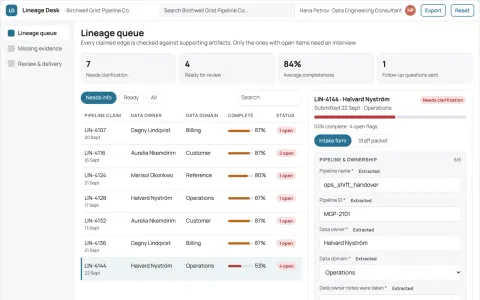
Data pipeline lineage interview desk
Separate documented lineage from team recollection.
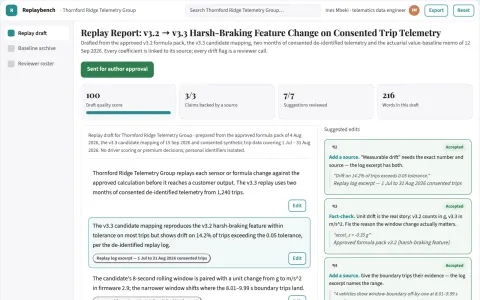
Usage-based insurance data replay workbench
Validate data pipelines before they affect customer calculations.
Show all 11 apps
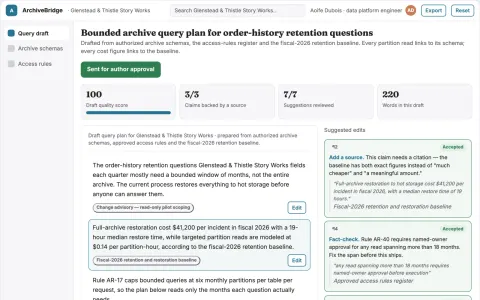
Database archive query bridge
Make infrequent historical questions cheaper to answer.
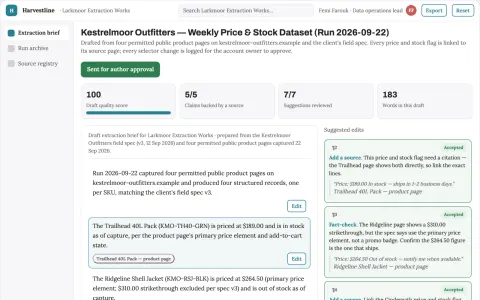
Managed web data extraction workspace
Reduce the number of rented scraping subscriptions and manual re-checks while keeping extracted data inside the client's own systems.
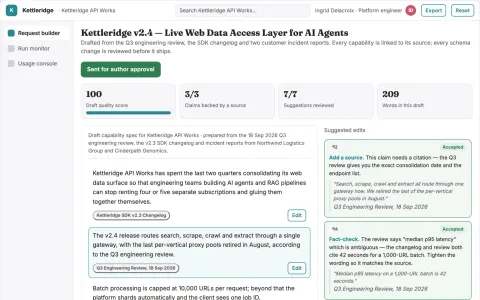
Live web data access layer for AI agents
Give agents and applications one owned API for search, scraping, crawling and structured extraction.
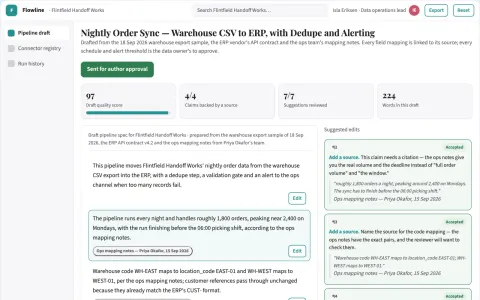
No-code data pipeline delivery workspace
Reduce hand-built data movement while keeping the data inside the client's own systems.
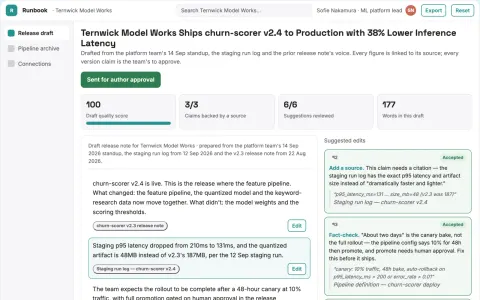
AI delivery workspace with managed implementation
Reduce tool sprawl and handoff effort while keeping project data and workflow under the team's control.































About this learning path
7 topicsPractical AI Skills for Data Engineers at Work
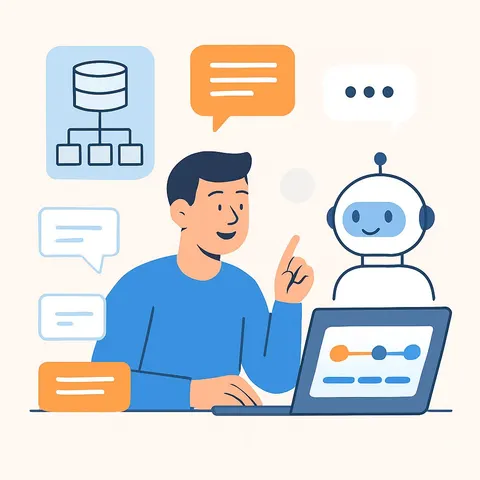
Data engineering work often means writing code, checking data, and keeping pipelines running. This path shows you how to use AI as a practical helper for those daily tasks.
First you answer a few setup questions and connect your AI tool. Then you work through skills for your job inside your AI, this prompt course, and video courses chosen for data engineers, each with the certification that comes with it.
Why AI Matters for Data Engineers
Data teams face more sources, tighter timelines, and constant requests. AI can help draft transformation code, explain errors, and suggest checks, so you spend less time on repetitive work and more on reliable systems.
What This Path Includes
The path starts with setup questions and connecting your AI tool. It then adds job-specific skills inside your AI, the prompt course for data engineers, and video courses picked for your role.
Each video course comes with a certification. That gives you a clear record of focused training you can show in reviews or interviews.
How It Saves Time
You will use prompts for code, debugging, quality checks, query tuning, and documentation. AI gives you a first draft or a list of likely causes, and you review it with your own knowledge.
Small time savings add up across a week. A faster log review or a cleaner SQL draft can free you for design work and helping analysts.
How It Protects Your Career
AI changes how data engineering tasks get done, but it does not remove the need for engineers who understand data. The people who guide AI, verify output, and explain choices stay valuable.
This path helps you build that judgment. You learn where AI helps, where it fails, and how to keep quality high.
How to Start
Begin with the setup questions and connect the AI tool you use at work. Then try one prompt on a real task, such as a slow query or a failed pipeline.
After that, move through the lessons in order. Keep the prompts that save you time and share them with your team when they help.
Certifications Along the Way
The video courses are chosen for data engineers and end with certifications. They cover tools and methods you can apply to pipelines, warehouses, and data quality.
You can add these certifications to your profile as you complete each course. They show a steady record of learning tied to your job.
Frequently asked questions
Do I need to be technical?
You already work with data, so you have the right foundation. The path explains AI in plain language and uses examples from data engineering. You do not need to be an AI expert.Which AI tool should I use?
You can use ChatGPT, Claude, or Gemini. The setup questions help you connect the tool you have access to at work. The prompts work across these tools with small adjustments.Will this replace my judgment?
No, AI gives drafts, suggestions, and explanations, but you still review code, check data, and make final decisions. That review is where your expertise matters.How long does it take?
You can move at your own pace. Many learners start with one prompt a day and finish the path over a few weeks. The video courses and certifications are there when you want to go deeper.