AI tool
Agnost AI
Agnost AI is an observability tool that analyzes production conversations from chat and voice agents to identify recurring failures, behavior drift, hallucinated links, and churn signals. It groups issues with specific users and conversations, all...
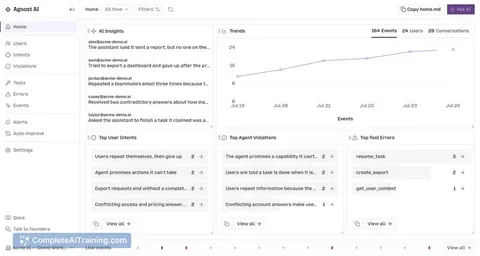
About Agnost AI
Agnost AI is an AI metrics and evaluation tool that analyzes conversations between users and production AI agents. It detects silent failures, agent behavior drift, hallucinations, user frustration, hidden feature requests, and churn signals, then groups them into recurring patterns. The tool shows the exact users and conversations behind each insight and converts them into evals and fixes.
Review
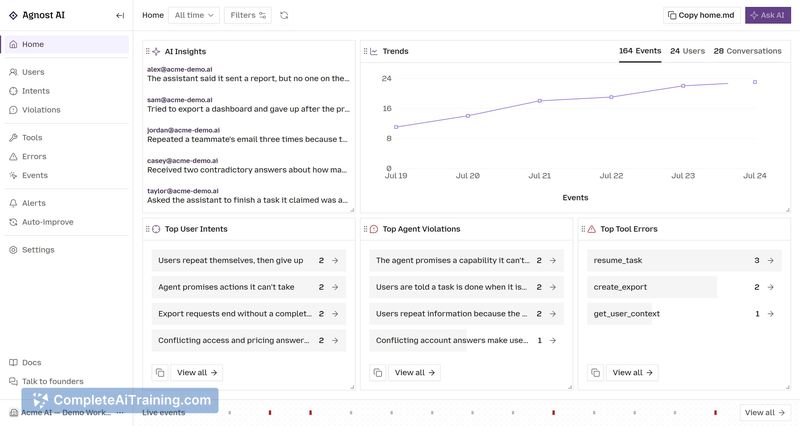
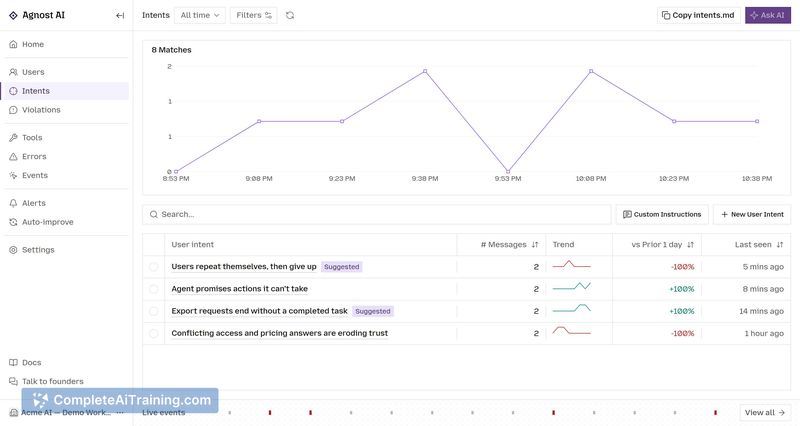
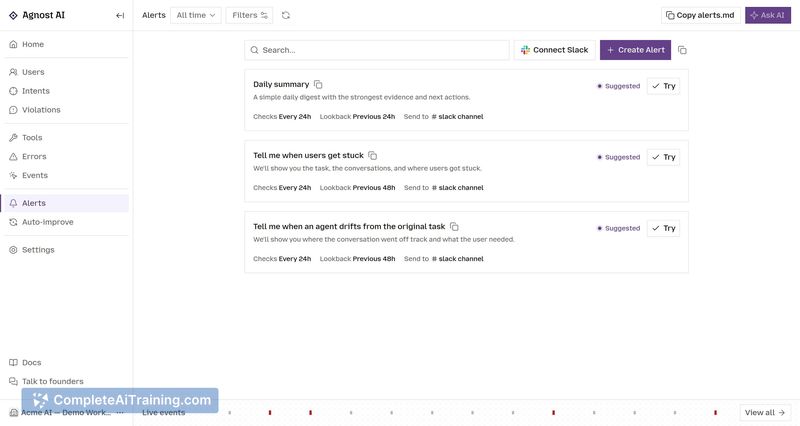
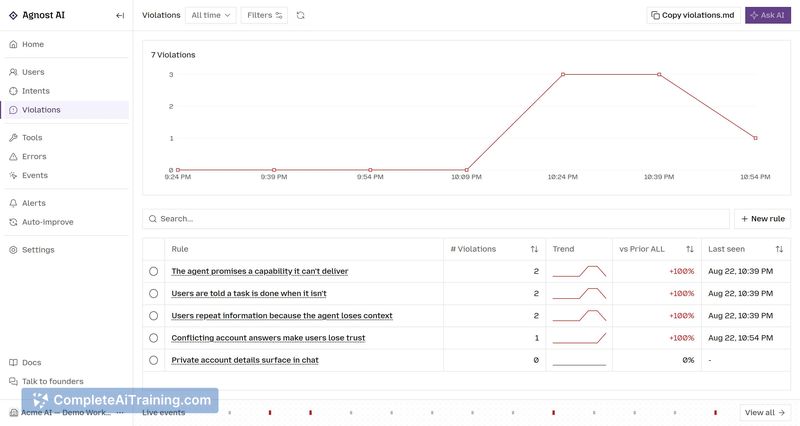

Agnost AI launched this week and addresses a specific gap in AI observability: the failures that don't appear in test suites. The tool reads every production conversation across chat and voice agents, finds patterns that standard dashboards miss, and connects them to the agents and conversations they originated from. The makers claim it already analyzes over one million messages daily.
Key Features
- Conversation-level analysis: Reads full production conversations across chat and voice agents rather than just request/response metadata.
- Failure grouping: Categorizes silent failures, behavior drift, hallucinations, frustrated users, hidden feature requests, and churn signals into recurring patterns.
- User attribution: Shows the exact users and conversations behind each insight.
- Eval generation: Converts discovered failures into evals and integrates with frameworks through an MCP connector.
- SLM training: Uses insights on where an agent fails to train an SLM that the team says is faster and cheaper on those failure cases.
Pricing and Value
Agnost AI offers free options at launch, and the makers mention a 20% off for launch teams on the Product Hunt page. Specific pricing tiers beyond the free tier are not defined in the reference content. The tool's value is in shifting failure detection from user complaints or manual trace reading to automated conversation analysis.
Pros
- Surfaces failures that traditional evals miss: the tool catches confident wrong answers, not just visible agent breakdowns.
- Integration takes only three lines of code or uses OpenTelemetry.
- Insights attach directly to specific users and conversations, so debugging doesn't start from scratch.
- MCP integration means eval frameworks like DeepEval or Braintrust get the discovered failures.
Cons
- The tool depends on production traffic; teams without deployed user-facing agents won't find it useful.
- Specific billing and pricing structures beyond the launch promotion aren't documented in the reference material.
- Your entire conversations are processed through a third service, which some teams may hesitate on. Teams with strict data-handling policies on your own infrastructure will need to weigh that sensitivity against the analytics value.
Agnost AI fits teams running user-facing AI agents who want to systematically catch failures rather than rely on waiting for users to complain. It works well for teams with enough production conversation volume that manual review drafts become a bottleneck, and who favor exporting discovered failures straight into their standard eval frameworks. Teams needing strict data control or auditing may want to check the deployment requirements honestly before committing.
Jobs Agnost AI suits
We checked Agnost AI against 500+ jobs; these get the most out of it.
Alternatives to Agnost AI
Other tools that do the same main job. Our AI compared Agnost AI with similar tools and kept the ones you could use instead.