AI tool
AnySearch
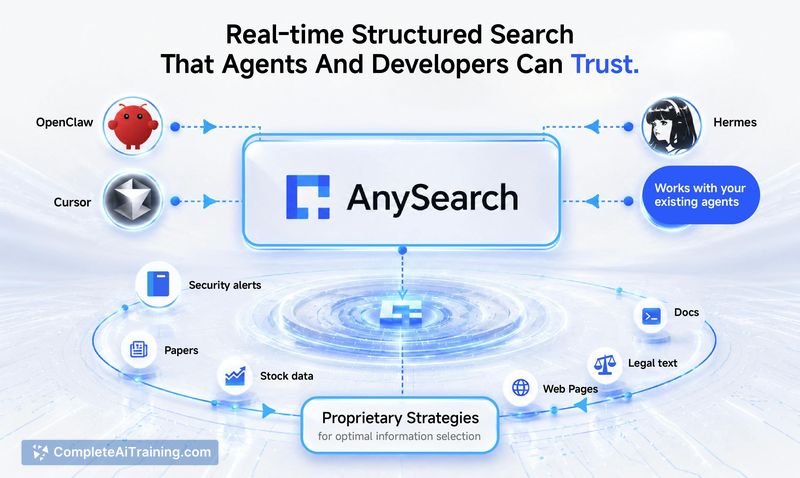
AnySearch provides real-time structured search infrastructure for AI agents. It filters spam and returns clean information so developers can build reliable agents without parsing messy HTML.
About AnySearch
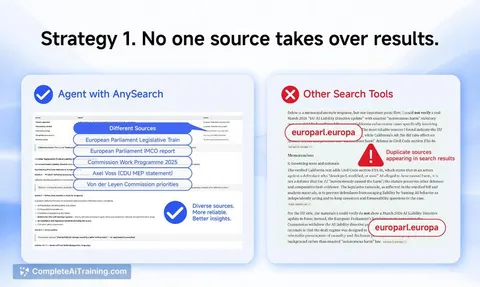
AnySearch is a search infrastructure tool built for AI agents and the developers who build them. It takes a query, runs parallel searches across trusted sources, then returns filtered, de-duplicated results in a structured format that agents can parse directly. The output is meant to reduce the noise and repeated calls that often plague agent workflows.
Review

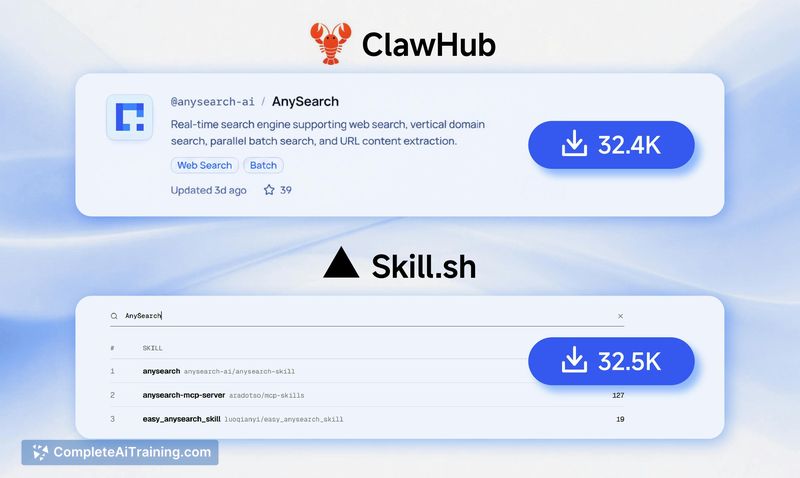
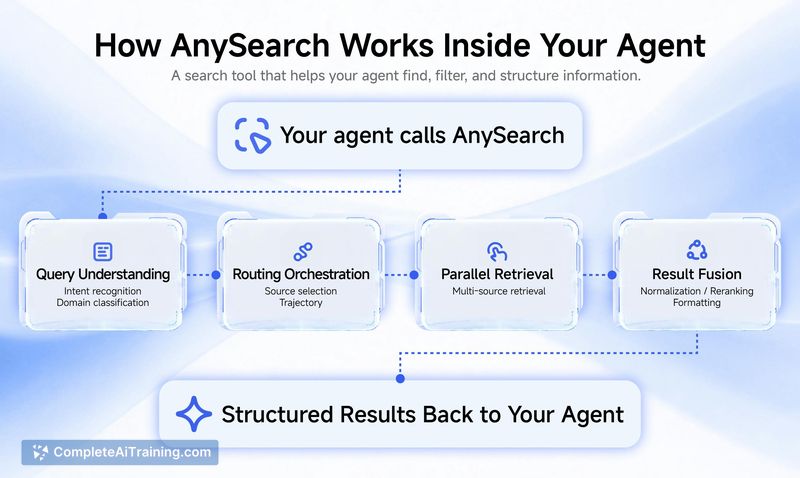
AnySearch launched this week as a real-time search layer designed specifically for agentic systems. Instead of presenting a list of links for a human to skim, it delivers cleaned, structured context that an agent can act on without additional HTML cleanup or guesswork. The team behind it comes from an AI development background and built the service to address the reliability gaps they saw when agents tried to use traditional search APIs.
Key Features
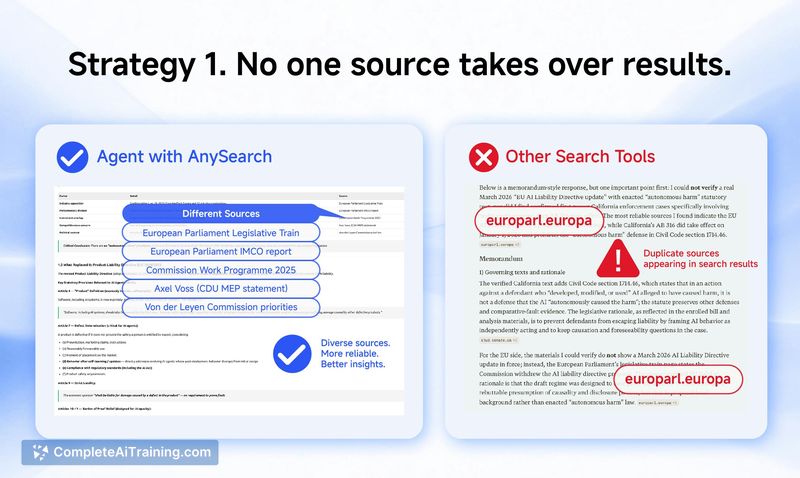
- Parallel trusted-source search - Queries hit multiple sources at once, and the system filters out SEO spam, ads, and duplicates before returning results.
- Structured output for agents - Results come back as Entity-Enriched Markdown (with title, URL, and context) or via a JSON API. The schema is fixed per result, so agents get a consistent format.
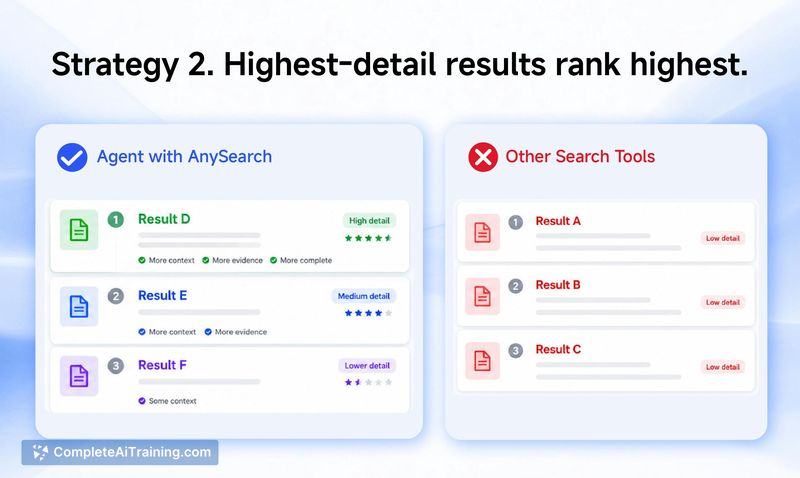
- Information-density ranking - A custom algorithm scores results by relevance while penalizing cross-passage redundancy. This aims to maximize the new information an agent receives in each call, rather than repeating the same story from different sources.
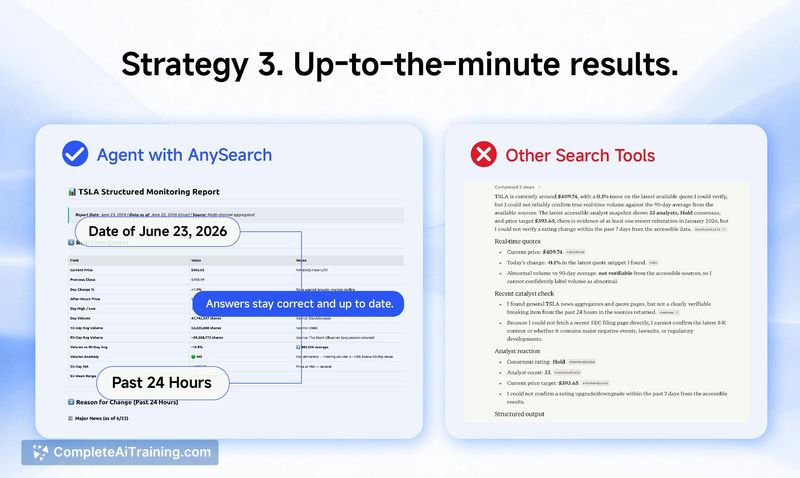
- Domain-aware freshness - Caching and refresh strategies vary by vertical. Fast-moving areas like finance use shorter refresh windows, while academic or legal sources can rely on longer cache periods.
- Flexible integration paths - AnySearch works through a Skill (paste a prompt and the agent installs it), the Model Context Protocol (MCP), or a direct API.
Pricing and Value
The service is free to start. The launch page does not detail pricing tiers, usage limits, or what the free tier includes beyond that. An Enterprise-only feature called Private Capability Isolation is mentioned, which lets teams scope search to specific domains. Beyond that, the pricing model is not yet defined publicly.
Pros
- Parallel search plus deduplication reduces context bloat that often confuses agents.
- Output arrives in a consistent Markdown or JSON format, so developers spend less time on parsing and cleanup.
- Published latency numbers (p50 ~1s, p95 under 5s) give teams concrete data for planning multi-step agent loops.
- The Skill install method is simple - paste a prompt and the agent handles setup.
- Domain-specific caching keeps results fresher for time-sensitive queries without wasting resources on slow-moving sources.
Cons
- Per-agent source scoping is only available in the Enterprise plan; request-level source control exists, but operators who need to pin a customer-facing bot to specific domains without an enterprise contract will find that limiting.
- The output schema is fixed - developers cannot yet pass a JSON schema to shape the structure per query, though the team says they're exploring this for the roadmap.
- AnySearch is not well suited for teams that need per-agent trusted-source policies today. The ability to define such policies at the operator level is still under consideration, and the current tool leans toward request-level control.
AnySearch fits best for developers building research agents, multi-step reasoning workflows, or internal tools where consistent, clean search context matters and where the fixed schema works out of the box. Teams that need strict per-agent domain isolation or highly customized result shapes may want to wait for the roadmap items to land. The free starting point and the Skill install make it easy to test in an existing agent loop without a large upfront commitment.
Jobs AnySearch suits
We checked AnySearch against 500+ jobs; these get the most out of it.
Alternatives to AnySearch
Other tools that do the same main job. Our AI compared AnySearch with similar tools and kept the ones you could use instead.