AI tool
Claude-Mem
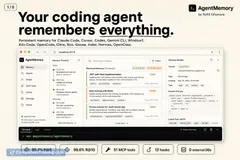
Claude-Mem records Claude sessions, extracts and compresses the moments that matter, and injects them into future sessions so decisions and insights persist without noisy transcripts.

About Claude-Mem
Claude-Mem is an AI tool that takes notes on other AI assistants' work in real-time, turning transient conversations into a permanent, searchable archive. It watches sessions, extracts the key moments, compresses them, and makes that context available in future interactions so teams do not have to repeat explanations.
Review

Claude-Mem targets developer workflows where multi-day engineering work and repeated assistant sessions commonly lose context. It focuses on capturing the moments that matter-decisions, root-cause discoveries, and timeline entries-and surfacing them invisibly in later sessions to preserve continuity.
Key Features
- Real-time observation and note-taking that runs in the background while an assistant is used.
- Compression-based memory: extracts concise observations rather than storing entire noisy transcripts.
- Searchable timeline and archive that visualizes development progress and decision points across commits.
- Integration-ready architecture with a worker process, HTTP API and a search component for flexible deployment.
- Team collaboration support so multiple contributors can access persistent context and shared timelines.
Pricing and Value
At launch, Claude-Mem is listed as free. The immediate value is time saved: fewer repeated explanations to assistants, quicker handoffs between sessions, and easier traceability of decisions during development. As an early-stage tool, long-term pricing and enterprise options may change, so teams should evaluate short-term gains against potential future costs and any integration effort required for production use.
Pros
- Preserves continuity across separate assistant sessions, reducing repetition and onboarding friction.
- Focuses on distilled observations rather than raw logs, which keeps the archive concise and useful.
- Provides a timeline view that helps track decisions and link them to commits or changes.
- Runs unobtrusively in the background and exposes an API for flexible integration into existing workflows.
Cons
- Capturing live assistant activity raises privacy and security questions; teams must review what is recorded and where it is stored.
- Documentation and community support are limited at launch, which can slow adoption for complex setups.
- Requires some infrastructure (worker, API, search component) to integrate fully, which may be a barrier for lightweight projects.
Claude-Mem is best suited for engineering teams and individual developers who use AI assistants across multi-day projects and need continuity, traceability, and fewer repeated explanations. It is especially helpful where decisions and troubleshooting insights matter over time and where a searchable, compressed archive adds day-to-day efficiency.
Jobs Claude-Mem suits
We checked Claude-Mem against 500+ jobs; these get the most out of it.
Alternatives to Claude-Mem
Other tools that do the same main job. Our AI compared Claude-Mem with similar tools and kept the ones you could use instead.