AI tool
Dial
Dial gives AI agents a phone number via one API call so they can send and receive SMS, place voice calls, and read inbound verification codes. It is built for developers and teams deploying autonomous agents that need to interact with phone-based ...

About Dial
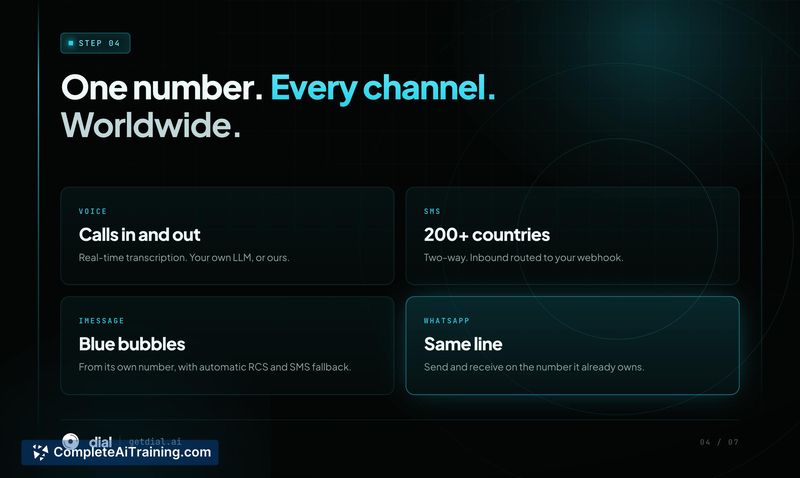
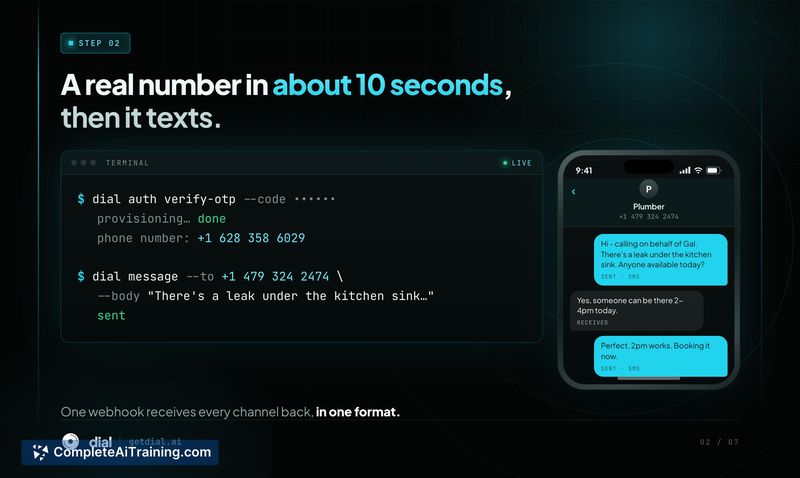
Dial is an API-first service that gives AI agents a real phone number through a single API call, typically provisioning one in about 10 seconds. It handles placing and receiving voice calls, sending and receiving SMS across 200+ countries, and messaging over iMessage with automatic RCS/SMS fallback. The tool also reads inbound verification codes, allowing agents to clear phone-gated signup flows without human intervention.
Review

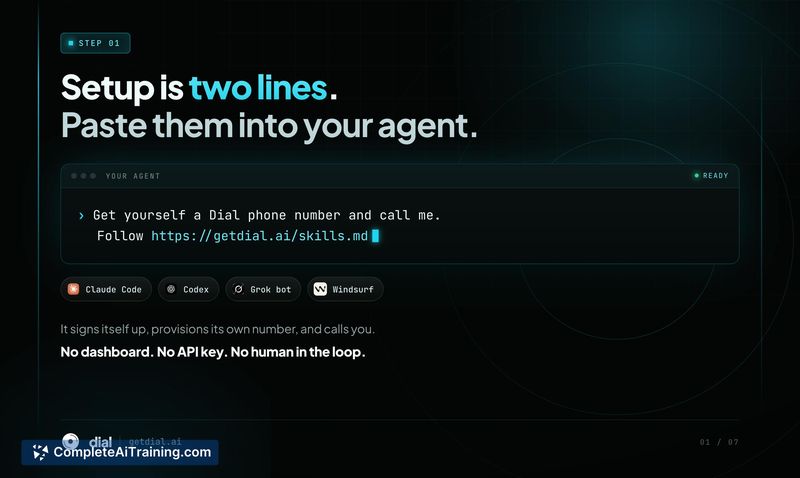
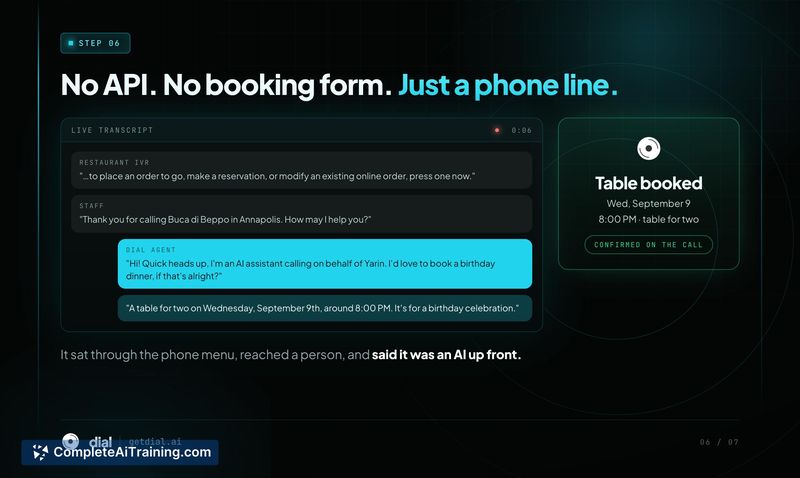
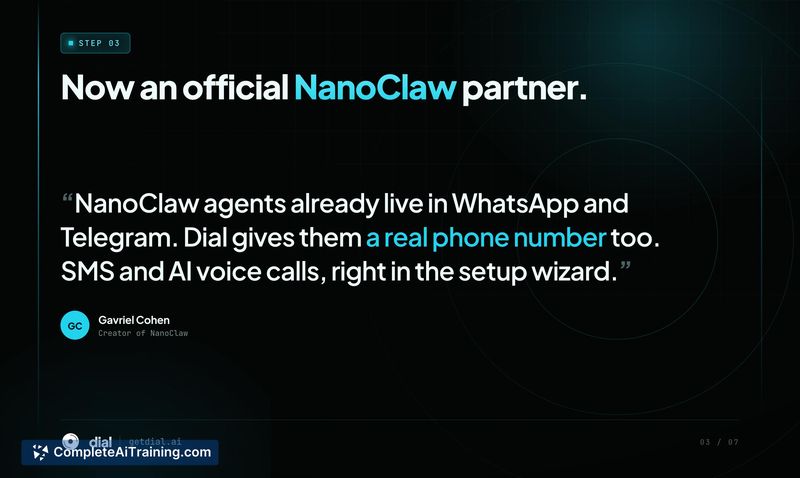
Dial addresses a specific gap in agent infrastructure: the point where an autonomous workflow hits a phone-based checkpoint and stalls. Rather than building an AI that answers calls on behalf of a person, it assigns a number that the agent itself owns and operates. The setup path - having an agent self-provision a number and call you - demonstrates the core concept without requiring a dashboard or manual configuration.
Key Features
- Programmatic number provisioning via REST API, CLI, MCP servers, and SDKs, with a working number available in roughly 10 seconds.
- Voice call placement and reception with real-time transcription, using either the user's own LLM or Dial's speech-to-speech models.
- SMS and iMessage support, with the agent receiving the full message content and deciding how to proceed.
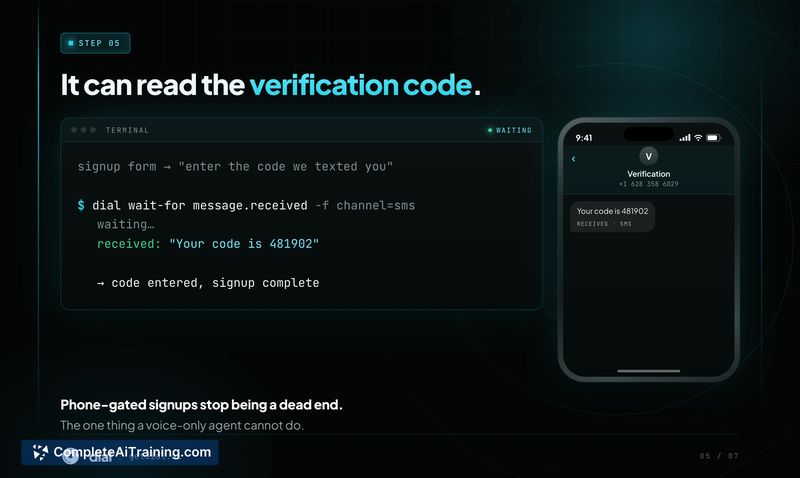
- Inbound verification code reading, letting agents extract codes from SMS messages and continue through phone-gated signups.
- One webhook, one format across all communication channels, with keypad digit input during calls for navigating phone menus.
Pricing and Value
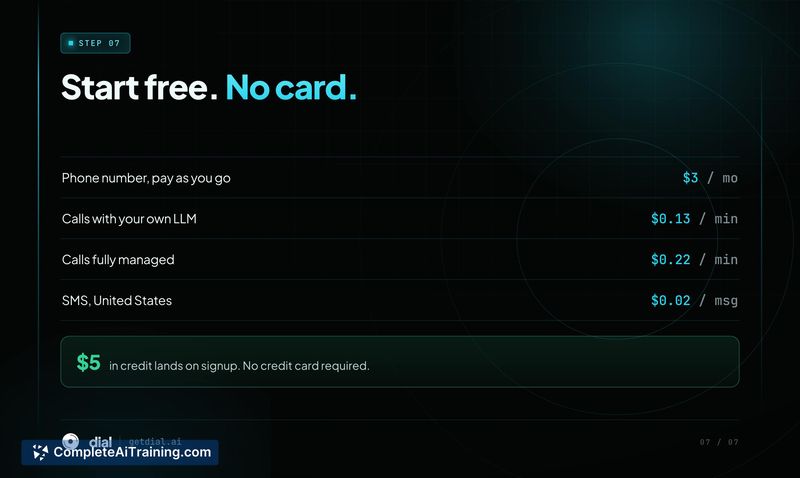
The website lists a price of $3 per number, though the founders have noted that pricing varies by country. A calling service without an associated number is also available, with pricing provided upon contacting the team directly. New signups receive free credit without requiring a card. Specific per-minute rates or volume-based tiers beyond the per-number cost are not publicly detailed at this time.
Pros
- Eliminates the manual step of reading and relaying SMS codes to an agent mid-workflow.
- Works across multiple channels - voice, SMS, iMessage - through a single integration point.
- Self-service provisioning means agents can obtain numbers without human approval cycles.
- Managed 10DLC registration, with a "Self-Healing 10DLC" process that the team says reduces approval time to 1-3 days instead of the typical 10-15 days.
- Agent-accessible keypad input during calls allows interaction with automated phone menus and GSM-based entry systems.
Cons
- Per-number pricing may accumulate quickly for workflows that spin up many short-lived agents, and volume discounts are not yet publicly defined.
- Reliance on a third-party service for phone numbers introduces an external dependency into agent pipelines where uptime requirements are strict.
- Not well suited for teams that only need outbound calling without number ownership, as the core product is built around number provisioning and inbound capabilities.
Dial fits scenarios where an agent's task chain repeatedly breaks at SMS verification, phone-based booking, or two-way calling that currently requires a human to step in. Teams running agents that never touch telephony will find little use for it, but those building autonomous workflows that interact with real-world phone infrastructure will likely encounter the exact dead end Dial was built to remove.
Jobs Dial suits
We checked Dial against 500+ jobs; these get the most out of it.
Alternatives to Dial
Other tools that do the same main job. Our AI compared Dial with similar tools and kept the ones you could use instead.