AI tool
FetchSandbox
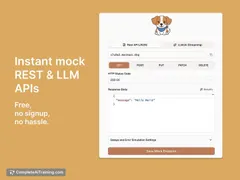
FetchSandbox simulates external API behaviors for developers testing third-party integrations. It provides a failure library to reproduce edge cases and errors in a controlled environment.
About FetchSandbox
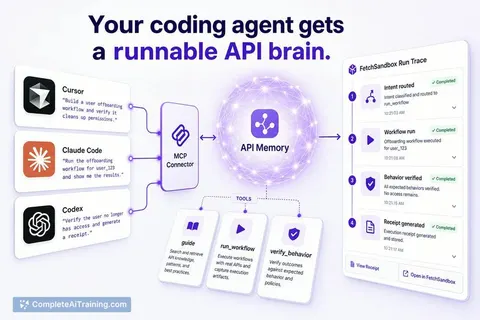
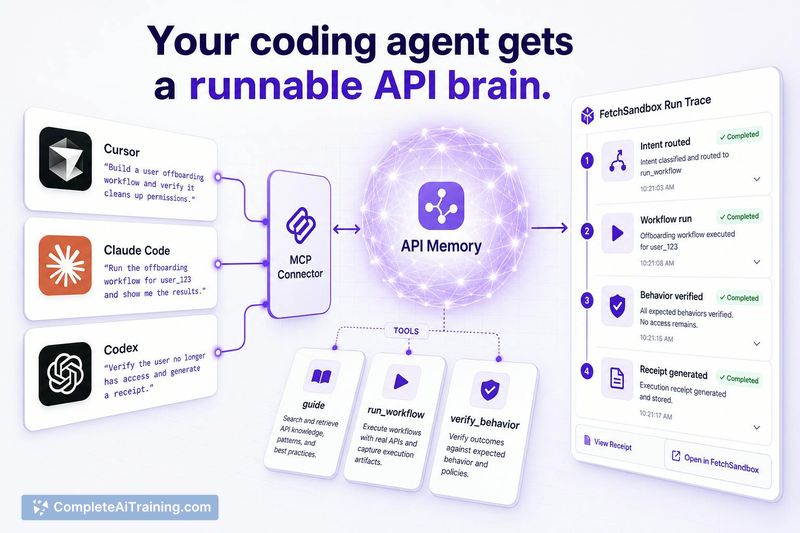
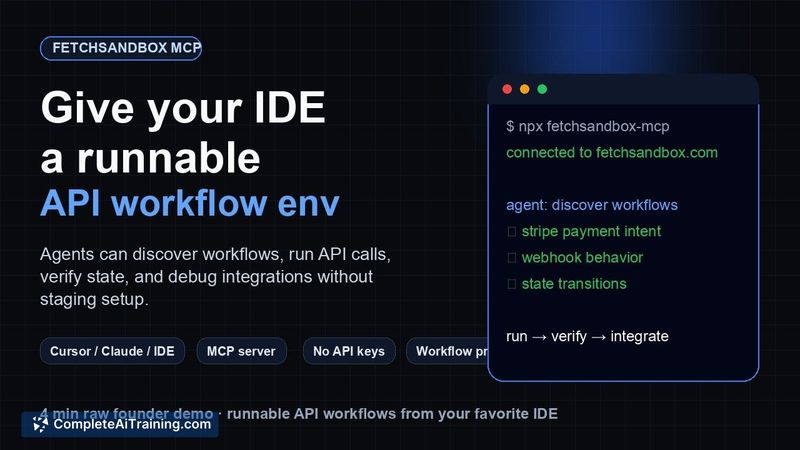
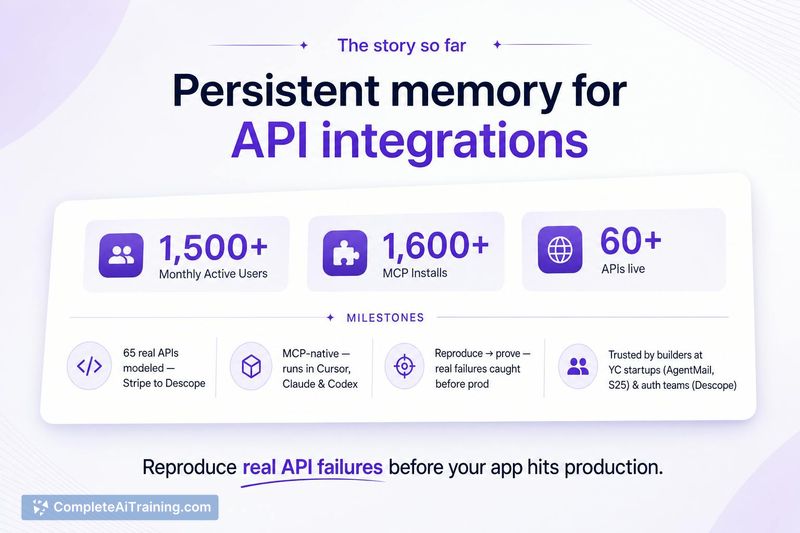
FetchSandbox is an API integration testing tool that goes beyond status-code checks. It lets developers and AI coding agents verify webhooks, retries, state changes, and async failure scenarios against 60+ real APIs without consuming live quota. The tool connects via MCP to editors like Cursor, Claude Code, and VS Code, and uses a curated library of known failure patterns to reproduce bugs and prove fixes.
Review
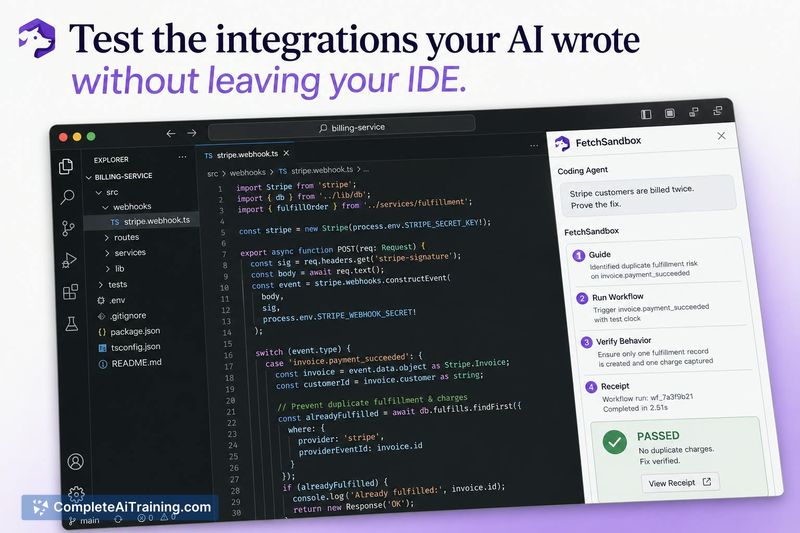
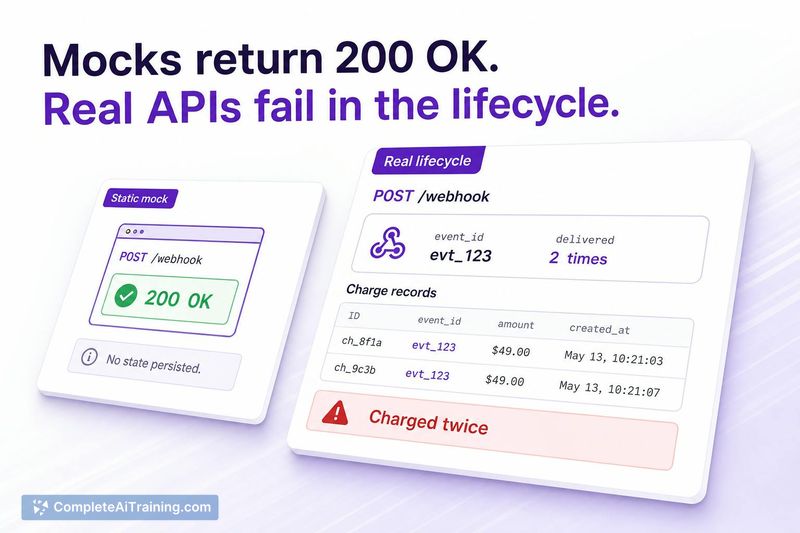
Most API testing stops at a 200 OK response, leaving the messy lifecycle of retries, duplicate events, and stale state untested. FetchSandbox addresses that gap by providing runnable sandboxes that simulate real API behavior, including failure modes. The tool is built for developers and AI agents that need to catch integration bugs before they reach production.
Key Features
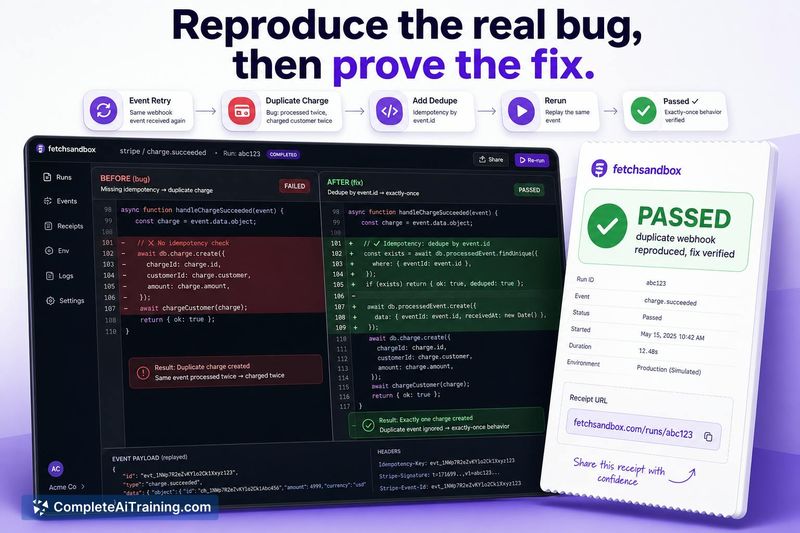
- Reproduce → prove loop: The sandbox reproduces a failure against your handler, then reruns after a fix is applied to confirm the issue is resolved. Nothing counts as verified unless it diverges in a run.
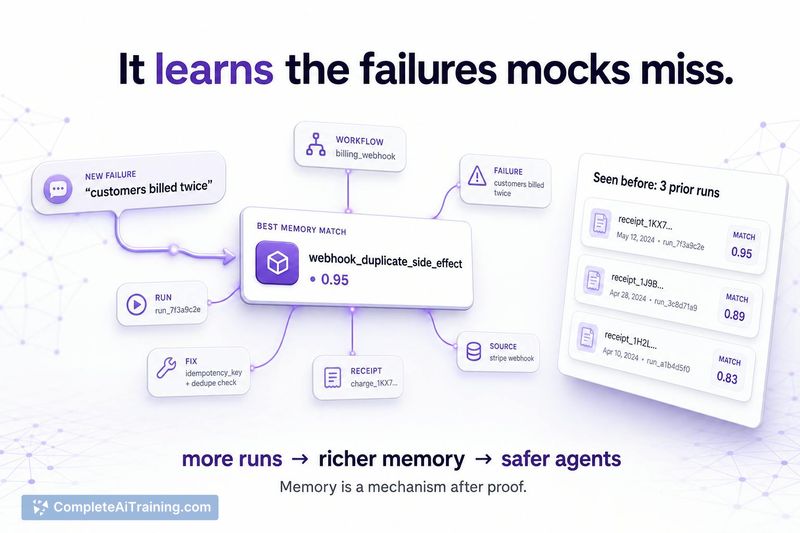
- Global per-API failure library: Curated from documented behavior and real integration failures, the library contains known breakage patterns for APIs like Stripe, GitHub, and Twilio. You inherit these patterns when testing an API, and they compound as more integrations run.
- MCP-native access: Connect directly from Cursor, Claude Code, Windsurf, VS Code, and Codex with a one-line install. No API keys or accounts required for the free tier.
- Deterministic replay for common scenarios: Duplicate webhooks, retries, and stale state are repeatable with the same inputs, allowing you to pin a failure and gate CI merges on it. Out-of-order event sequencing is not yet a first-class pinned fixture.
- Webhook and callback coverage: Inbound webhook flows-duplicate deliveries, retries, dropped events-are simulated, so you can check if your handler double-processes or corrupts state.
Pricing and Value
FetchSandbox launched with a free tier that includes MCP access and the core reproduce→prove workflow. No paid plans or pricing tiers have been announced yet. The current setup lets you try the tool headless in supported editors without providing payment details.
Pros
- Tests the actual integration lifecycle-webhooks, retries, state transitions-instead of just the initial request/response.
- The failure library is proof-gated: a pattern only enters the library after it has been reproduced in a sandbox run, not just documented.
- MCP integration works with several AI coding agents, making it straightforward to add to an existing agent workflow.
- Deterministic replay for duplicates and retries is ready for CI gating today.
- The maker is transparent about current gaps and roadmap items in public discussions.
Cons
- The failure library is server-side, not stored locally per project. Pinned scenarios could be affected by library updates unless version-locking is introduced.
- Automated per-API drift detection-monitoring whether the sandbox's simulation lags behind the live API's behavior-is on the roadmap, not yet shipped. Today it relies on catch-and-correct.
- Teams that need precise, deterministic out-of-order webhook sequencing as a merge gate won't find it yet; ordering currently falls out of variable timing rather than a strict "deliver B before A" replay.
FetchSandbox fits developers and AI agents who want to catch lifecycle bugs in API integrations early, especially those dealing with webhooks, retries, and state-dependent failures. It's less suited for organizations requiring fully automated, continuous drift detection or per-project, locally stored failure libraries. The free tier and MCP-native setup make it easy to evaluate without commitment.
Jobs FetchSandbox suits
We checked FetchSandbox against 500+ jobs; these get the most out of it.
Alternatives to FetchSandbox
Other tools that do the same main job. Our AI compared FetchSandbox with similar tools and kept the ones you could use instead.