AI tool
Gemini Robotics 2
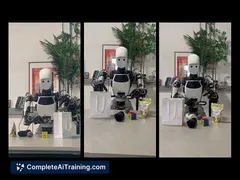
Gemini Robotics 2 brings physical AI to robots, enabling them to interpret environments and reason through tasks. It is built for developers creating intelligent agents that adapt to physical spaces.
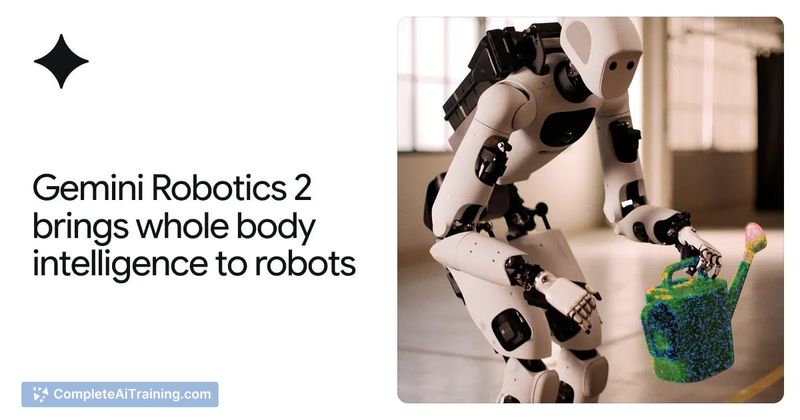
About Gemini Robotics 2
Gemini Robotics 2 is a research initiative from Google DeepMind that applies large-scale AI models to physical robots. The system processes visual and spatial information to let robots understand their surroundings, reason through tasks, and manipulate objects. It is designed to work across robot types, from single arms to humanoid forms, and supports multi-robot collaboration.
Review
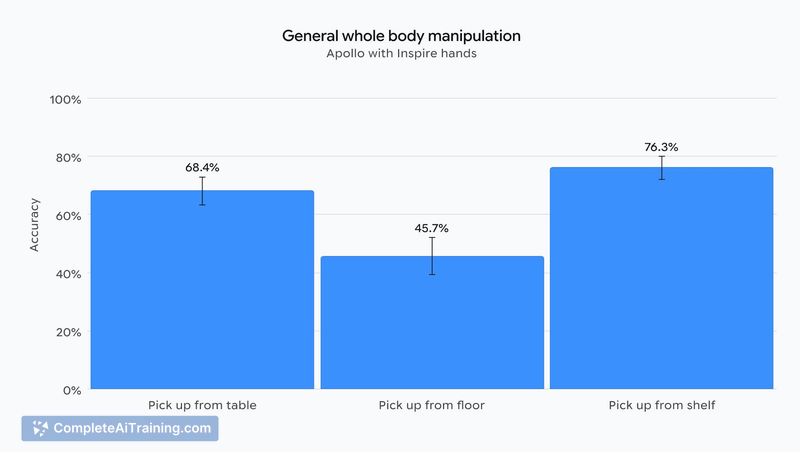
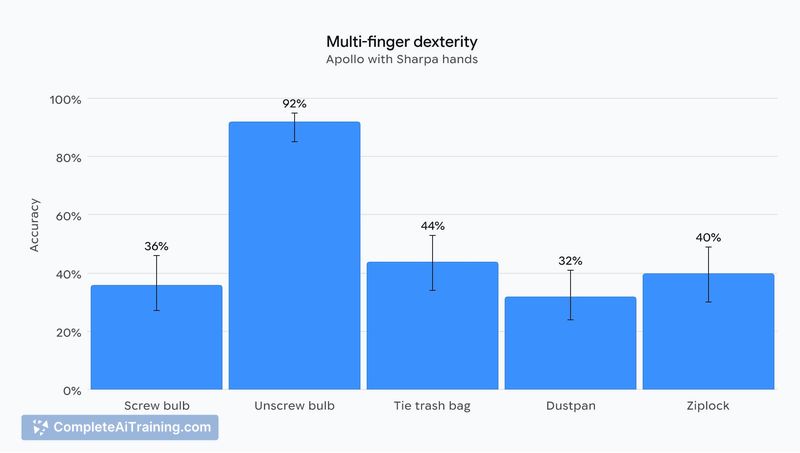
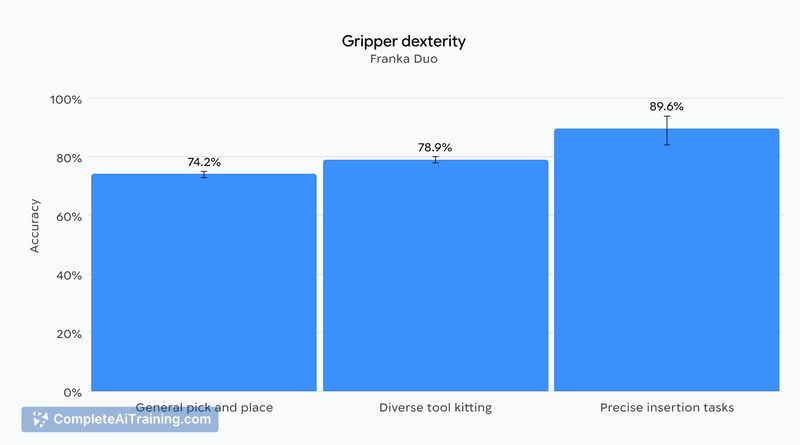
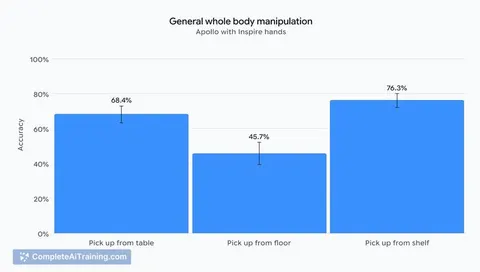
Gemini Robotics 2 enters a growing field of AI-powered robotics, and the listing frames it as a step toward general-purpose physical intelligence. Concrete performance data-task success rates, latency measurements, failure recovery behavior-hasn't been published alongside this preview. Without those figures, the announcement reads more like a research direction than a tool engineers can evaluate today.
Key Features
- Whole-body intelligence that coordinates multiple joints and sensors simultaneously, rather than controlling a single gripper in isolation.
- Dexterous manipulation for handling objects with varied shapes, weights, and surface properties.
- Adaptive reasoning that lets a robot adjust its plan mid-task when the environment changes or an initial grasp fails.
- Compatibility with robots of different sizes and configurations, from stationary arms to mobile humanoids.
- Multi-robot collaboration where two or more robots share a task and coordinate their movements.
Pricing and Value
The Product Hunt listing tags the tool as free, but no licensing details, usage tiers, or future pricing models are specified. It remains unclear whether access is limited to research partners or if a public API or SDK will follow.
Pros
- Built on top of Google DeepMind's Gemini model family, which has a track record in multimodal reasoning.
- Targets whole-body control, not just pick-and-place, which broadens the range of physical tasks a robot can attempt.
- Mentions multi-robot coordination, a capability that many robotics platforms still handle through separate orchestration layers.
- The listing indicates free access at this stage, lowering the barrier for early exploration.
Cons
- No task success rates, latency figures, or failure mode analyses have been shared, making independent evaluation impossible right now.
- The current preview lacks documentation about how the model handles safety constraints or unexpected physical contact during operation.
- Not well suited for teams that need a production-grade robotics stack with defined SLAs, hardware integration guides, and long-term support commitments.
Gemini Robotics 2 will likely interest researchers and advanced robotics labs that want to experiment with vision-language-action models on physical hardware. Teams building commercial automation solutions or those requiring validated safety and reliability metrics will need more detail before they can assess its fit. For now, it works best as a research artifact to study how large multimodal models can bridge the gap between digital reasoning and physical action.
Jobs Gemini Robotics 2 suits
We checked Gemini Robotics 2 against 500+ jobs; these get the most out of it.
Alternatives to Gemini Robotics 2
Other tools that do the same main job. Our AI compared Gemini Robotics 2 with similar tools and kept the ones you could use instead.