AI tool
Graft AI
Graft AI turns internal software like ERPs and spreadsheets into stable tools for AI agents. It helps developers deploy agents that safely execute company workflows with built-in approvals and audit trails.
About Graft AI
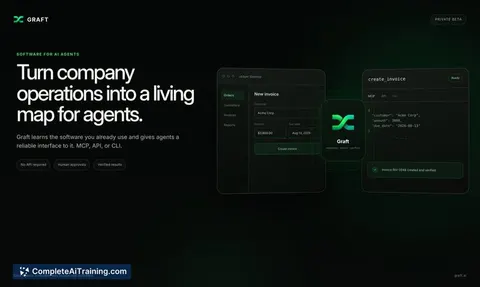
Graft AI is an AI workflow automation tool that turns company operations into a living map for agents. It connects to legacy apps, internal tools, and screen-based workflows where clean APIs don't exist. Instead of expecting structured interfaces, Graft learns how work actually gets done and gives agents stable tools with permissions, approvals, audit trails, and verification built in.
Review
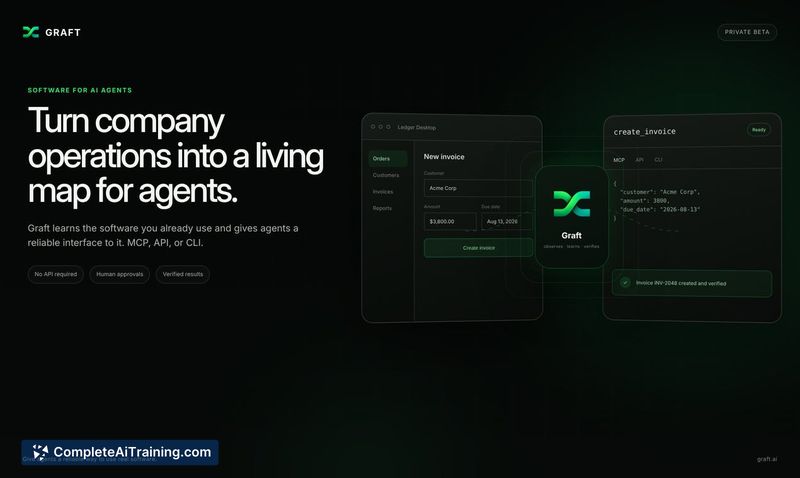
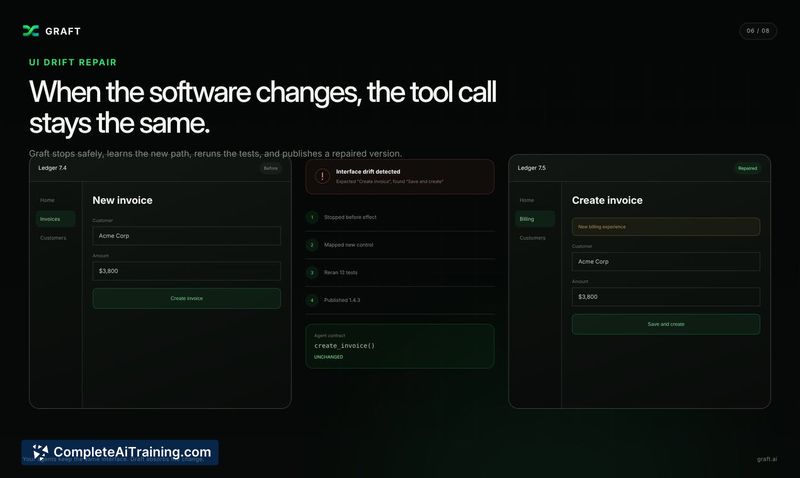
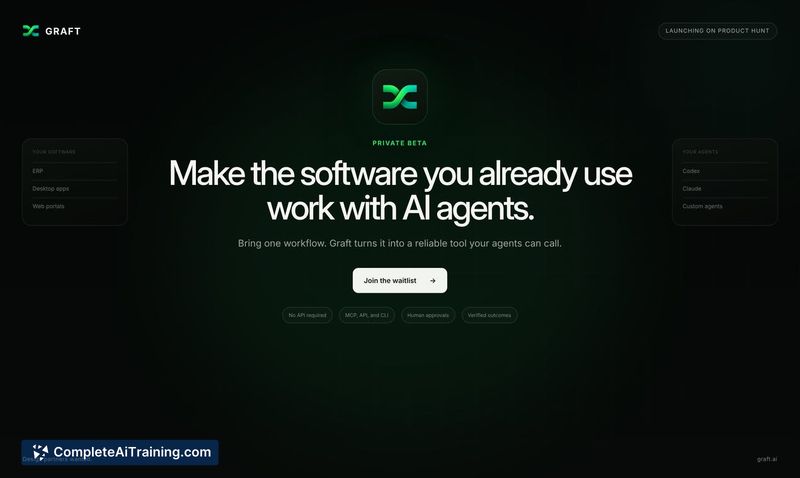
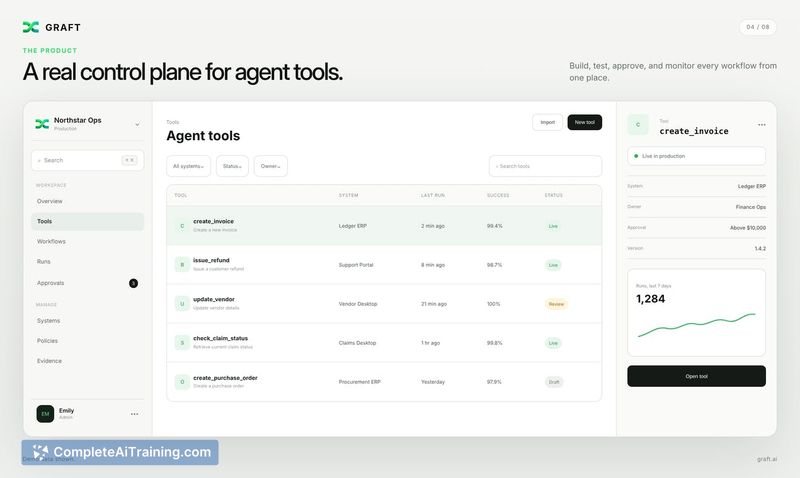
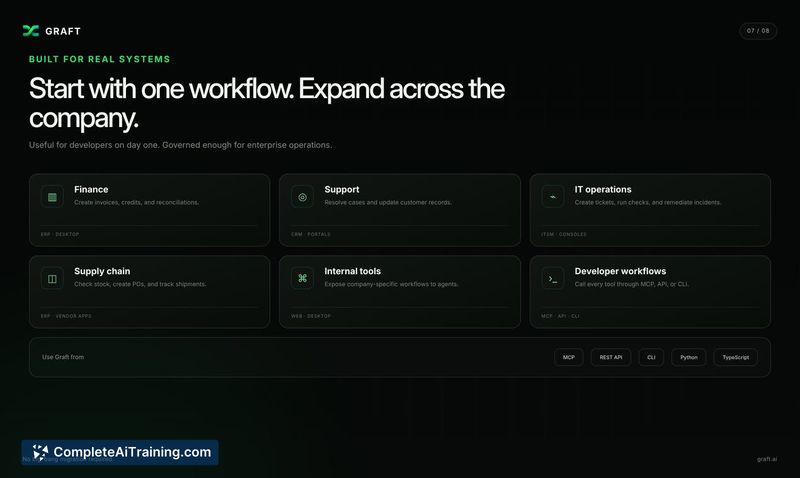
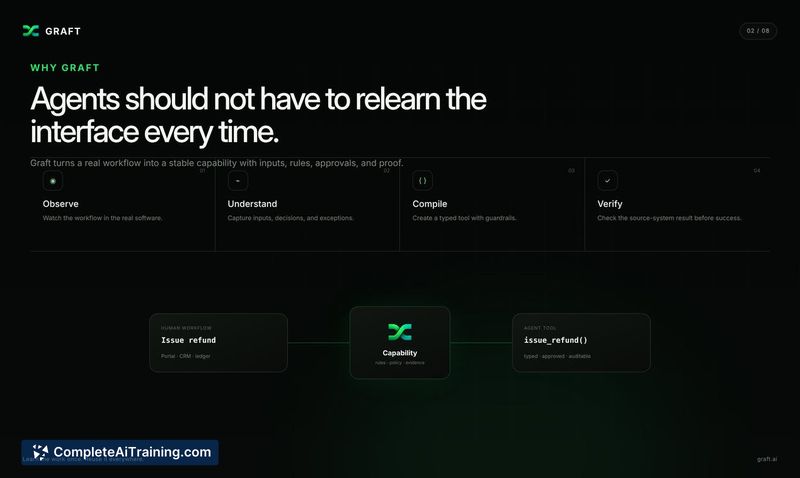
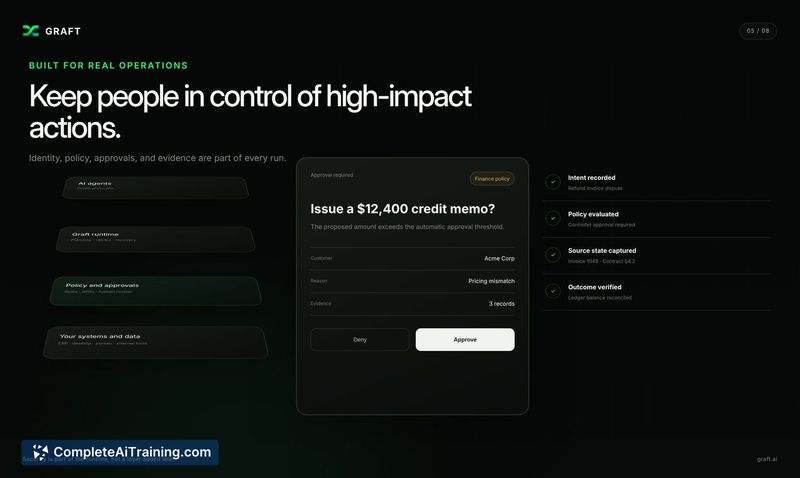
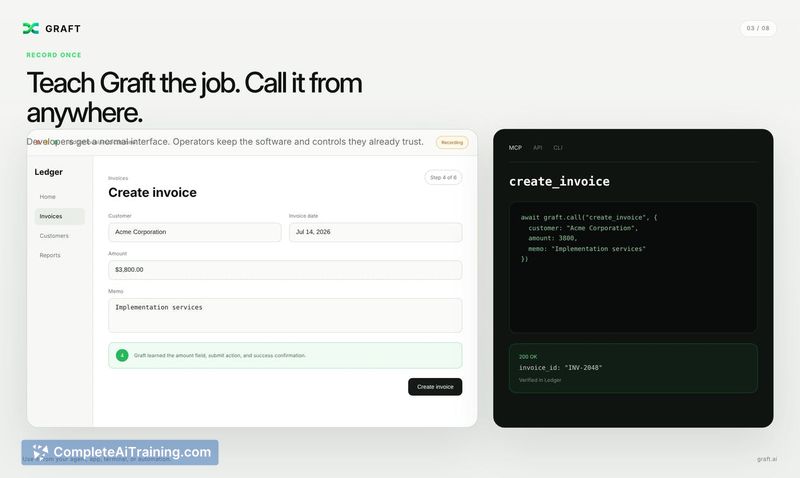
Graft AI tackles the gap between the software companies actually use and the clean API assumptions most agent tools make. It watches real workflow executions, builds an operational map from that activity, and keeps agent-facing interfaces stable even when the underlying UIs shift. The tool is launching early, with a waitlist and an active discussion around how it handles verification, drift, and human judgment.
Key Features
- Creates a living operational map by observing how work flows through ERPs, desktop apps, spreadsheets, and internal portals.
- Exposes stable tools for agents with built-in permissions, approvals, audit trails, and verification steps.
- Detects UI drift on the first failed run, stops before side effects, and can generate and re-test a repair within minutes for simple changes like moved controls.
- Routes ambiguous exceptions or policy boundaries to a human for a decision, then resumes the workflow from the same state.
- Continuously compares real outcomes against the current map, proposes diffs, tests them in shadow mode, and asks for review only when a change is risky or uncertain.
Pricing and Value
Graft AI is currently in an early launch phase. Interested users can join a waitlist at graft.axcelner.com. No pricing plans or free tier details have been publicly shared yet.
Pros
- Learns from actual screen-based workflows rather than requiring APIs or documentation.
- Fails closed when business logic drifts, quarantining the tool until it's re-certified.
- Verification combines explicit schemas, business invariants, and learned semantic checks-ambiguous results don't silently pass.
- Human-in-the-loop steps keep people in control for exceptions without pausing entire automation runs.
- Self-repair for simple UI changes reduces the maintenance burden that typically breaks RPA-style automations.
Cons
- Not well suited for organizations that already operate entirely through clean, API-first systems with no screen-based legacy workflows.
- As an early launch, community resources, documentation, and third-party integrations are still minimal.
- Pricing and commercial terms aren't defined, which makes budget planning and procurement difficult.
Graft AI fits teams that need to automate work trapped behind legacy UIs and want built-in safety checks and drift resilience. It's less relevant for environments where everything is already accessible via stable APIs. The living-map approach and automatic repair capabilities address real operational pain points, though practical adoption will depend on how the product matures and what the eventual pricing looks like.
Jobs Graft AI suits
We checked Graft AI against 500+ jobs; these get the most out of it.
Alternatives to Graft AI
Other tools that do the same main job. Our AI compared Graft AI with similar tools and kept the ones you could use instead.