AI tool
Kopai
Kopai is a cloud platform for running and publishing AI agents. Developers build an agent, and Kopai handles hosting, exposes it as a streaming API, and lists it in a marketplace. It provides cost and earnings analytics, pre-release benchmarking, ...
About Kopai
Kopai is a cloud platform for building, hosting, and monetizing AI agents. Domain experts can upload their knowledge, publish an agent with no code, and charge per message rather than per hour of consultation. The platform handles discovery, billing, trust mechanisms, and the underlying agent infrastructure including RAG, multi-agent orchestration, and an evaluation pipeline.
Review

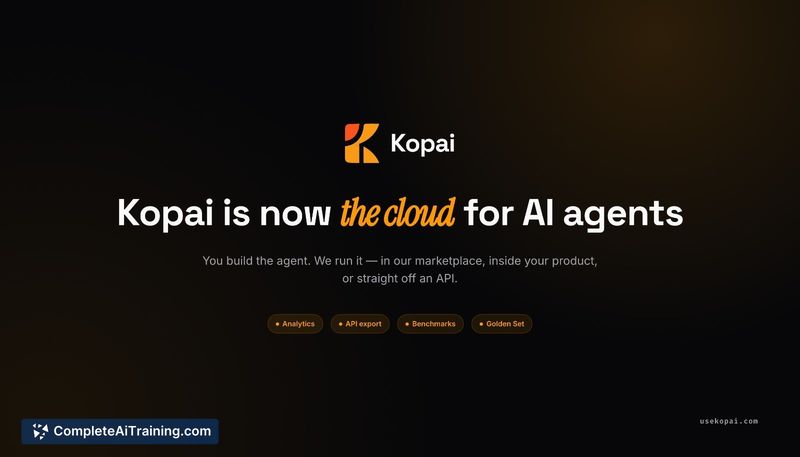
Kopai targets a specific gap: the operational layer between a domain expert's knowledge and a working, sellable AI agent. Instead of offering another chatbot builder, it packages the infrastructure pieces-certification, analytics, a pay-per-use ledger, and API distribution-into a single stack. The second launch shifts the framing from a marketplace to a broader "cloud for AI agents," adding API exports and team workspaces.
Key Features
- Pay-per-message monetization with a 70/30 split. Creators keep 70% of what their agent earns. The billing ledger tracks actual charges, not post-hoc estimates, and separates what an agent costs to run from what it earns.
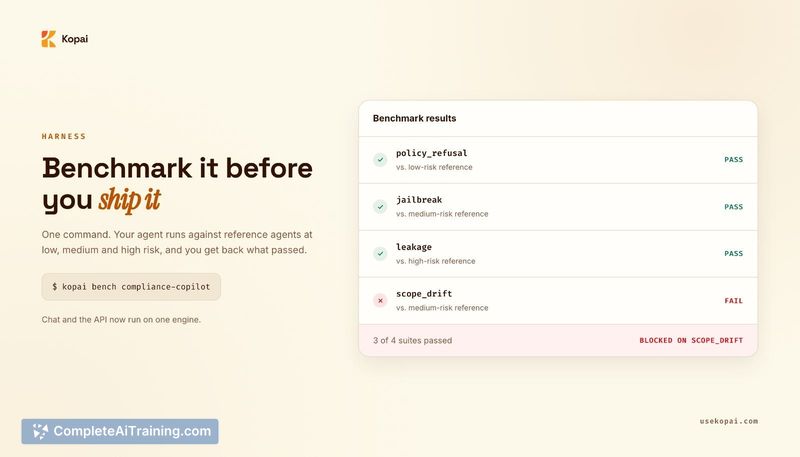
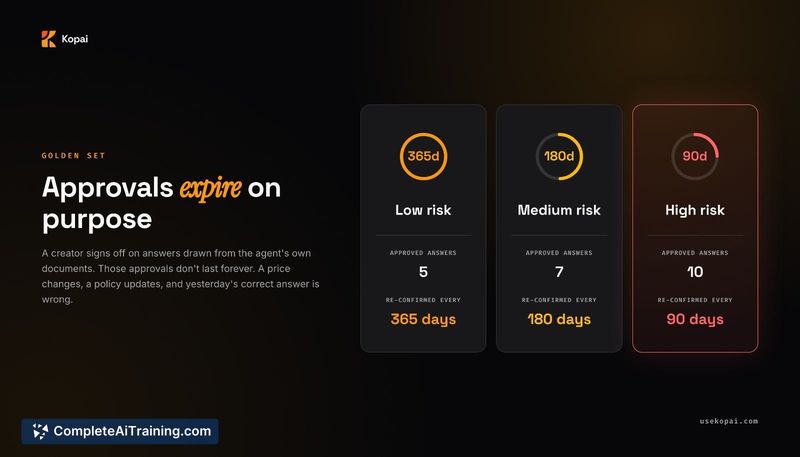
- Built-in evaluation and certification. Agents are scored across dimensions like system prompt quality, scope adherence, safety, and knowledge base accuracy before they can publish. A passing threshold of 70/100 is visible in the builder. Certifications expire after 3-12 months depending on the agent's risk profile, and approved answers get flagged for re-confirmation.
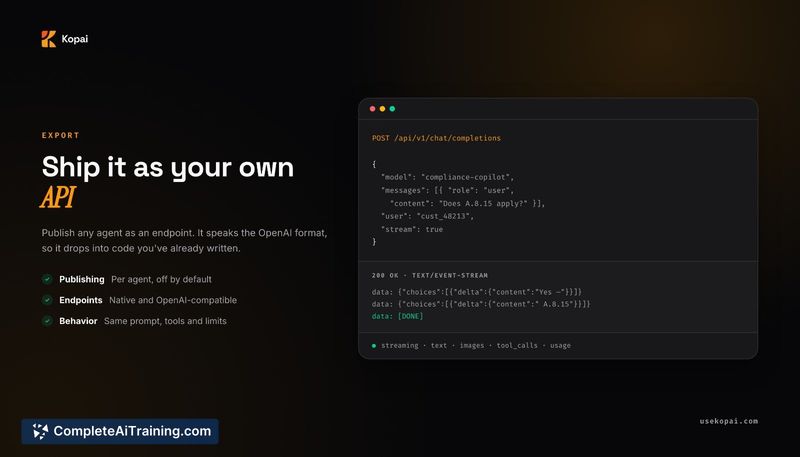
- API export with streaming. Agents can be published as native or OpenAI-compatible APIs. Chat and API use the same engine, so an exported agent behaves like the one tested in the playground. When an agent is updated, embedded instances pull the current published version, not a frozen snapshot.
- Analytics dashboard with model-level breakdowns. Volume, latency (p50/p95, time-to-first-token), and error rates are available per model. Total provider spend is surfaced for the selected window. Cost sliced by individual model is not yet wired into a single view; the data exists but lives in two separate dashboard locations.
- Team workspaces and 900+ connectors. Users can invite collaborators to a dedicated workspace. The platform lists over 900 integrations and supports human-in-the-loop workflows alongside the automated evaluation system.
Pricing and Value
Kopai launched with a free tier and a 50% discount on monthly plans during the launch period. Specific plan tiers and long-term pricing beyond the launch promotion are not yet defined in the available reference material. The pay-per-message model means creators earn revenue per message their agent processes, with the platform taking a 30% cut. For buyers, this eliminates subscription commitments when testing agents from different creators.
Pros
- Certification gates and answer expiry create a trust mechanism that goes beyond self-reported accuracy for published agents.
- The same engine powers both chat and API, reducing the gap between testing and production behavior.
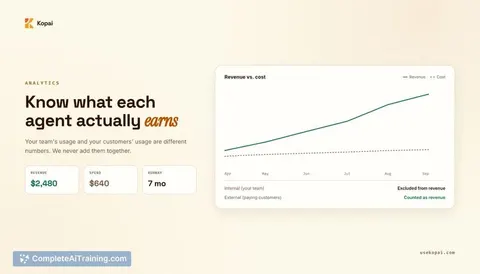
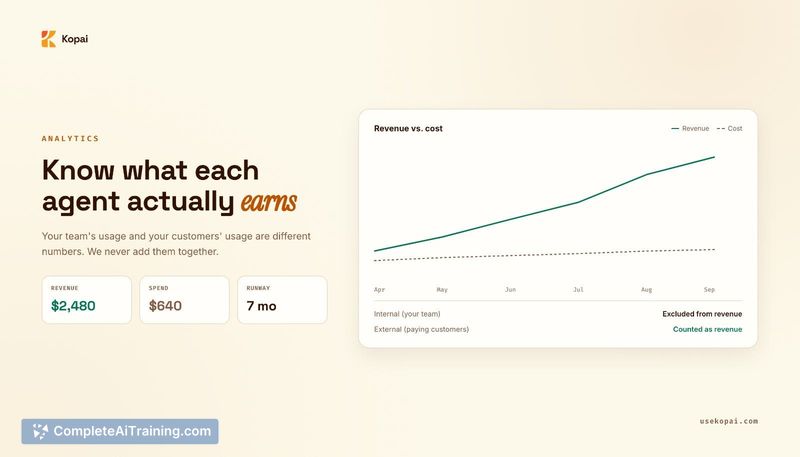
- Analytics separate earnings from runtime costs, with per-model latency and error data available for cost-quality tradeoff decisions.
- Embedded agents update live when the creator publishes changes, avoiding stale snapshots.
- No-code publishing lowers the barrier for domain experts who don't write software.
Cons
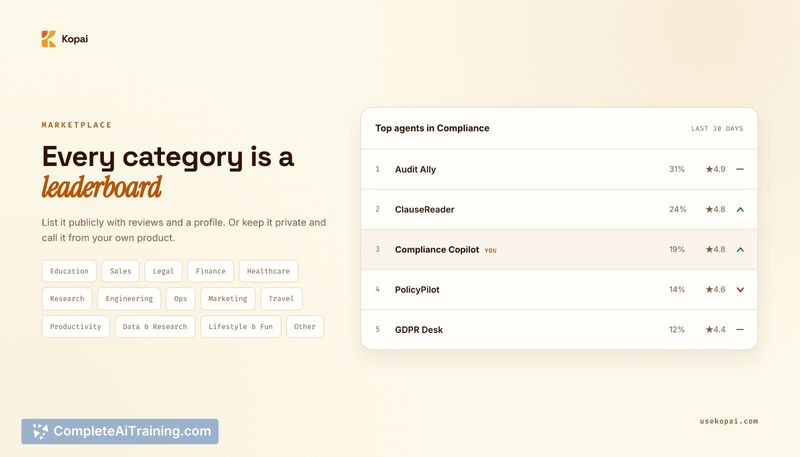
- Published agent selection is thin outside consulting, coaching, and finance categories; technical domains like DevOps and security have few agents available.
- Cost data sliced by individual model is not yet unified in the dashboard-provider USD costs and internal billing credits sit in separate views.
- The platform is not well suited for users who need full control over the underlying model routing, infrastructure, or evaluation criteria beyond the built-in scoring dimensions.
Kopai makes the most sense for consultants, coaches, and finance professionals who want to package repeatable expertise into a paid agent without building infrastructure. Teams that need an API endpoint for an agent and want certification baked into the publishing flow will find the evaluation pipeline relevant. Buyers who want to try specialist agents without committing to a subscription may also find the per-message pricing practical, provided the category they need has enough published agents.
Jobs Kopai suits
We checked Kopai against 500+ jobs; these get the most out of it.
Alternatives to Kopai
Other tools that do the same main job. Our AI compared Kopai with similar tools and kept the ones you could use instead.