AI tool
Loomal
Loomal gives AI agents a real identity: DKIM-signed inboxes, per-agent AES-256 encrypted vault, scoped TOTP 2FA and audit logs - one MCP API so agents can act and remain auditable.

About Loomal
Loomal is an identity infrastructure service for AI agents that provides per-agent inboxes, encrypted secret vaults, and per-action two-factor authentication through a single API. It aims to replace brittle credential workarounds by giving agents verifiable identities and auditable actions.
Review

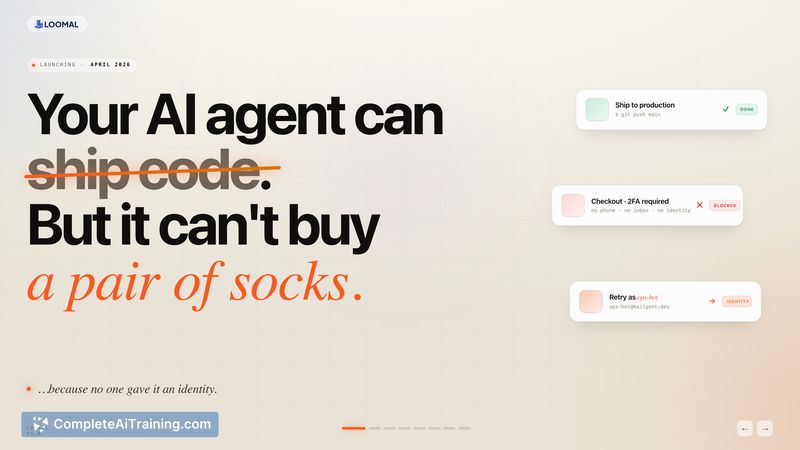
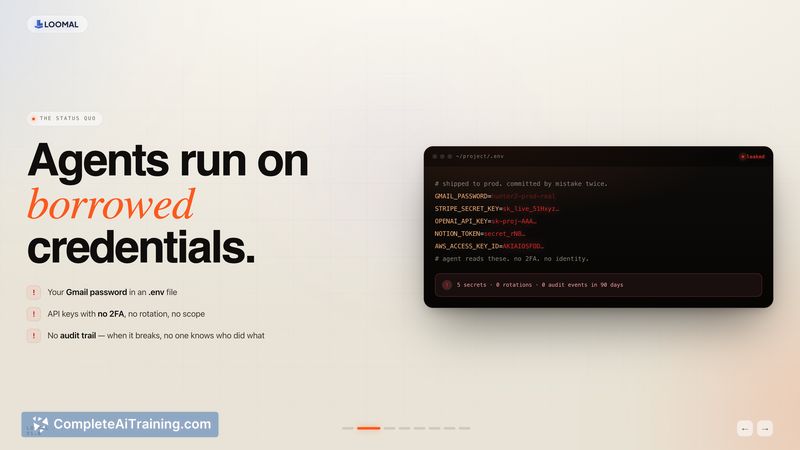

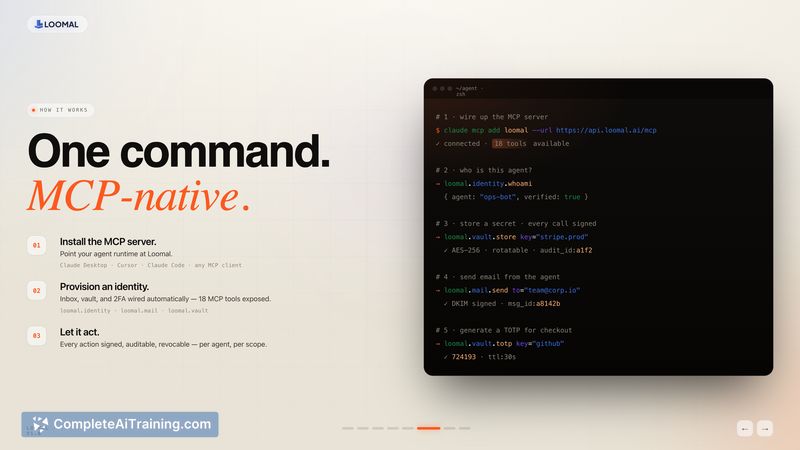

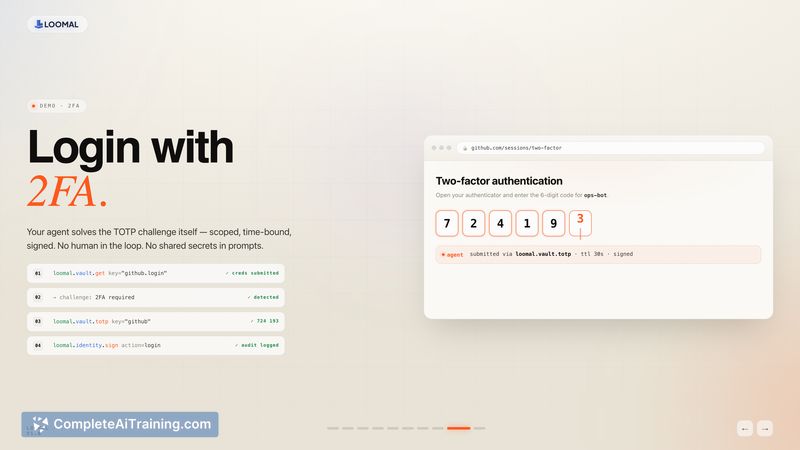
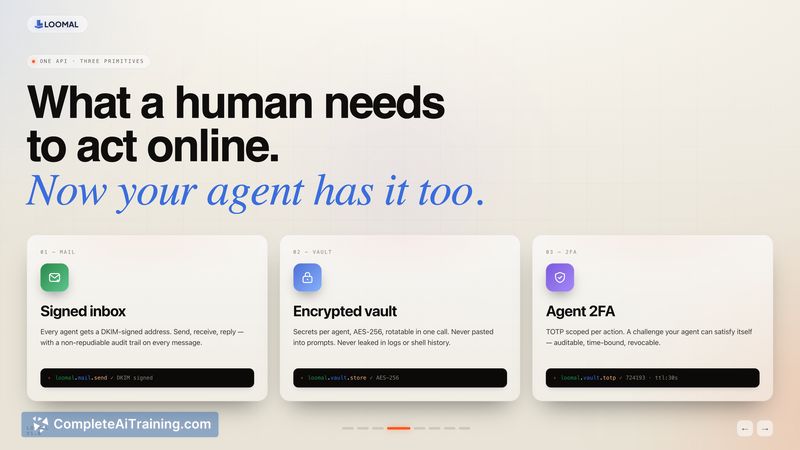
Loomal focuses on the practical problems that appear when agents interact with real web services: shared credentials, missing audit trails, and 2FA challenges. The product packages three core primitives-DKIM-signed inboxes, an encrypted vault, and scoped TOTP-into an MCP-compatible API and a console for monitoring agent activity.
Key Features
- DKIM-signed per-agent inboxes for attributable email activity.
- Encrypted per-agent vault (AES-256) with rotatable secrets to avoid storing keys in prompts or .env files.
- Per-action 2FA/TOTP scoped to agents, producing audit logs for each authentication event.
- MCP server exposing multiple tools (mail.send, vault.store, vault.totp, identity.sign, calendar.create, etc.) and native support for popular agent frameworks.
- Web Console that aggregates each agent's inbox, vault entries, and audit trail for troubleshooting and oversight.
Pricing and Value
At launch, Loomal lists a free entry point for trying the service. Detailed paid tiers, rate limits, and enterprise SLAs are not fully published on the launch page, so teams expecting production usage should review the documentation or contact the provider for limits and support options. The core value proposition is reduced operational risk: by giving agents distinct, auditable credentials and a secrets vault, Loomal can simplify moving agent prototypes toward more controlled deployments.
Pros
- Provides clear attribution for agent-driven emails via DKIM-signed inboxes.
- Encrypts and scopes secrets per agent, removing the need to hard-code credentials in prompts or environment files.
- Per-action 2FA and audit logs help diagnose failures and improve accountability.
- MCP-native with integrations for common agent frameworks, making it straightforward to plug into existing agent runtimes.
- Console centralizes visibility into agent identities and actions, which aids debugging and governance.
Cons
- Newly launched: feature maturity, long-term pricing, and enterprise support details are still evolving.
- Teams may need to adapt their agent runtimes to MCP semantics and the Loomal API, which adds integration work.
- Depending on adoption, there may be vendor-specific behaviors to account for when migrating agents later.
Overall, Loomal is best suited for developers and teams building autonomous agents who need safer credential handling, per-agent accountability, and reproducible audit trails. For experimental projects and early production pilots that deal with email, 2FA, or secrets management for agents, it can significantly reduce friction; larger organizations should confirm capacity, support, and pricing details before full rollout. For more information, see the official site and documentation at https://loomal.ai and https://docs.loomal.ai.
Jobs Loomal suits
We checked Loomal against 500+ jobs; these get the most out of it.