AI tool
MCP Bridge by Appfactor
MCP Bridge by Appfactor auto-generates typed MCP schemas for SOAP, gRPC and REST, inferring schemas for APIs without OpenAPI and handling variable response shapes and inconsistent auth so agents can call customer APIs reliably.

About MCP Bridge by Appfactor
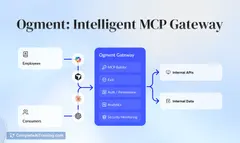
MCP Bridge by Appfactor connects AI agents to a wide range of APIs by auto-generating MCP tool definitions with typed schemas, authentication support, rate limiting, and response processing. It is offered as a self-hosted, open-source option so credentials and runtime logic can remain within your environment.
Review

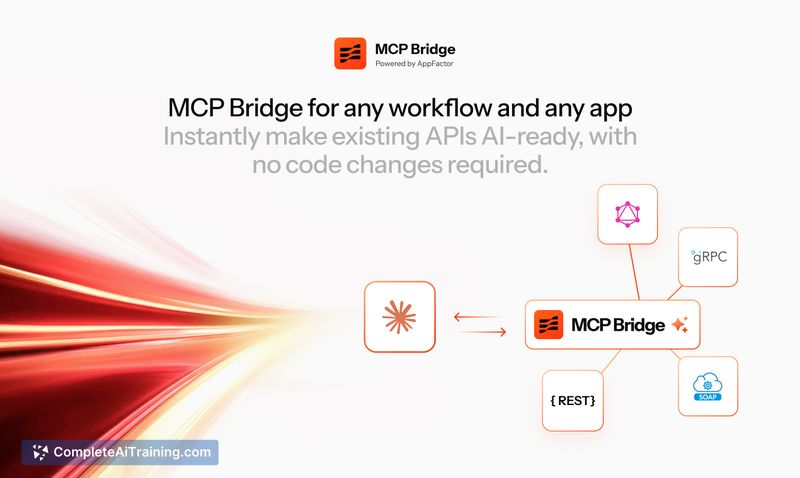
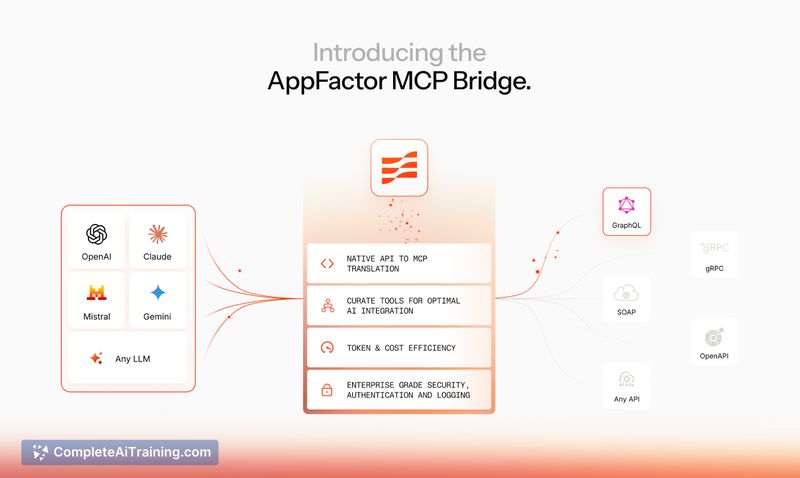
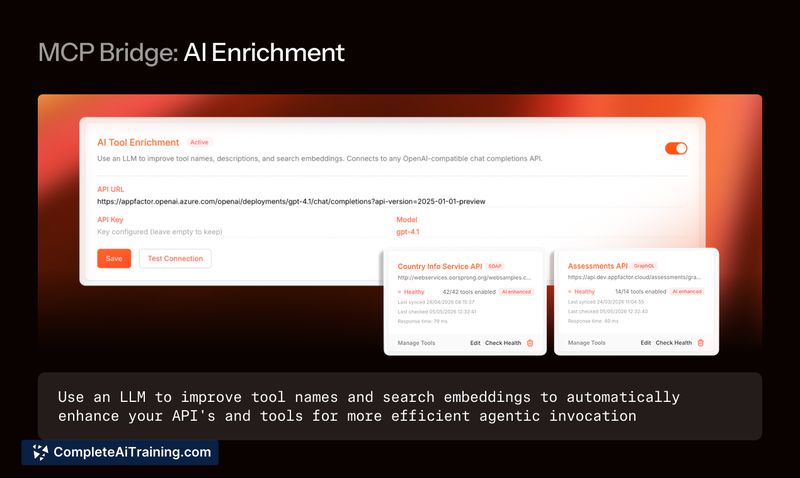
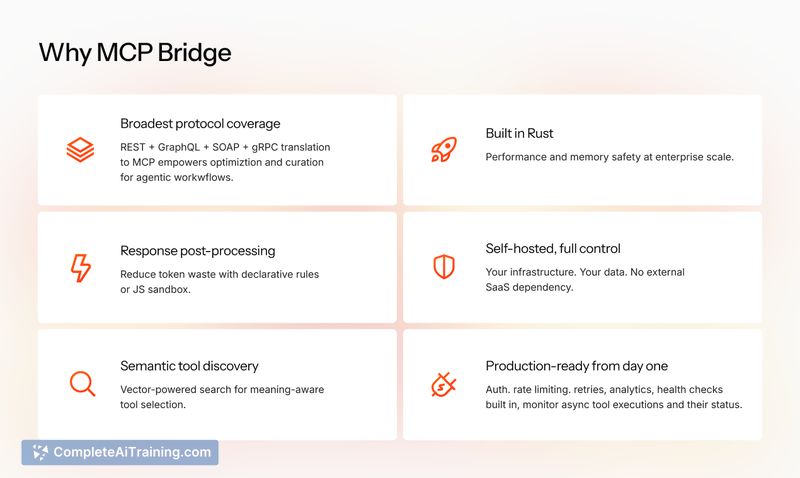
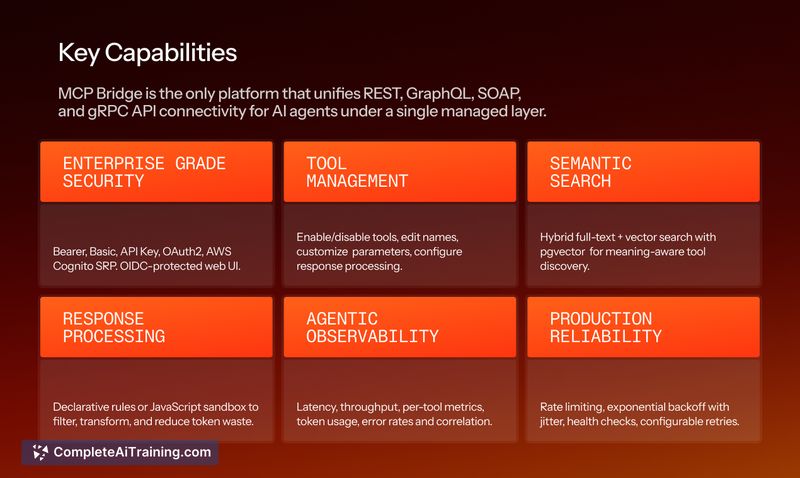

MCP Bridge by Appfactor aims to reduce the manual work of exposing APIs to agent workflows, especially when dealing with REST, GraphQL, SOAP, and gRPC systems. It combines automated schema generation with an editable tool builder and a sandboxed transform layer to handle real-world API inconsistencies.
Key Features
- Multi-protocol support: auto-generate typed MCP tools for REST, GraphQL, SOAP, and gRPC with schema inference via introspection or WSDL where available.
- Editable tool definitions and response normalization: a sandboxed transform slot (JavaScript) lets you normalize inconsistent responses and map canonical field names.
- Custom auth and composed flows: support for multi-step auth handshakes, custom auth handlers, token caching, and packaging multi-call flows as a single tool.
- Governance and observability: per-tool scoping, audit logs, analytics (latency, token cost, errors), and human-in-the-loop approvals for destructive operations.
- Self-hosted and open-source implementation with multiple auth methods and a focus on keeping credentials local.
Pricing and Value
At launch there are free options and an open-source, self-hosted distribution that minimizes vendor lock-in. The primary value is time saved by avoiding hand-written tool wrappers and by centralizing auth, governance, and observability across many agents. Organizations should factor in hosting, maintenance, and security operational costs when assessing total cost of ownership.
Pros
- Supports a broad set of protocols (REST/GraphQL/SOAP/gRPC), including server reflection for some protocols to reduce manual work.
- Editable, auditable tool definitions and a sandbox for response transforms let teams reconcile documented specs with production behavior.
- Built-in patterns for complex auth flows and token handling reduce boilerplate and agent-side complexity.
- Governance features (scoping, audit trails, analytics, approval flows) are useful for production deployments.
- Open-source, self-hosted option keeps sensitive credentials and integrations under your control.
Cons
- REST auto-inference is limited: an OpenAPI spec is still required for best results, so legacy REST endpoints may need extra work.
- Messy or highly variable APIs often require manual transforms and ongoing tuning to keep tool definitions accurate.
- Self-hosting places responsibility for security, monitoring, and scaling on the deploying team, which can increase operational overhead.
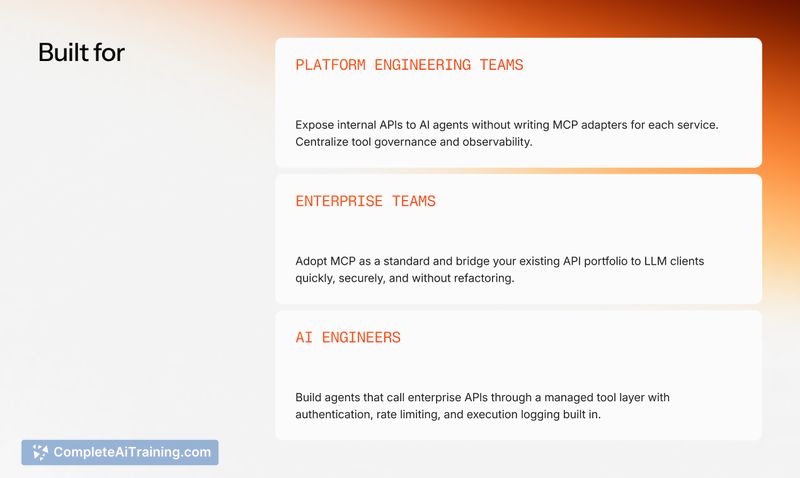
MCP Bridge by Appfactor is well suited for engineering teams and organizations that need a central connectivity layer for multiple agents and heterogeneous APIs, or for those who require on-premises control of credentials and tooling. Smaller teams or projects without dedicated operations resources should weigh the maintenance and security responsibilities before adopting a self-hosted solution.
Jobs MCP Bridge by Appfactor suits
We checked MCP Bridge by Appfactor against 500+ jobs; these get the most out of it.
Alternatives to MCP Bridge by Appfactor
Other tools that do the same main job. Our AI compared MCP Bridge by Appfactor with similar tools and kept the ones you could use instead.