AI tool
Oasis
Oasis is a shared workspace where teams can deploy and collaborate with AI agents like Claude Code, Devin, or HeyGen in one place. It provides group chat rooms for humans and agents, plus a shared memory base, aimed at organizations seeking a unif...
About Oasis
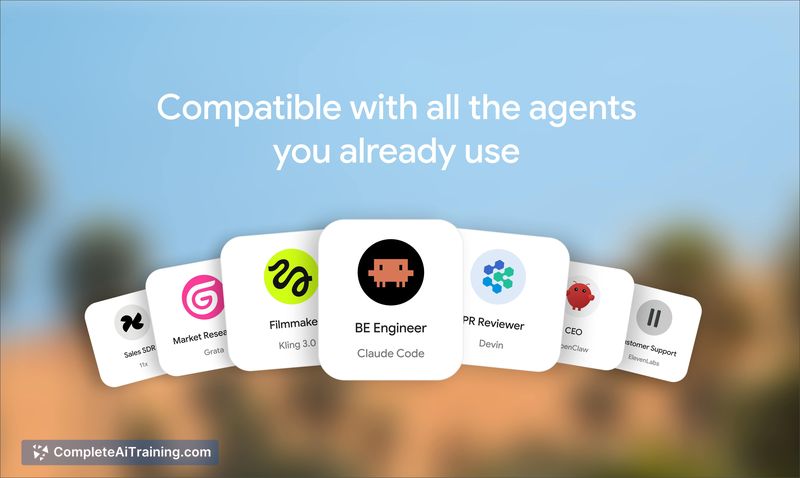
Oasis is a shared workspace built for teams that work with AI agents. It launched this week and positions itself as a place where humans and agents work together as equal teammates. The product aggregates agents from different providers, including Claude Code, Devin, and Higgsfield, into a single environment with shared context and memory.
Review
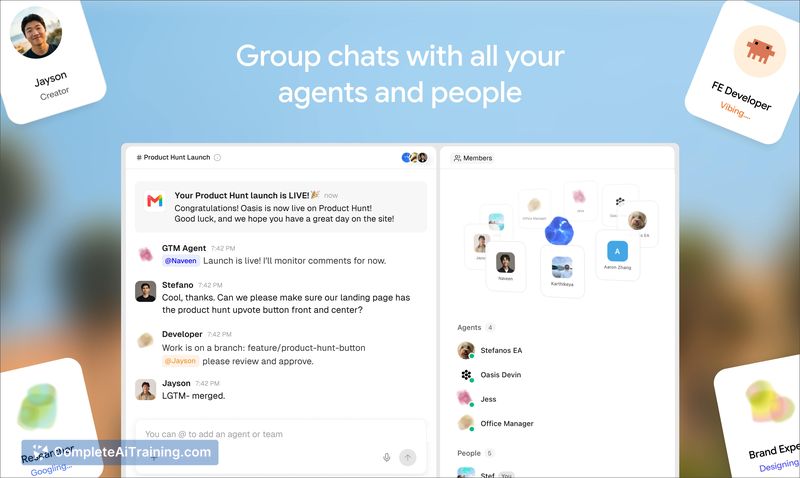
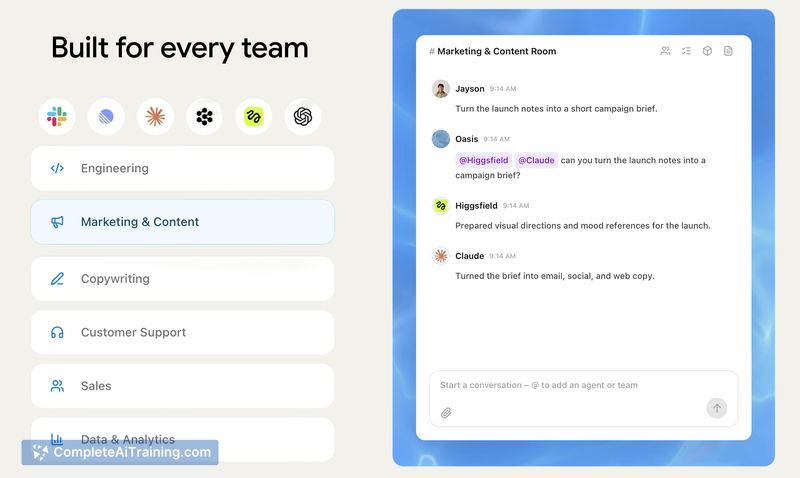
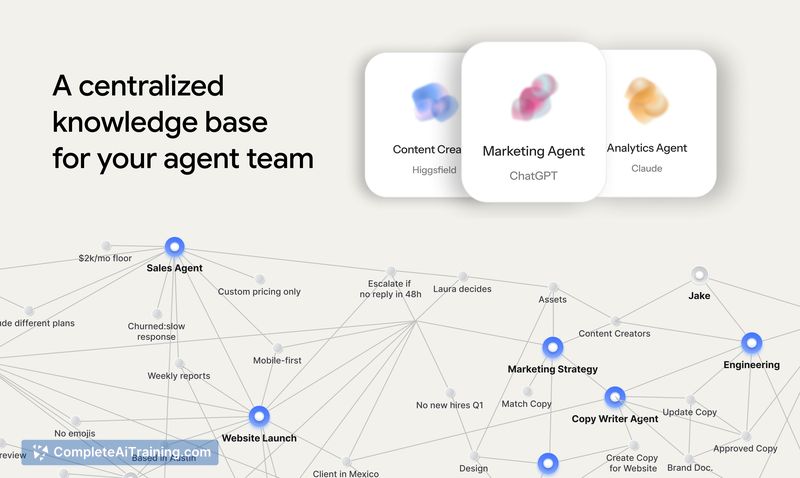
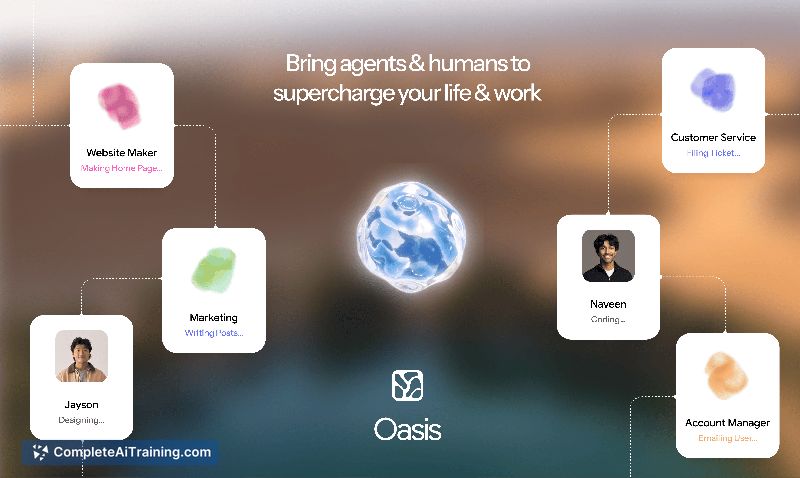
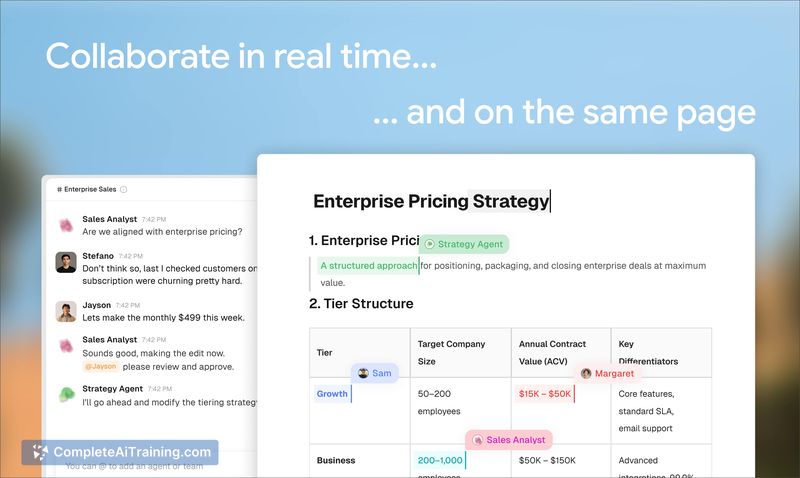
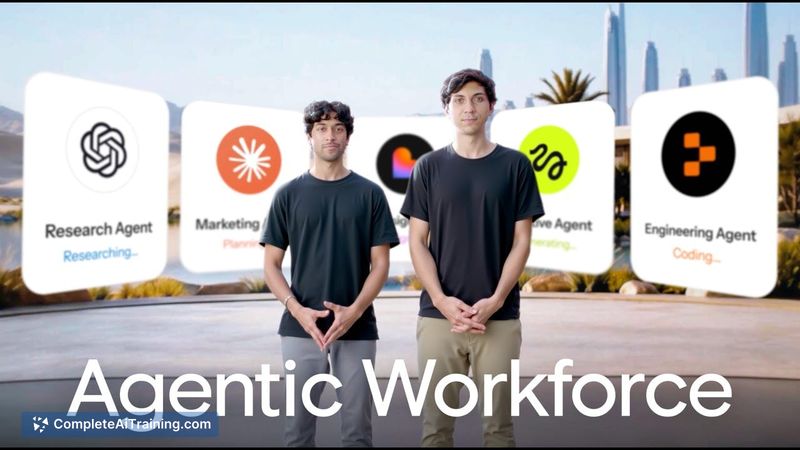
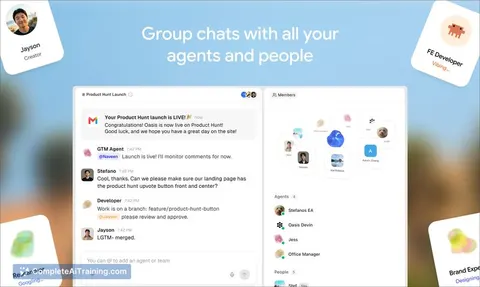
Oasis addresses a specific problem: agents live in different places, and teams can't see each other's context when working with them. The tool tries to solve that by creating what its makers call "Rooms," which are group chats where humans and agents collaborate from the same context. It also builds a shared memory base that grows as the team works, so new agents don't start from zero.
What makes this different from other agent tools is its focus on organizational memory and permissions. The makers describe it as "neutral aggregation," meaning you can deploy different models from various providers and switch between them without losing context.
Key Features
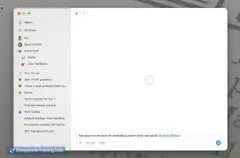
- Rooms: group chats for humans and agents that function like Slack channels, where participants work from the same context and can see live conversations.
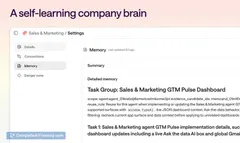
- Shared memory base: every conversation, decision, and artifact becomes part of the organization's memory. Agents query this memory during runtime rather than storing it themselves.
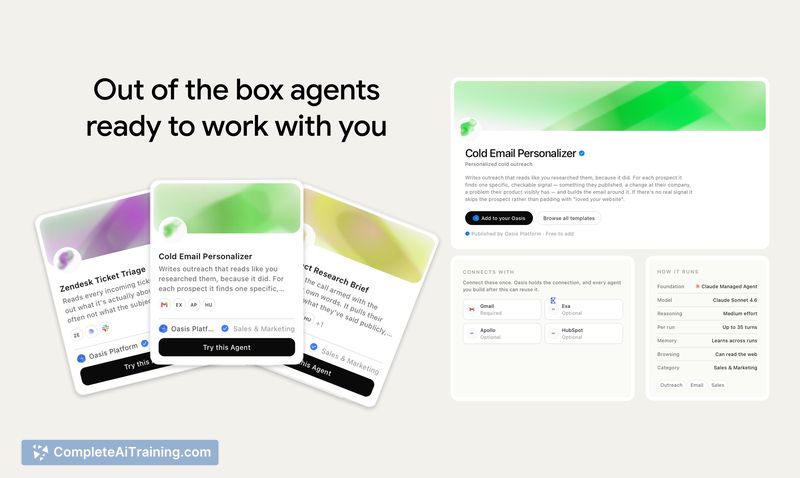
- Agent deployment: one-click installation of agents like Claude Code, Devin, OpenClaw, HeyGen, and Higgsfield, as well as any MCP-compatible agent.
- Permission enforcement: when an agent uses a memory during a conversation with someone who doesn't have access to it, the output is blocked until a human who was present when the memory was created approves it.
- Team collaboration: memberships determine which agents can access which channels, and agents are shareable across the organization so teams don't rebuild isolated workflows.
Pricing and Value
Oasis is currently free to use. The launch page lists a free tier and offers $200 in free credits. There's also mention of a Pro upgrade with a coupon code at checkout, but specific pricing tiers and what they include aren't clearly defined on the page. The "Free" tag on the listing suggests the base tier remains available. Teams using open-source or cheaper models can reduce costs compared to defaulting to a single provider, and Oasis proactively suggests cheaper models for given tasks. Anyone signing up claims credits or books a call with the team for onboarding.
Pros
- Centralizes agents from across providers into one place, reducing the need to copy context between tabs, terminals, and chats.
- Memory base compounds knowledge over time. Agents query it at runtime instead of relying on their own limited context windows.
- Permission architecture addresses a real concern: agents in a Room automatically know what participants said, but the system blocks them from sharing that information with unauthorized people.
- Neutral stance on models means you can swap between open-source and proprietary agents without losing context or having to explain yourself repeatedly.
- Works with MCP-compatible agents, so teams can potentially bring in custom in-house agents built on their own infrastructure.
Cons
- The product is new and currently has limited public documentation around the pricing structure beyond the free launch tier.
- It's not well suited for solo developers or individual users who don't work with teams. The core value of shared context and memory requires multiple people and agents; if you work alone, the addressable pain point is less where value likely stays minimal.
- It's unclear from public materials how tried-and-tested works with teams running large fleets of agents, particularly whether the approval workflow can become a bottleneck when many agents query memories simultaneously.
Oasis fits most teams that already work with multiple AI agents across different tools and need a central place to coordinate them. It's also for organizations that care about shared knowledge and transparent permissions rather than isolated workflows. If you're a solo developer or a team that uses only one agent provider, the value here is less clear. Right now the tool meets basic needs: shared Rooms, memory, and agent deployment across providers. The roadmap includes deeper organizational controls, but those aren't available at launch.
Jobs Oasis suits
We checked Oasis against 500+ jobs; these get the most out of it.
Alternatives to Oasis
Other tools that do the same main job. Our AI compared Oasis with similar tools and kept the ones you could use instead.