AI tool
Open Index
Open Index provides a structured context layer for AI agents by defining entities and their relationships. It helps developers in domains like security and legal build agents that can navigate complex information graphs effectively.

About Open Index
Open Index is an open-source structured context layer for AI agents, launched this week by the team at DrDroid. It lets developers define domain entities, map the relationships between them, and give agents a navigable graph instead of flat markdown documents. The project addresses problems like context poisoning, contradictions, and non-determinism that come with markdown-based context management.
Review

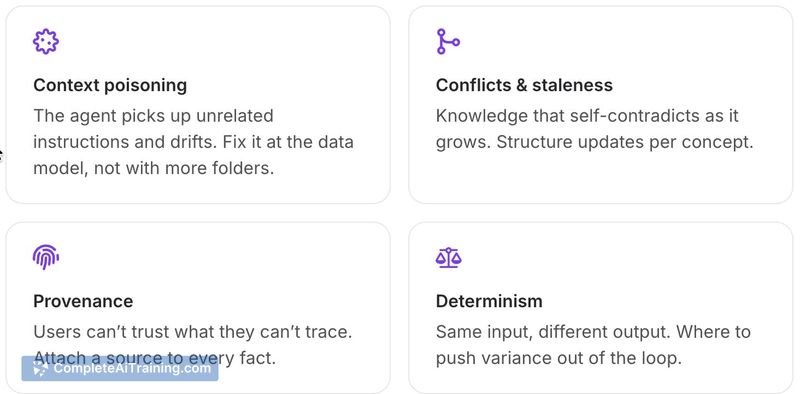
Open Index tackles a specific pain point: agents given more context often perform worse, not better. The tool reworks how context is organized, turning it into a structured graph of entities and relationships. This is a v1 release, and the team is explicitly inviting community feedback and experimentation.
Key Features
- Structured context layer: Define entities that matter in your domain and connect relationships between them.
- Navigable graph for agents: Agents receive a graph structure they can traverse, rather than long unstructured prompts.
- Open source: The full codebase is publicly available under an open-source license.
- Domain-agnostic design: Built initially for DrDroid's internal use, the team reports the same approach can apply to security, support, legal, insurance, sales, and other complex domains.
Pricing and Value
The tool is listed as free on its product page and the codebase is open source. There is no pricing structure to analyze, and no paid tiers are mentioned. The current version carries no cost to adopt, though roadmap details and future licensing changes are not specified.
Pros
- Directly targets the context-poisoning and navigation problems that emerge with long markdown documents.
- Builds on production experience from DrDroid, where the team applied it internally before releasing it publicly.
- Open source code means teams can inspect, modify, and self-host the entire system.
- The launch post encourages community contributions and acknowledges the project is early-stage.
Cons
- Documentation and setup guides are not yet detailed on the product page, so new users will need to explore the repository themselves.
- There is no published benchmark data comparing agent performance on Open Index versus a vector store with the same data.
- Teams without domain-modeling experience may struggle to define the right entities and relationships, so it is not well suited for those looking for a plug-and-play context solution with zero configuration.
Open Index is aimed at development teams building agents in domains with complex, relationship-heavy context such as support, legal, or sales. It is most useful when you have well-defined entities and are already comfortable with graph-based data modeling. If you prefer minimal setup or lack the bandwidth to design an entity model, you might want to watch for future releases and community documentation.
Jobs Open Index suits
We checked Open Index against 500+ jobs; these get the most out of it.