AI tool
Opengeni
Opengeni is an open-source agent infrastructure toolkit for developers. It provides ready-to-use sessions, sandboxes, API integrations, human approvals, and cost visibility so teams can ship agents in their products.
About Opengeni
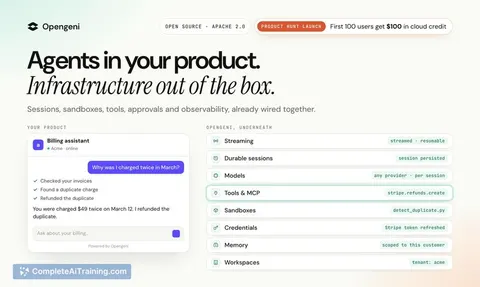
Opengeni is an open-source infrastructure layer for shipping AI agents into production applications. It handles the operational concerns-session persistence, sandboxed execution, integrations, and cost tracking-so development teams can focus on agent logic rather than surrounding infrastructure. The project is released under the Apache-2.0 license and can be self-hosted or run on the managed cloud.
Review
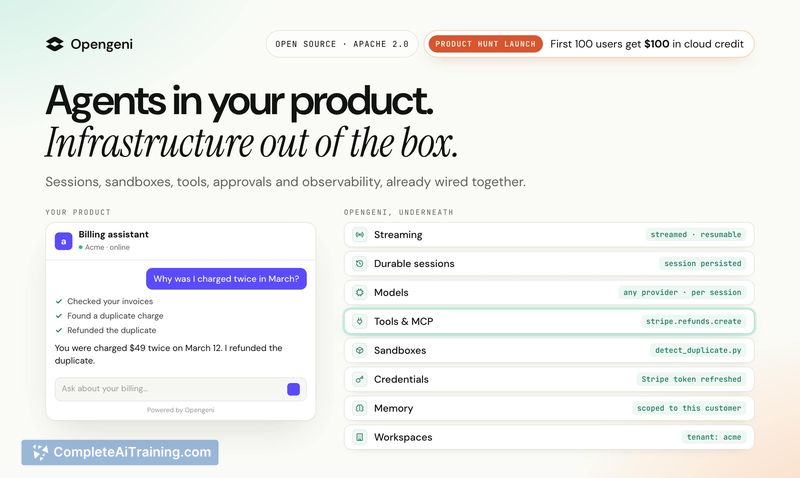
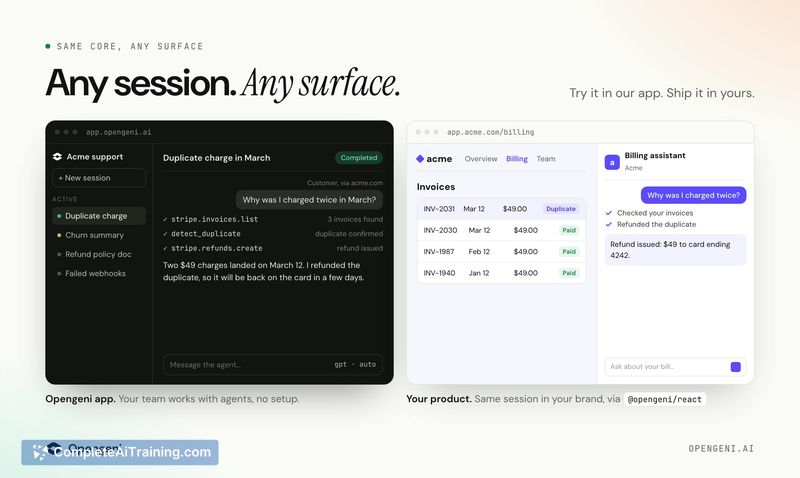
Opengeni entered public preview this week, backed by two years of production experience running agents against cloud infrastructure at CloudGeni. The tool packages the infrastructure components developers repeatedly rebuild when moving agents from prototypes to production: recoverable sessions, isolated execution environments, and observability into every step a model takes. It's currently in early public preview with an active open-source repository.
Key Features
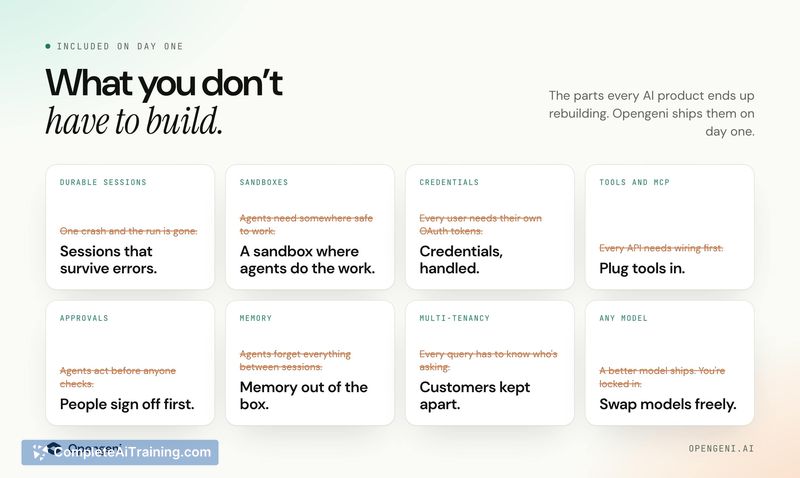
- Sessions that recover from failures and maintain a replayable history, allowing agents to pick up where they left off after a restart or error.
- Isolated sandboxes with built-in credential handling and memory, giving agents a safe place to execute work.
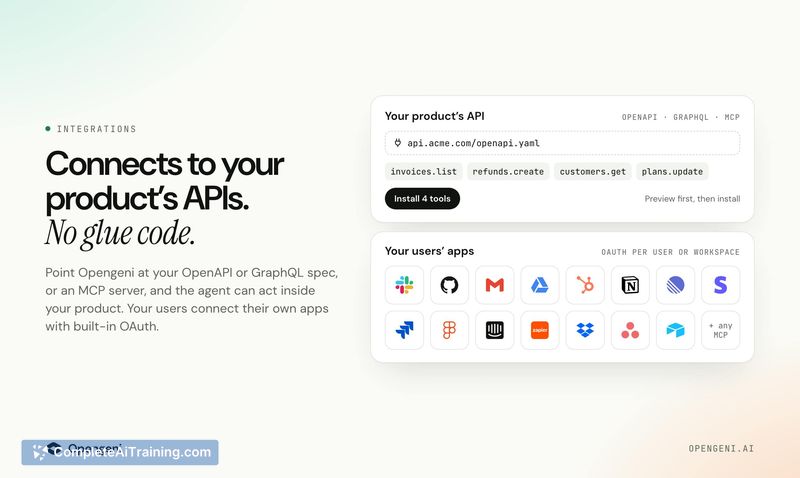
- Over 100 integrations with built-in OAuth, plus the ability to bring your own OpenAPI spec, GraphQL spec, or MCP server.
- Human approval gates that pause agents before risky actions, keeping people in control of consequential decisions.
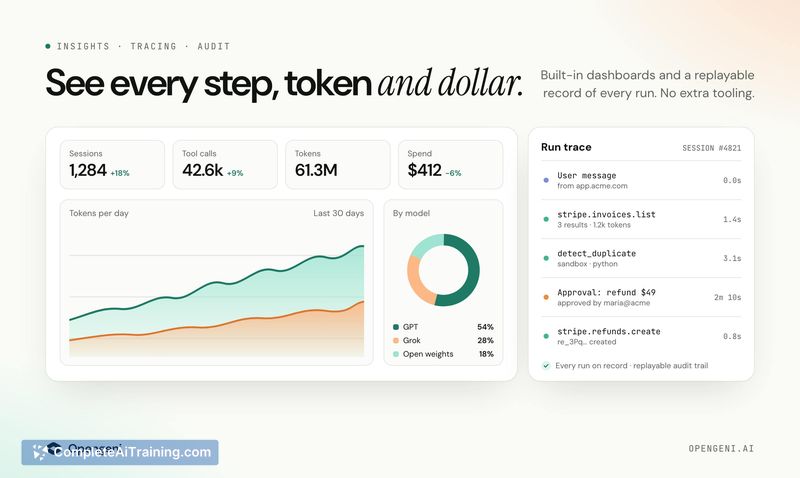
- Built-in dashboards and run traces that show every step, token consumed, and dollar spent per session.
Pricing and Value
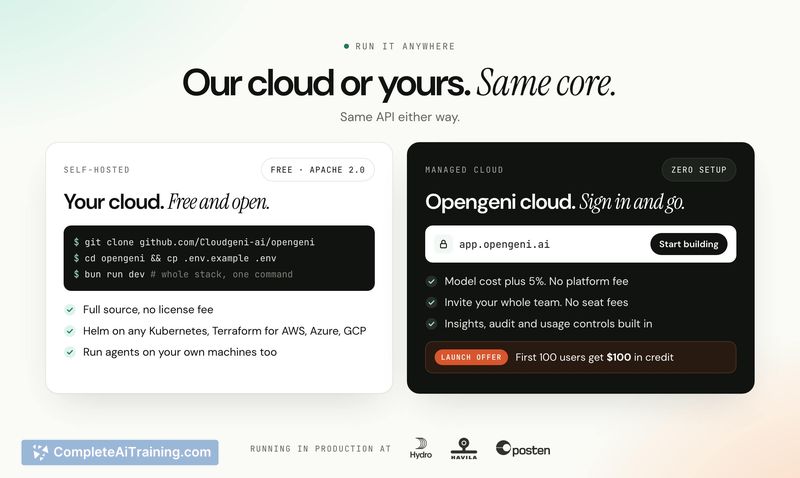
Self-hosting Opengeni is free under the Apache-2.0 license. The managed cloud service charges model cost plus 5%, with no platform or seat fees. For the launch period, the first 100 users receive $100 in cloud credit using the promo code PRODUCTHUNT100. A per-session budget limit that halts runs when reached is not yet available, though cost tracking per user and session is already in place.
Pros
- Open-source codebase lets teams inspect, modify, and self-host the entire infrastructure layer.
- Session recovery and replayable history mean long-running agent tasks survive worker restarts without losing state.
- Workspaces are scoped per customer, with freedom to choose which models to use for different tasks.
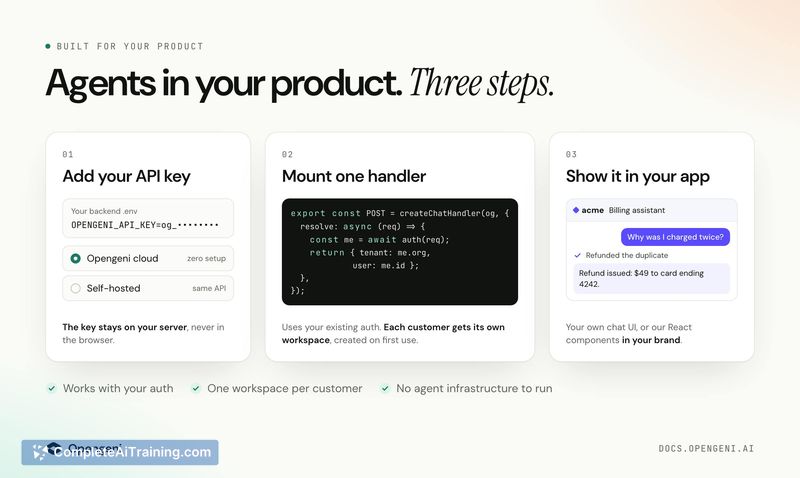
- Background agents don't require an open connection-you send a message, get a 202 response, and the agent continues on a worker.
- Stateless API design allows horizontal scaling by adding more replicas behind the existing Postgres store.
Cons
- The core workers don't scale to zero today; they run as long-running processes on Kubernetes or native cloud, which means idle infrastructure costs persist.
- Budget limits per agent or session are not yet implemented, so cost control relies on monitoring rather than automatic enforcement.
- Teams without an existing SaaS product or clear agent use case may find the infrastructure abstraction unnecessary-Opengeni is not well suited for one-off experiments or projects that don't need multi-tenant, production-grade agent hosting.
Opengeni fits teams that already have a SaaS product and want to embed agents without rebuilding authentication boundaries, execution environments, and observability from scratch. The open-source model makes it viable for organizations with strict data residency or SOC2 requirements who need to run everything on their own infrastructure. For developers still exploring whether agents solve a concrete user problem, starting with a lighter framework and migrating later would be a more practical path.
Jobs Opengeni suits
We checked Opengeni against 500+ jobs; these get the most out of it.