AI tool
Prelint
Prelint reviews coding agent output against specifications and tickets to catch incorrect product decisions. It helps engineering teams ensure AI changes match business requirements before they ship.
About Prelint
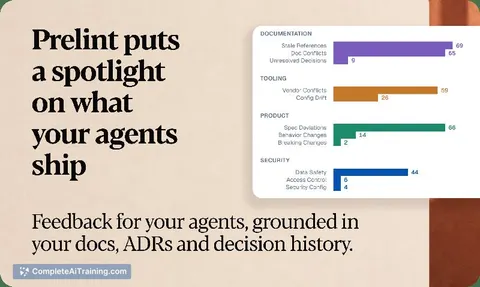
Prelint is a review tool that checks AI-generated pull requests against your architectural decisions, product specs, and past choices. Instead of flagging style issues or broken tests, it catches product drift - the "good code that quietly builds the wrong product." It builds a decision ledger that understands your team's ontology and weighs statements from agents and humans differently.
Review
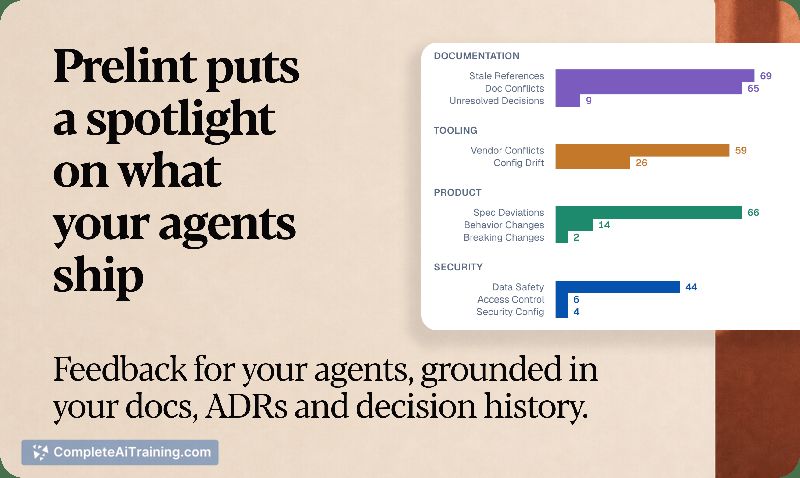
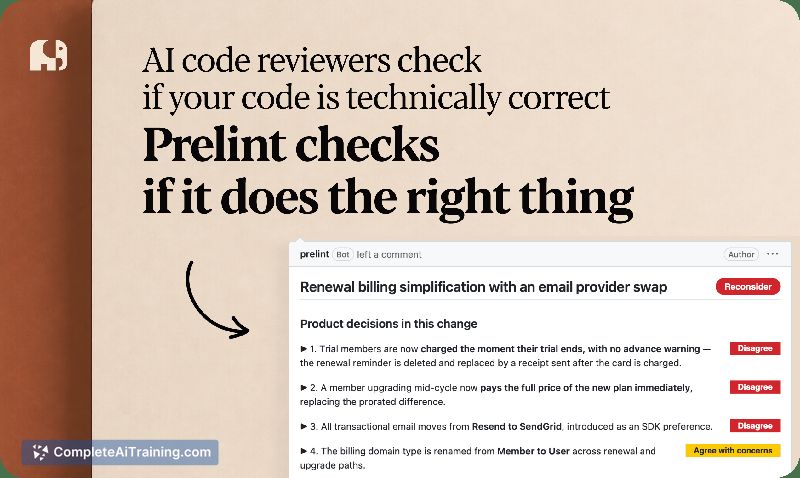
Prelint launched this week with a clear focus: preventing product drift in AI-written code. It sits alongside other AI reviewers and, on teams already using several, roughly 40% of the issues fixed before merge come from Prelint. The tool reads each change with your ADRs, docs, and tickets, then explains what the agent decided, what the consequences are, and how hard the choice will be to reverse.
Key Features
- Constructs a decision ledger that captures your business ontology, compliance patterns, and design patterns automatically from code and documentation.
- Flags architecture drift, breaking design patterns, and decisions agents made that conflict with existing ADRs or product context.
- Weighs statements by authority - human decisions carry more weight than agent-suggested ones, and speculative remarks from Slack or meetings are treated as signals, not directives.
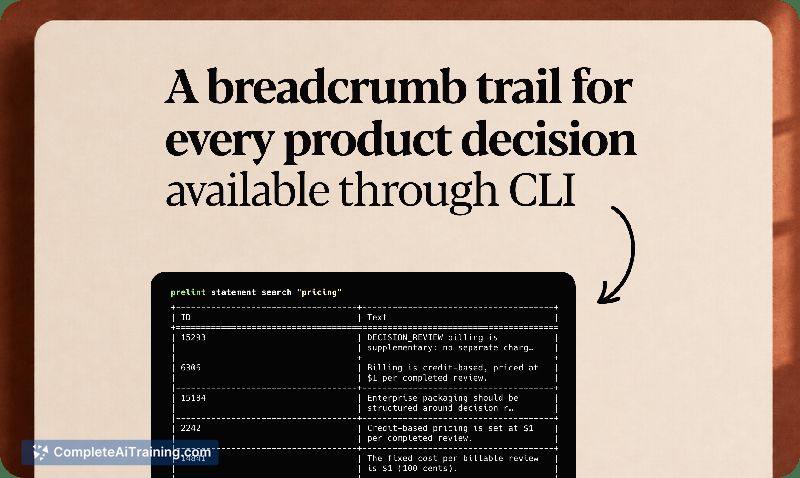
- Integrates with GitHub for PR-based enforcement, and also ships a CLI and MCP server so agents can check their decisions while they work, before a human review.
- Absorbs context from multiple sources (Slack, tickets, Notion, Linear) and compounds over time, so the ledger gets richer with every interaction.
Pricing and Value
Prelint currently lists a free tier and a credit system. New users can claim $100 in additional free credits using the code PH100. The full subscription pricing model hasn't been announced yet. For teams that want to try it, there's enough runway to connect a repo and see what agents have been deciding on their behalf without an upfront commitment.
Pros
- Catches product drift - the kind of issue where the code works but quietly builds the wrong thing - rather than surface-level style violations.
- 40% of pre-merge issues fixed on teams already using multiple AI reviewers are attributed to Prelint, indicating it finds problems other tools miss.
- Decision ledger grows with use; it learns your team's patterns and keeps historical context so enforcement compounds over time.
- Agent-accessible via CLI and MCP, which means the review loop can start while the agent is still working instead of waiting for a pull request.
- Understands compliance requirements (HIPAA, SOC, ISO) even when they aren't explicitly named in your docs.
Cons
- Not a technical code reviewer - it won't catch syntax errors, test failures, or security vulnerabilities. Teams still need a separate tool for that.
- Best suited for teams with PR-driven workflows and documented decisions (ADRs, tickets). Solo developers who push straight to main or lack structured artifacts may see limited immediate value.
- Enforcement is strongest in GitHub pull requests. The CLI can help agents with context, but the maker notes it's "less with the enforcement" in that path.
Teams who already use AI coding agents and maintain decision records like ADRs will get the most out of Prelint. It's built for the scenario where several agents are contributing code simultaneously and someone needs to check whether the product is still being built according to plan - not just whether the code compiles. If you're curious about the decisions agents are making on your behalf, you can connect a repo, run the review, and see exactly what they've been deciding without your input.
Jobs Prelint suits
We checked Prelint against 500+ jobs; these get the most out of it.