AI tool
Quiver GTM
Quiver GTM organizes go-to-market assets and automates signal-based workflows for marketing and sales teams. It helps revenue operators unify product data, content, and campaigns to run coordinated launches.
About Quiver GTM
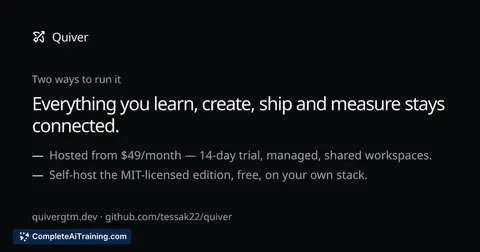
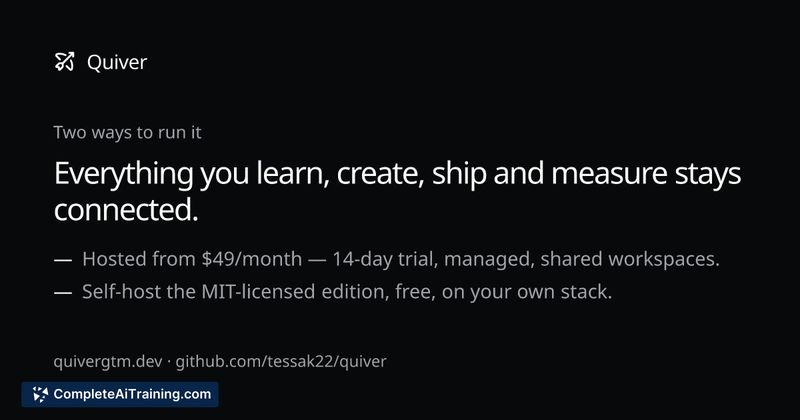
Quiver GTM is an agentic developer marketing system built for technical founders and dev-tool teams. It connects product context, customer evidence, campaigns, content, tasks, and results in a single controlled environment with version history, explicit production states, and a human-approved feedback loop. The tool is available as a hosted service with managed team access, or as a self-hosted MIT-licensed edition.
Review
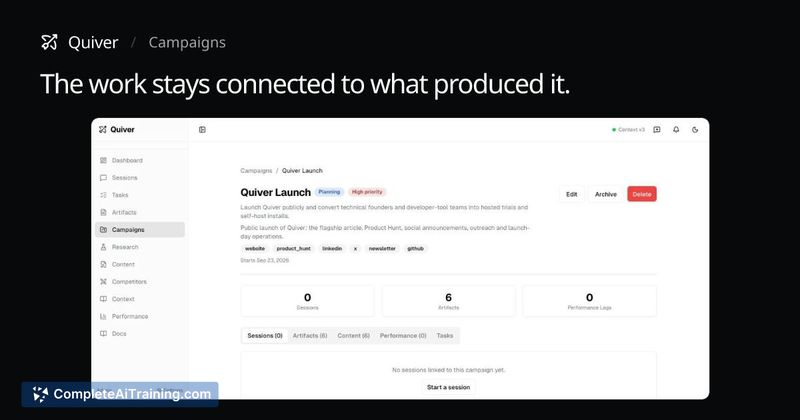
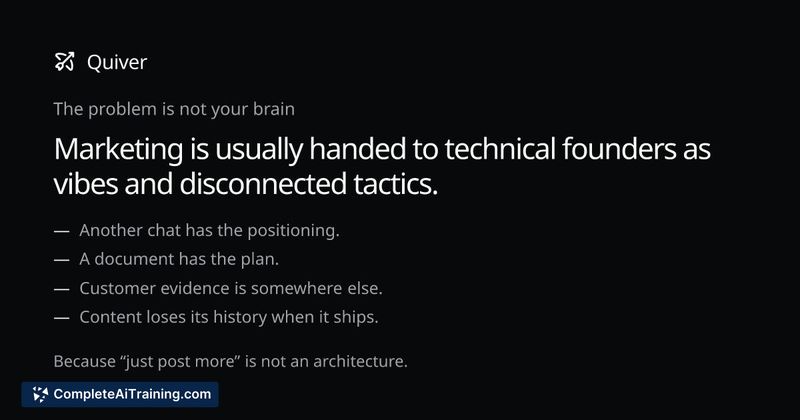

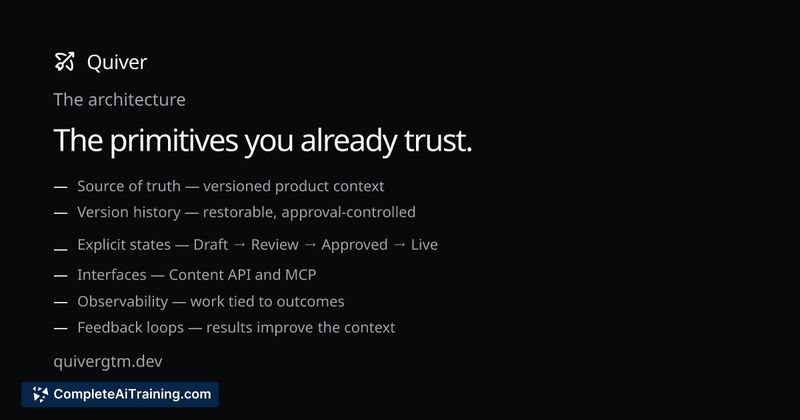

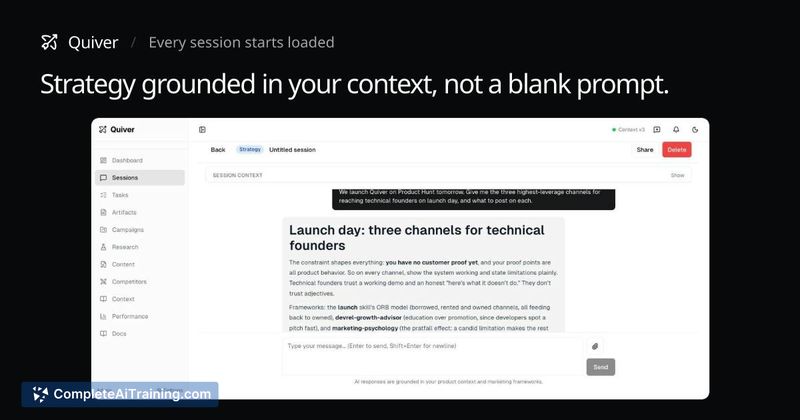
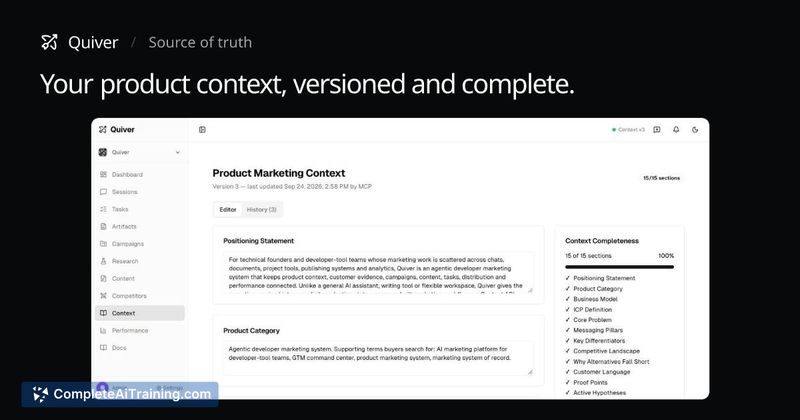
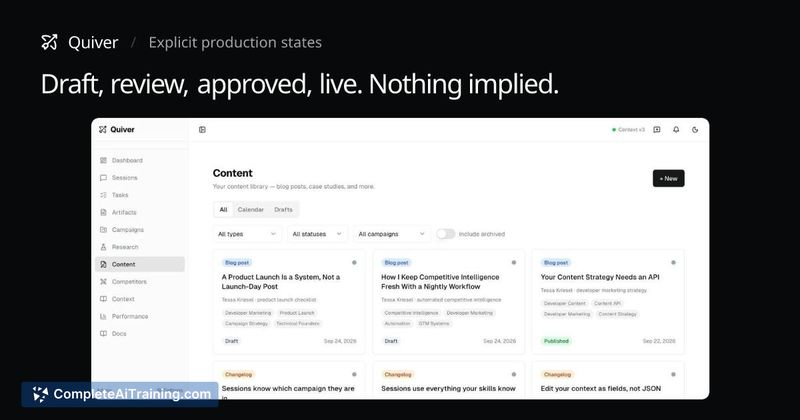
Quiver GTM approaches developer marketing as an engineering system rather than a collection of disconnected tools. The product launched this week and targets engineers who find traditional marketing workflows vague and difficult to debug. It's a web UI with MCP access and a Content API, designed to give AI agents durable context while keeping humans in control of what gets published and what counts as organizational truth.
Key Features
- Context management with version history. Quiver maintains product context, customer evidence, and campaign data as versioned records. Agents can propose changes based on research or performance data, but those proposals sit pending until a human approves or rejects them. Every change creates a new version, and previous snapshots can be inspected or restored without deleting history.
- Agentic feedback loop with explicit approval boundaries. When you add customer calls, surveys, reviews, or support threads, Quiver analyzes them against active context and extracts themes, verbatim language, and evidence. It generates proposals with current and proposed values plus rationale. Agents cannot silently learn or rewrite context on their own-the approval boundary prevents overlearning from one-off results.
- MCP server integration. Quiver ships with an MCP server that lets LLMs like Claude connect directly to a workspace as a custom connector. This allows agents to interact with the marketing system programmatically while respecting the same permissions and approval gates.
- Content API for multi-distribution workflows. The Content API supports managing content across multiple distribution channels, tracking metrics back to the core piece and campaign. It handles repurposing while maintaining traceability to the original content.
- Multi-tenant architecture with workspace subdomains. Each workspace gets a dedicated subdomain. Host-based middleware resolves the workspace, AI responses stream from the default runtime, and scheduled work runs through cron. Workspace creation attaches domains through an API with automatic certificate handling.
Pricing and Value
Quiver GTM offers a hosted version with managed team access and built-in tasks. A free self-hosted edition under the MIT license is also available. Specific pricing tiers or seat-based costs for the hosted version have not been publicly defined as of this review. The maker has indicated willingness to offer discounts for users managing multiple products, but formal pricing details remain unannounced.
Pros
- Versioned context with side-by-side proposal review lets teams trace exactly what changed, when, and why.
- Agents operate within explicit approval boundaries, so no model can alter organizational truth without human sign-off.
- MCP server and Content API provide programmatic access for teams that want to integrate marketing workflows into existing engineering toolchains.
- Multi-tenant design with per-workspace subdomains keeps tenant data isolated without custom auth tables or invite systems.
- MIT-licensed self-hosted option removes vendor lock-in for teams with the infrastructure to run it themselves.
Cons
- The onboarding is a single screen that scans a product URL and drafts marketing context automatically. If that initial scan makes incorrect assumptions, the user must manually correct foundational context before anything else works well.
- Visual previews and walkthroughs are sparse. A potential user noted difficulty understanding whether the interface is CLI-based or a web UI without digging into documentation.
- This tool is not well suited for teams without technical staff. The MCP setup, self-hosting option, and engineering-oriented workflow assume familiarity with developer tooling and infrastructure concepts.
Quiver GTM fits teams where at least one person thinks of marketing as an engineering problem-something that needs version control, explicit state transitions, and auditable change history. DevRel leads managing multi-person content programs and solo technical founders running their own GTM motions will find the most immediate use for the system. Teams without an engineer willing to own the marketing infrastructure will likely struggle with the initial setup and mental model.
Jobs Quiver GTM suits
We checked Quiver GTM against 500+ jobs; these get the most out of it.