AI tool
Reflexio
Reflexio is a learning platform that observes AI agents in production to autonomously reduce failure rates and token usage. It is built for developers and teams running AI agents who need to close the online learning loop without manual prompt tun...
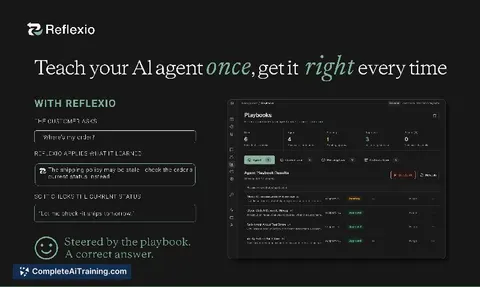
About Reflexio
Reflexio is a learning platform for AI agents that converts production interactions-successes, failures, and user corrections-into reusable behavioral rules. The tool observes live agent traces and continuously optimizes behavior without manual prompt tuning. It is designed for teams running customer support agents, marketing and SDR agents, and digital employees where one agent serves many users.
Review
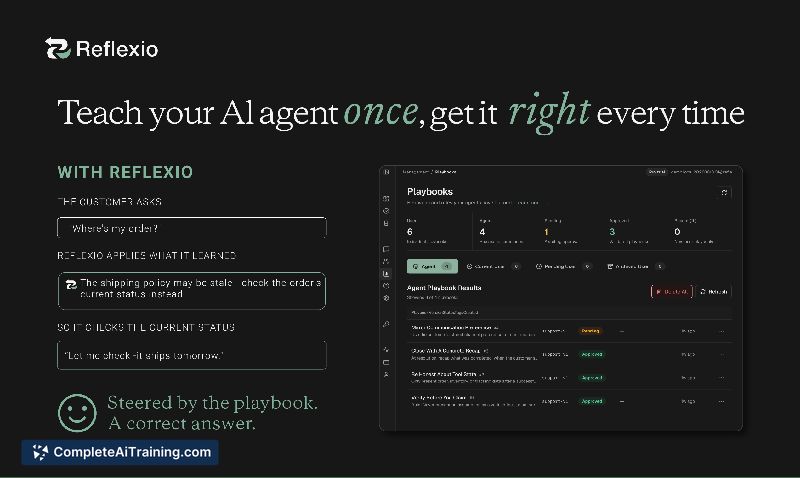
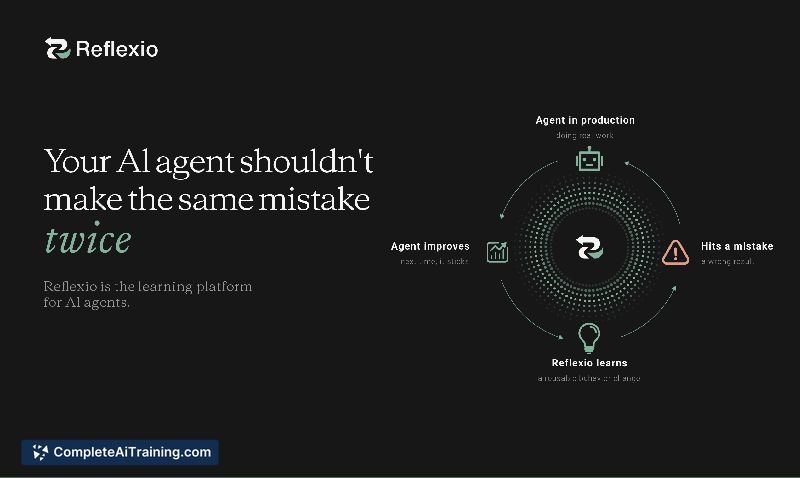
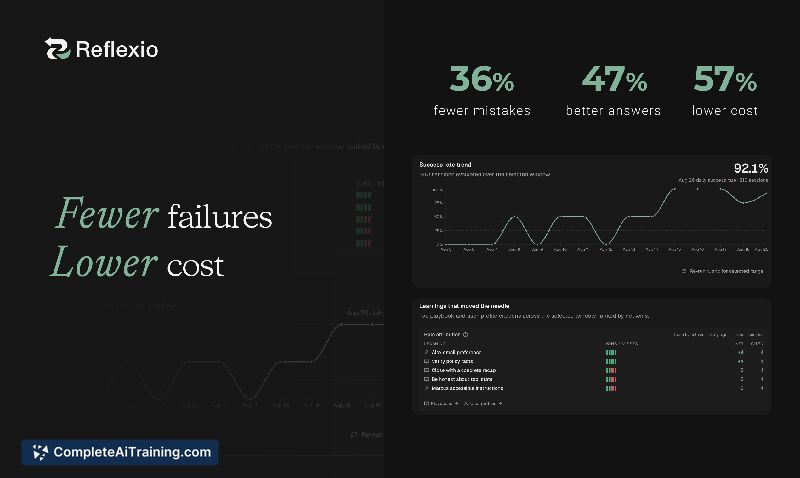
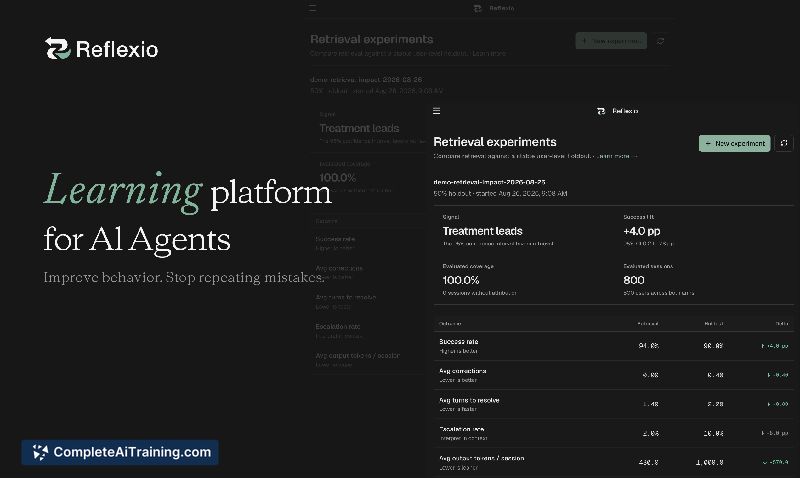
Reflexio tackles a specific operational problem: AI agents that keep making the same mistakes across sessions and users. The platform sits on top of existing agents and builds a feedback loop that turns what happens in production into learnings the agent can apply next time. The makers report that agents using Reflexio cut task failure rates by 36% and reduced token usage by 57% in their case studies.
Key Features
- Autonomous observation of live agent traces to detect failures, successes, and user corrections without manual review.
- Generation of scoped, testable, and reversible behavioral rules that agents reuse across interactions.
- Dashboard and API access for reviewing, editing, deleting, or regenerating learnings before they take effect.
- User-specific learning that rolls up into generalized rules when common patterns emerge, with support for group-specific behavior when conflicts exist.
- Export and deletion controls-all user profiles and learnings can be exported or permanently removed from the platform.
Pricing and Value
Reflexio offers a free sign-up option with 30 days of Pro access included. The reference content does not specify pricing tiers or costs beyond this introductory period, so the long-term pricing model is not yet defined in the available material.
Pros
- Reduces task failure rates and token consumption based on measured case study results rather than theoretical claims.
- Works non-intrusively with existing agent stacks-integration happens through provided skills that coding agents can follow, with Python, REST, and CLI interfaces available.
- Learnings remain visible and editable; teams can inspect, modify, or discard behavioral changes instead of trusting a black box.
- Handles conflicting user feedback by first learning per-user improvements, then generalizing patterns or scoping rules to specific user groups.
Cons
- The platform is newly launched, so long-term stability data and a track record across diverse production environments don't exist yet.
- A TypeScript SDK is on the roadmap but not currently available, which may slow adoption for teams whose stacks center on TypeScript.
- Reflexio is not well suited for agents that serve very few users or handle highly unique one-off tasks, since the learning mechanism depends on recurring patterns across many interactions.
Reflexio fits teams that already have agents in production and are spending significant time manually analyzing traces and rewriting prompts. It's less relevant for experimental or low-traffic agents where there isn't enough repetition to form generalizable learnings. The platform's approach to letting users review and reverse learnings addresses a common concern with autonomous optimization-you can see exactly what changed and undo it if needed.
Jobs Reflexio suits
We checked Reflexio against 500+ jobs; these get the most out of it.
Alternatives to Reflexio
Other tools that do the same main job. Our AI compared Reflexio with similar tools and kept the ones you could use instead.