AI tool
Reform
Reform enables dev teams to quickly build logistics software using pre-built components and APIs, automating tasks like quoting, shipment creation, and customs clearance filing for logistics service providers.
About Reform
Reform is a software platform aimed at logistics companies, offering a streamlined way for development teams to create modern logistics applications quickly. It provides pre-built components and APIs that help automate common logistics tasks such as quoting, shipment creation, and customs clearance filing.
Review
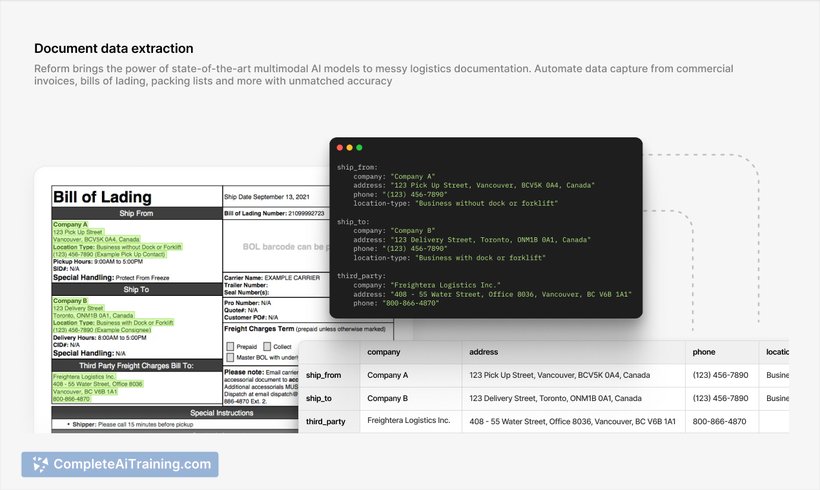


Reform addresses a common challenge faced by logistics service providers: the need to develop and maintain custom software to keep up with operational demands. By offering ready-made APIs and components, Reform enables teams to build tailored logistics solutions more efficiently, reducing the time and effort typically required for development and maintenance.
Key Features
- Pre-built components for common logistics functions like shipment and quote creation.
- APIs that convert unstructured data from emails and documents into structured formats.
- Automation support for customs clearance filing and invoice reconciliation.
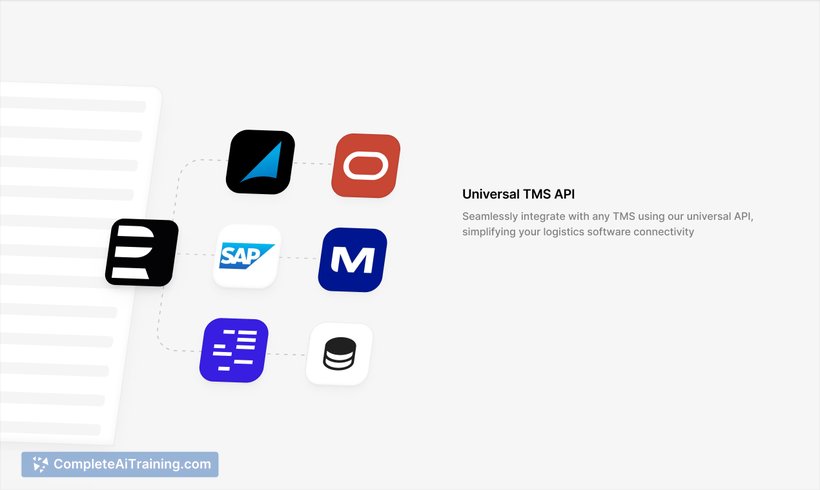
- Integration capabilities with transport management systems, ERP, OMS, and other databases.
- Focus on reducing maintenance overhead by providing an infrastructure layer for easier software building.
Pricing and Value
Reform operates on a payment-required model, though specific pricing details are not publicly listed. The value proposition lies in accelerating development cycles and minimizing the need for ongoing maintenance, which can result in cost savings for logistics providers who otherwise invest heavily in custom software. This makes it particularly appealing for teams wanting to deliver logistics software without extensive in-house development resources.
Pros
- Speeds up the development of logistics software by using pre-built components and APIs.
- Reduces maintenance burden through an infrastructure layer that handles common logistics workflows.
- Supports automation of several key logistics processes, improving operational efficiency.
- Flexible integration with various enterprise systems such as ERPs and transport management systems.
- Helps logistics providers avoid building standard functionality from scratch.
Cons
- Pricing details are not transparent, which may require direct contact for clarification.
- Focused specifically on logistics, so it may not be suitable for businesses outside this sector.
- Customization beyond provided components and APIs might require additional development effort.
Overall, Reform is well-suited for logistics service providers, including digital freight forwarders and 3PLs, looking to streamline their software development process. It benefits teams aiming to reduce time-to-market and maintenance efforts while automating core logistics functions. Organizations seeking a more efficient way to build logistics applications without starting from scratch may find Reform particularly useful.
Jobs Reform suits
We checked Reform against 500+ jobs; these get the most out of it.