AI tool
ReWeaver AI DriftDetector
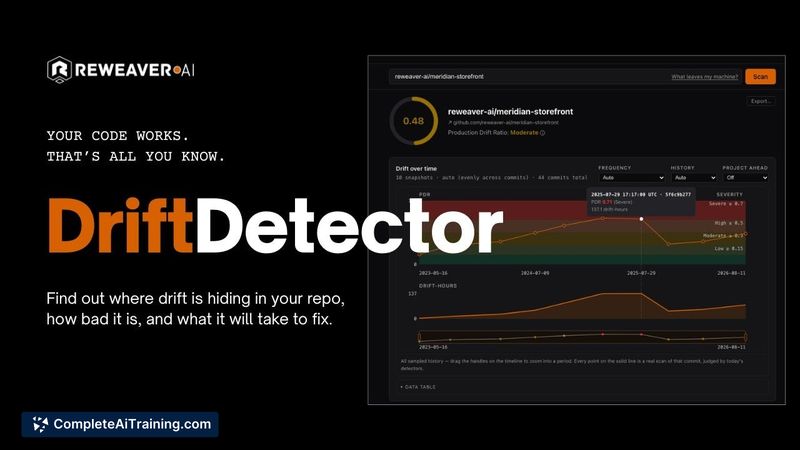
ReWeaver AI DriftDetector measures code drift introduced by AI coding assistants, scoring each commit for issues like dropped accessibility patterns, invalid design tokens, or business logic in the presentation layer. It provides reproducible, sca...
About ReWeaver AI DriftDetector
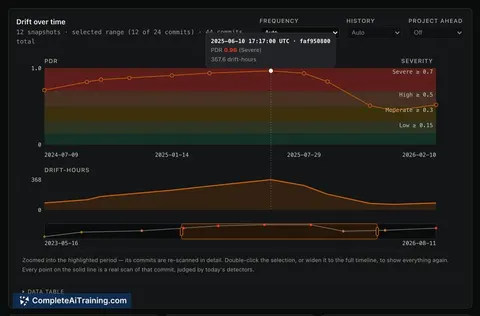
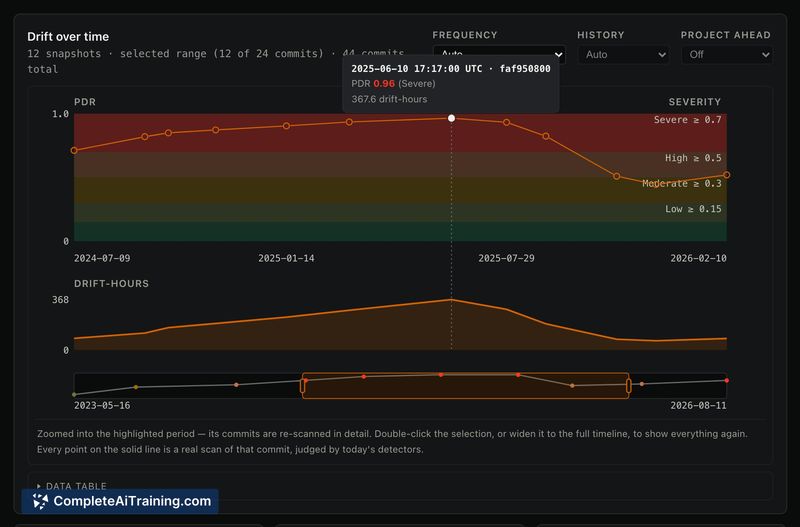
ReWeaver AI DriftDetector is a testing and QA tool that calculates a Production Drift Ratio (PDR) for any public GitHub repository. It scans a repo and returns a single number indicating how far the code sits from production-ready, along with a drift history where each data point comes from an actual scan of a specific commit. The tool runs deterministic rules with no LLM in the loop and requires no signup or installation.
Review
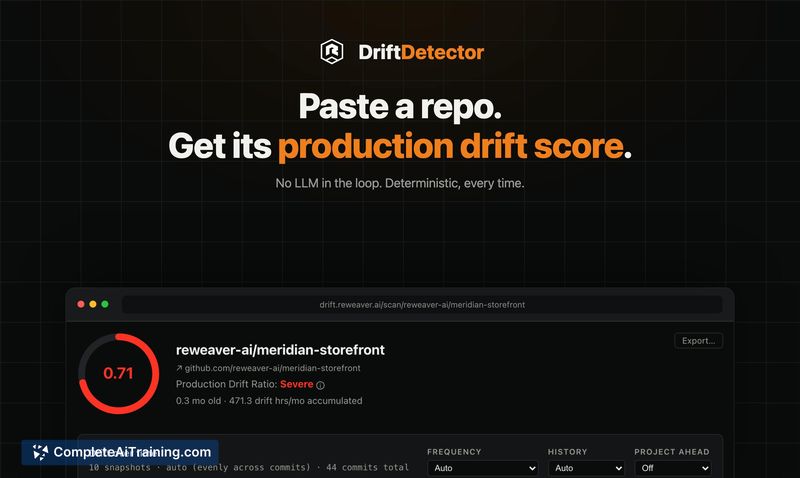
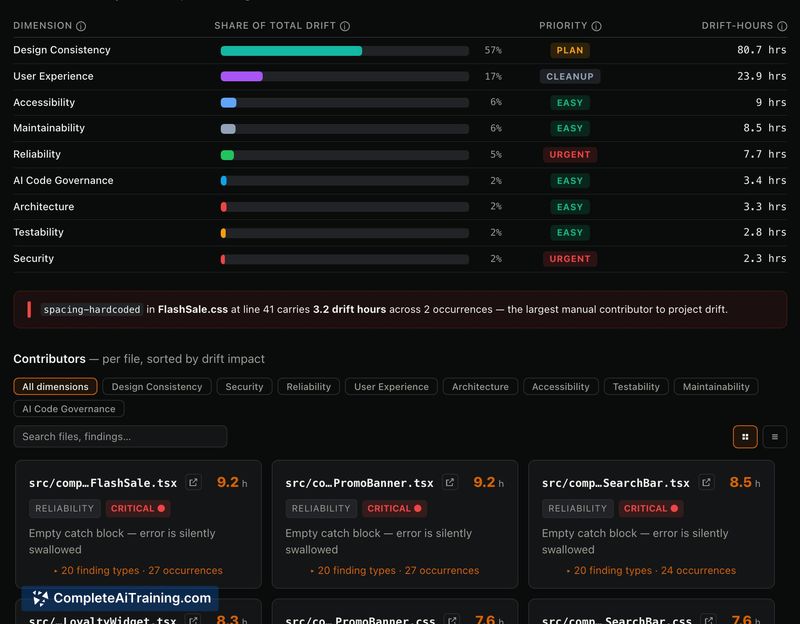
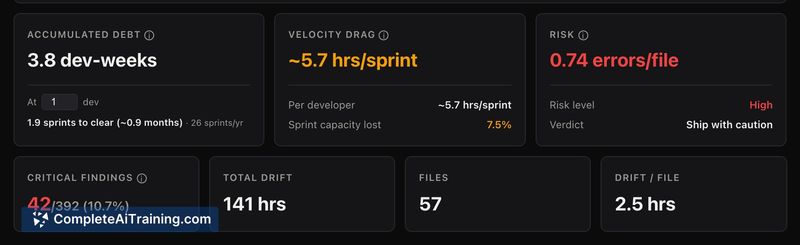
DriftDetector launched this week and targets a specific problem: code that passes tests but drifts from production standards over time. The tool measures that drift across nine dimensions, and every finding links back to a specific file and line in the repository. Because it uses deterministic rules rather than a second LLM guessing at what the first one missed, scanning the same commit twice produces the same result.
Key Features
- Production Drift Ratio (PDR): a single score for any public GitHub repo, computed in seconds
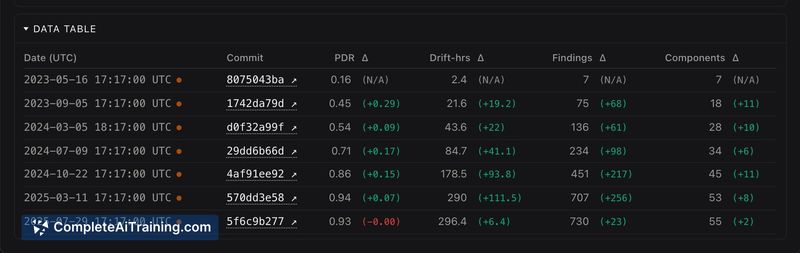
- Drift history chart where every point is a real scan of a commit, not an estimate; you can zoom into any period to have it re-scanned in detail
- Nine dimensions of analysis with every finding traced to the exact file and line
- No signup required and nothing to install; paste a repo URL and scan immediately
- Deterministic rules with no LLM in the loop, so scans don't consume tokens and results are reproducible
Pricing and Value
The tool is currently free. Pricing beyond that is not yet defined. The value case rests on the absence of per-token costs and the ability to run scans without creating an account. For teams that want to audit code quality without paying for LLM-based review tools, the free tier covers the core functionality as it exists today.
Pros
- Results are reproducible; scanning the same commit twice yields the same PDR, which makes the number safe to present to a team lead
- Every finding links to a specific file and line, so issues are actionable rather than vague
- The drift history uses real scans of each commit, allowing you to identify the week drift entered and open that commit on GitHub directly from the table
- No account creation and no installation; a public repo URL is all you need
- Runs on Cloud Run with a one-person deploy loop, which keeps the tool itself lightweight
Cons
- The tool only works with public GitHub repos; private repositories aren't supported at this time
- It measures drift against production standards but doesn't fix the issues it finds; remediation is left to the developer
- The tool is not well suited for teams that need LLM-based code review or natural language explanations of findings, since it deliberately avoids any LLM in the loop
The ideal use case is a developer or team lead who wants a quick, reproducible read on how far a public repo has drifted from production-ready standards, especially after heavy use of AI coding assistants. It also works well for comparing multiple repos to see which ones need attention first. Teams working primarily with private codebases or those wanting conversational explanations of issues will need to look elsewhere.
Jobs ReWeaver AI DriftDetector suits
We checked ReWeaver AI DriftDetector against 500+ jobs; these get the most out of it.