AI tool
Robinhood Agentic Trading
Connect AI agents to Robinhood to automate trading and card purchases with built-in safety controls, a real-time activity feed, and a dedicated agentic account that keeps you in control.
About Robinhood Agentic Trading
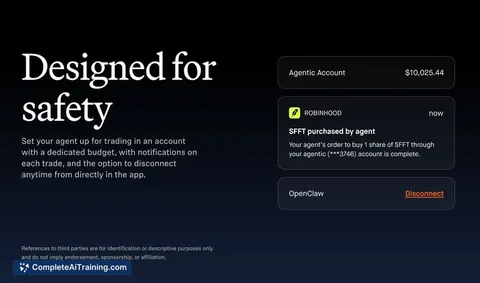
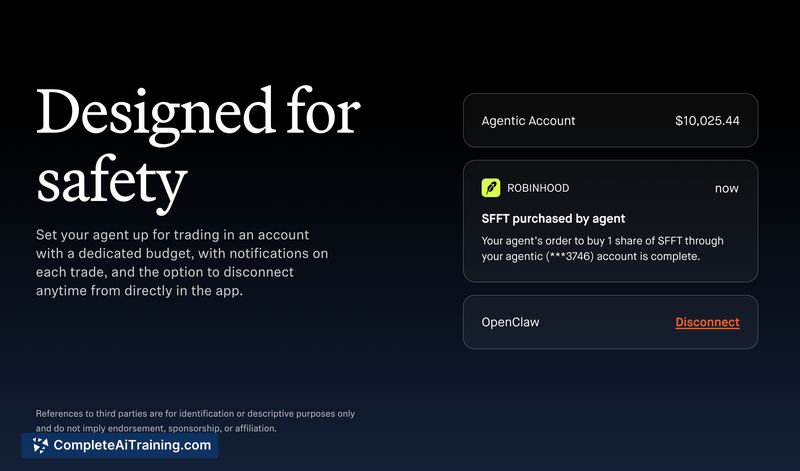
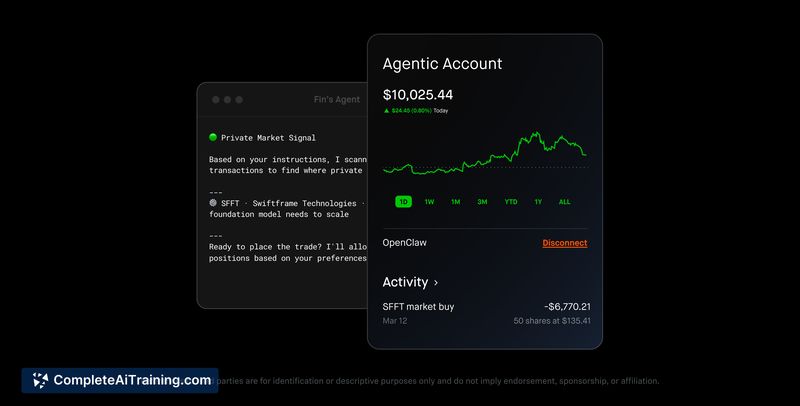
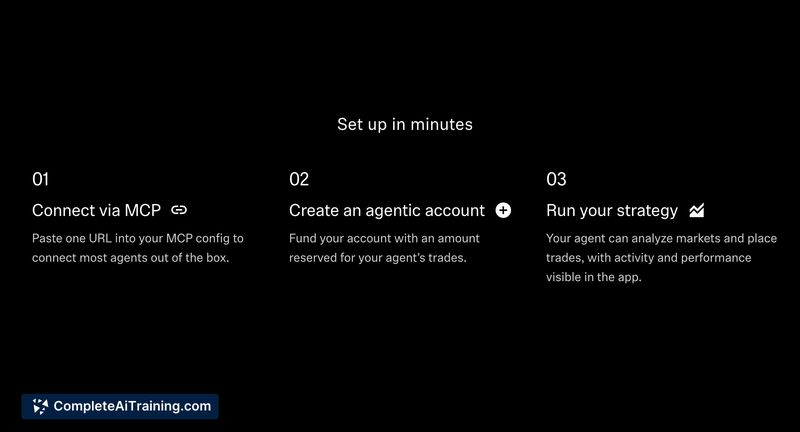
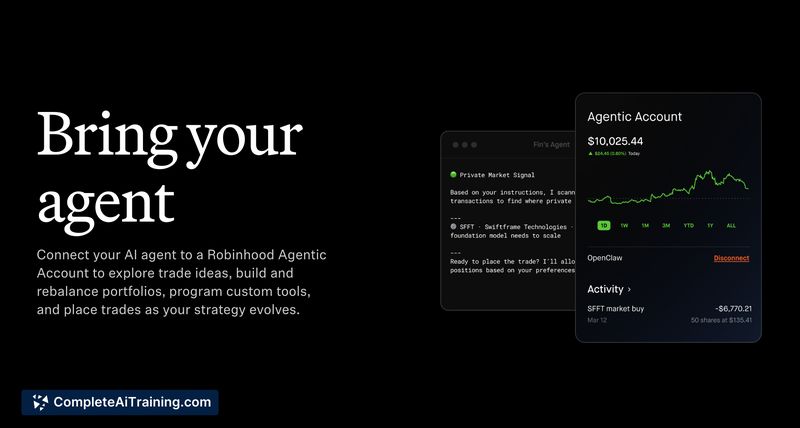
Robinhood Agentic Trading is a feature that lets users connect third‑party AI agents to a brokerage account to automate trading and certain credit card purchases. It includes built-in safety controls, a real‑time activity feed, and a dedicated agentic account so automated activity is kept separate from a user's main holdings.
Review
This review covers the core functionality, safety design, and practical value of the service. The product lowers the friction for running agent‑driven strategies but raises questions around oversight, execution transparency, and advanced settings for serious traders.
Key Features
- Connect external AI agents to execute trades and manage eligible card activity.
- Dedicated agentic account that isolates agent trades from primary accounts.
- Built‑in safety controls and configurable limits to constrain agent behavior.
- Real‑time activity feed that logs agent actions for monitoring and review.
- Ability to run thesis‑driven or thematic strategies via continuous agent operation.
Pricing and Value
The feature is listed as free at launch, making it low‑cost to test automated strategies. Its value depends on how well safety controls, execution quality, and reporting meet a user's needs-particularly for anyone who plans to run agents frequently or at meaningful scale. For casual experiments it reduces setup friction; for ongoing use, effectiveness will hinge on transparency and control features.
Pros
- Easy way to experiment with automated, agent‑driven trading without extra platform integration.
- Dedicated account model limits the exposure of primary funds and reduces accidental risk to main portfolios.
- Real‑time activity feed gives immediate visibility into agent decisions and trades.
- Safety controls and per‑trade limits help manage downside risk from automated actions.
- Free launch status lowers the barrier to trying agentic automation.
Cons
- Availability and certain features (tax parcel preferences, advanced tax optimization) are unclear from the initial listing.
- Execution transparency and order fill details are not fully described; traders who require detailed execution reporting may find this limiting.
- Automated agents can generate losses if strategies are poorly configured or if external market signals are not considered; users need to actively monitor agents.
Ideal users are investors and developers who want to experiment with automated, agent‑based strategies while keeping those activities separated from core accounts. Newer investors can try small experiments safely thanks to the dedicated account and safety controls; experienced traders will want to confirm execution details, reporting, and tax handling before relying on agents for larger sums.