AI tool
Zerg Router
Zerg Router is a unified API endpoint for coding agents that consolidates multiple AI provider keys under one account. It lets developers set per-key daily budgets and model fallbacks to avoid mid-task quota limits.
About Zerg Router
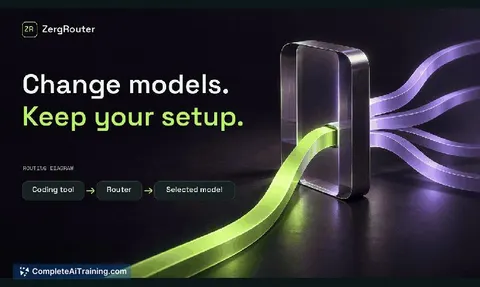
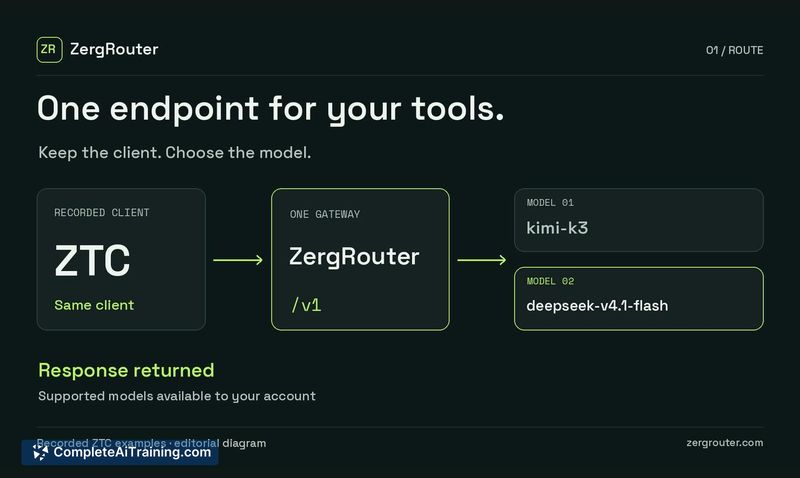
Zerg Router is a unified API layer that consolidates model access for coding agents into a single OpenAI-compatible endpoint. Instead of configuring provider settings inside each individual tool, users manage routing policy, budgets, and fallback logic from one account. It supports paid usage through Zerg Router or allows users to bring their own provider keys.
Review
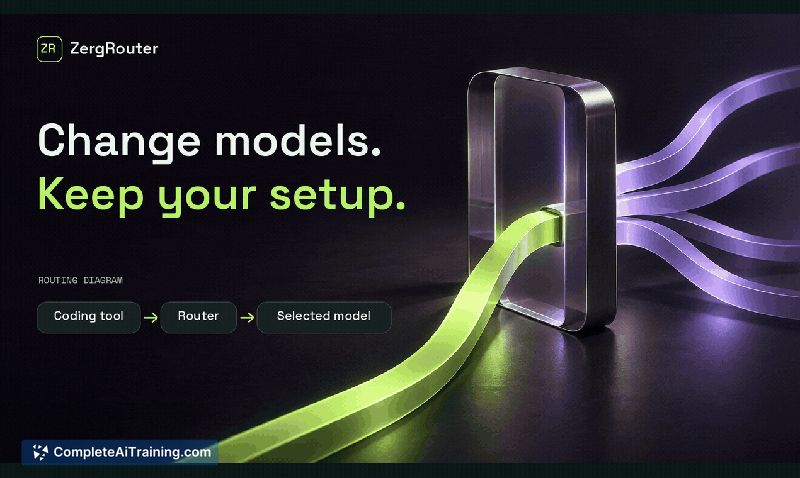
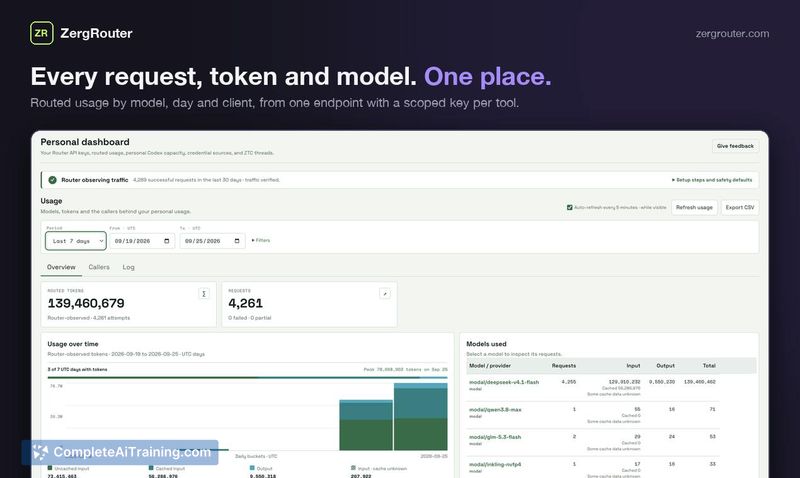

Zerg Router addresses a specific friction point for teams running multiple coding agents: scattered provider configurations and unpredictable spend. The tool moves routing logic out of individual applications and into a centralized account, which changes how developers handle model selection and cost enforcement. It launched this week and is built on Modal for its infrastructure layer.
Key Features
- One OpenAI-compatible endpoint that accepts scoped API keys per tool, keeping routing policy in the account rather than inside each coding agent.
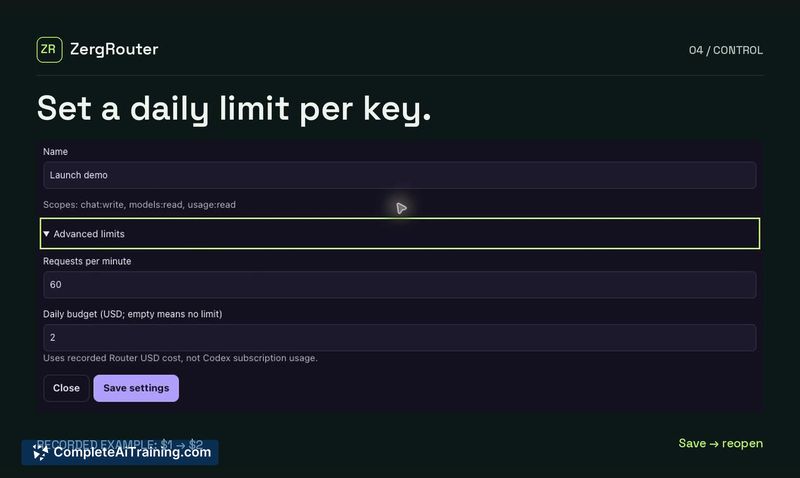
- Per-key daily budgets enforced at request time, so a key stops working when it hits its limit instead of generating surprise charges.
- Explicit fallback chains that automatically try the next model in sequence when a provider returns a 5xx error, a 429 rate limit, or a timeout.
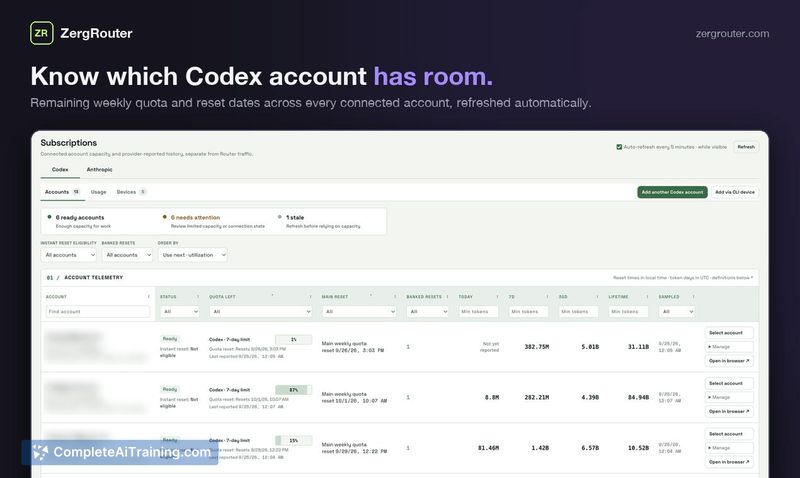
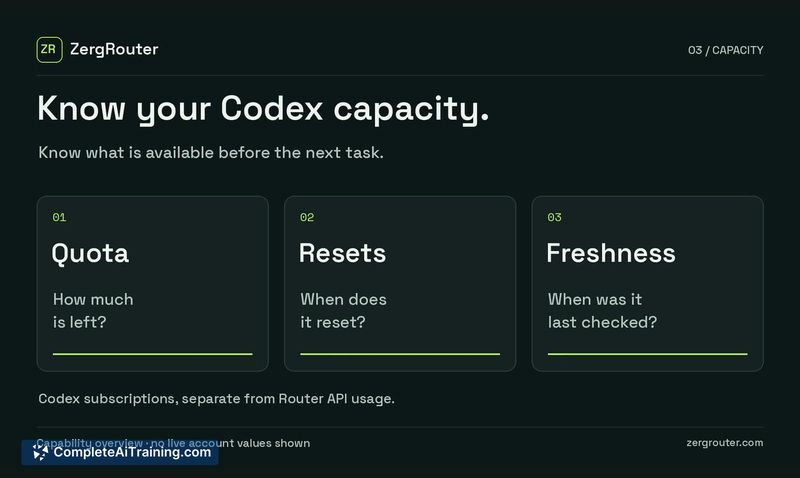
- Codex integration that lets users run open models like DeepSeek 4.1 Flash through the router and displays remaining weekly quota plus reset dates across Codex accounts.
- Support for both Zerg Router's paid usage and customer-provided keys, so teams can use their own provider credentials if they prefer.
Pricing and Value
New accounts receive a 14-day DeepSeek trial at no charge. After the trial period, the service costs $5 per month plus usage fees, or users can bring their own provider keys. The paid plan includes the routing infrastructure, budget enforcement, and quota visibility features. Exact usage-based costs beyond the monthly fee aren't specified in the current documentation.
Pros
- Centralizes spend control across multiple coding tools with per-key budgets that stop requests before costs accumulate.
- Reduces downtime from provider errors through automatic fallback to alternate models when a request fails.
- Works with existing Codex setups without requiring workflow changes-users can run DeepSeek 4.1 Flash inside Codex through the router.
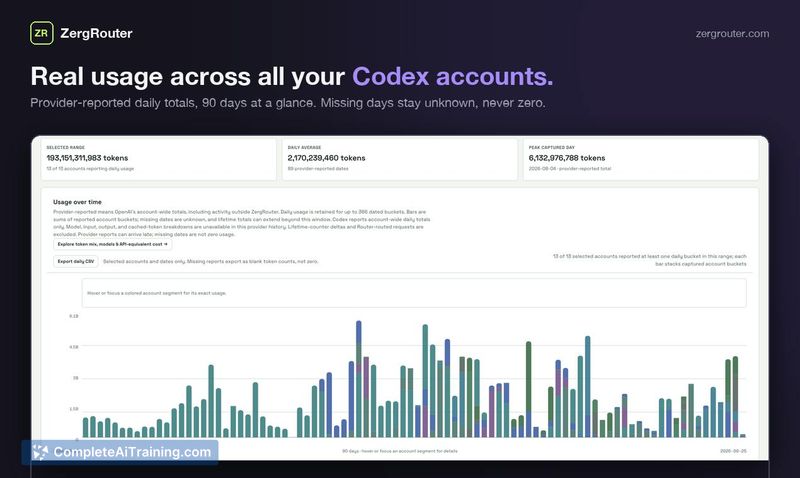
- Shows remaining weekly quota and reset timing for all connected Codex accounts in a single view.
- Doesn't lock users into one payment model; the bring-your-own-key option keeps provider relationships flexible.
Cons
- The tool is not well suited for teams using a single coding agent with straightforward provider setup-the routing layer adds management overhead that may not be justified.
- As a newly launched product, there is no track record of production reliability or long-term support responsiveness available yet.
- Usage-based pricing details beyond the $5 monthly fee remain undefined, making total cost projection difficult for high-volume teams.
Zerg Router fits teams that run multiple Codex accounts or coding agents and need centralized budget enforcement with automatic failover between models. Developers who already manage provider configurations across several tools and want to stop tracking quotas per account will find the consolidated view useful. It's less relevant for solo developers or small setups where a single provider key and manual budget tracking suffice.
Jobs Zerg Router suits
We checked Zerg Router against 500+ jobs; these get the most out of it.
Alternatives to Zerg Router
Other tools that do the same main job. Our AI compared Zerg Router with similar tools and kept the ones you could use instead.