AI tool
Spectron
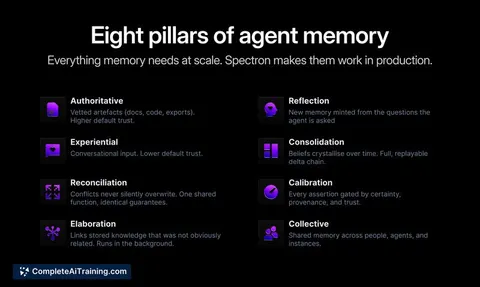
Spectron: ACID agent memory committing graphs, vectors, documents and rows in one transaction. Provenance for every fact; corrections supersede. Hybrid retrieval (vectors, graph, BM25, keywords); tri-temporal facts, multi-tenant MCP support.
About Spectron
Spectron is an agent memory system that stores graphs, vectors, documents, and structured rows on a single ACID substrate so related writes commit in one transaction. Every fact carries provenance, corrections supersede rather than overwrite, and retrieval mixes vectors, graph queries, full-text (BM25) and keyword filters.
Review
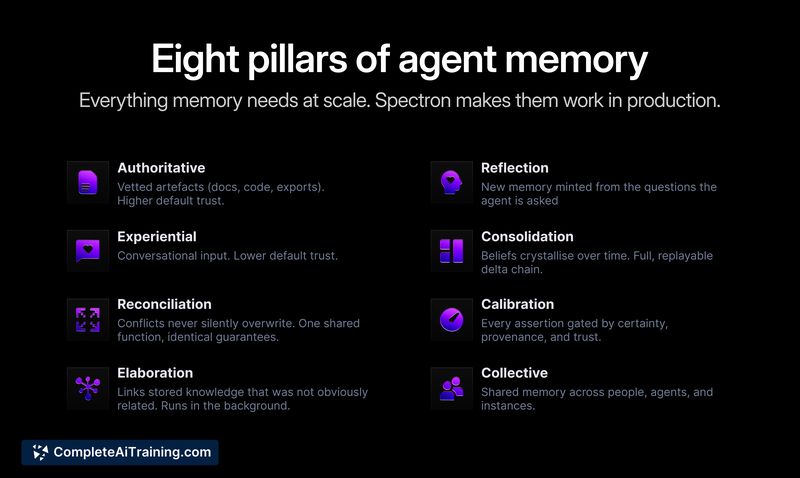

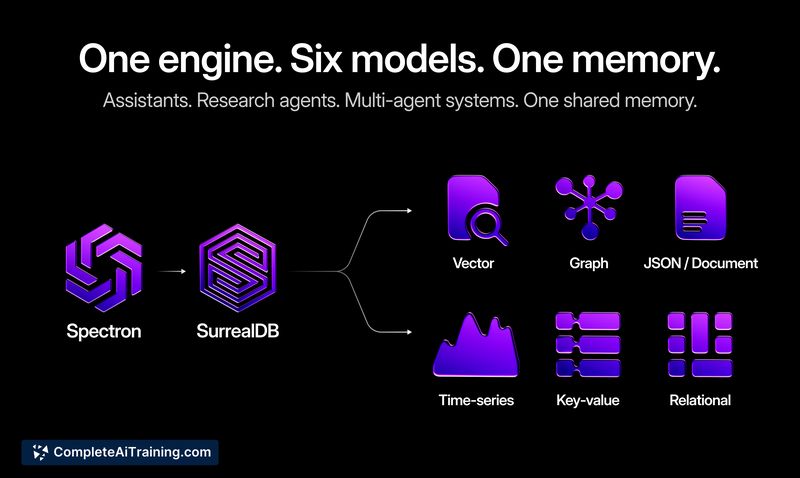
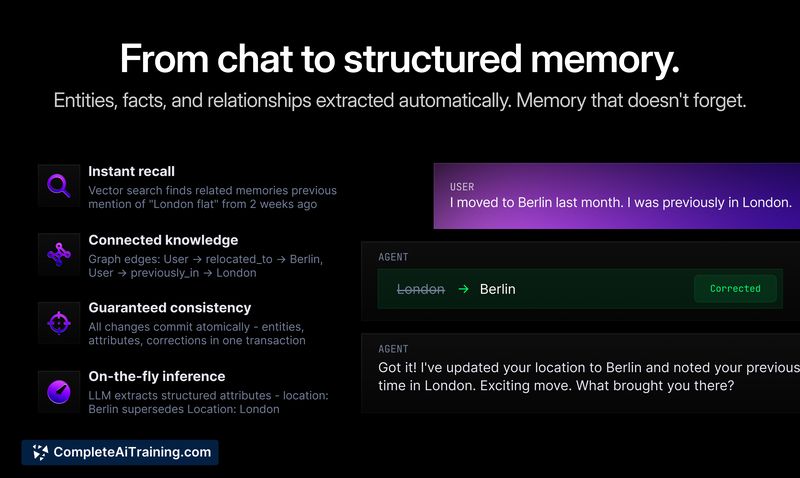
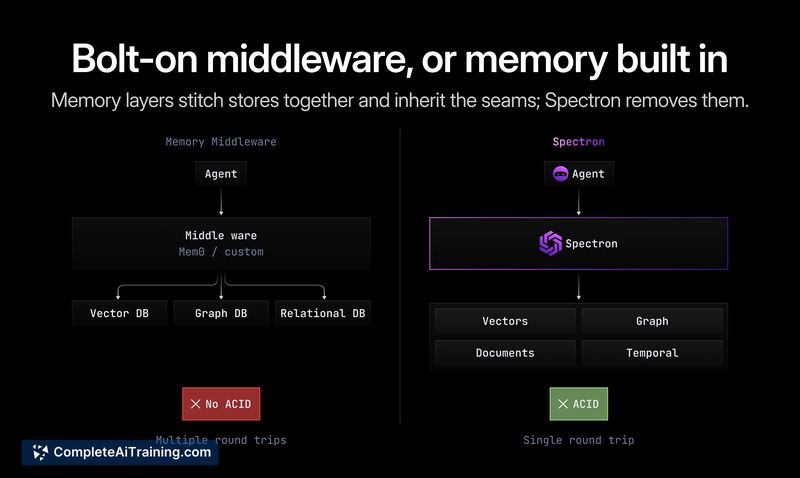
Spectron focuses on making agent memory auditable and consistent by keeping multi-model data together instead of stitching separate stores. Early-access functionality includes REST APIs, SDKs (Python, TypeScript, Kotlin, Swift) and an MCP protocol for common memory operations; access is being opened in waves and requires payment.
Key Features
- Single ACID substrate for documents, graphs, vectors, time-series and structured rows, enabling atomic cross-model transactions.
- Per-fact provenance stored with byte-span references and source trust priors for full audit trails.
- Tri-temporal facts: system time, time first believed, and time true in the world are recorded separately.
- Hybrid retrieval that fuses vector similarity, graph relations, BM25 full-text, and keyword filters, with traces feeding back into ranking.
- Multi-tenant scopes, MCP support, and options to run embedded, at the edge, or as a scalable cloud cluster.
Pricing and Value
Spectron is offered as a paid, invite-based early access product. The current model emphasizes enterprise and team use: customers pay for access and support while early waves provide SDKs, REST APIs, and MCP tooling. The value proposition is reduced operational overhead and fewer consistency incidents by avoiding multi-store glue code, which can lower debugging costs and incident risk for teams running production agents.
Pros
- Clear provenance makes answers traceable and easier to audit or debug.
- Atomic multi-model transactions reduce classically hard consistency failures caused by stitching separate databases.
- Tri-temporal model preserves historical beliefs and corrections without deleting prior context.
- Hybrid retrieval and ranking feedback give flexible, context-aware recall across multiple signal types.
- Developer tooling and SDKs cover common languages and include an MCP server for memory operations.
Cons
- Early-access availability and payment requirement may limit experimentation for small teams or solo developers.
- New architecture and breadth of features introduce a learning curve and operational considerations to get right.
- Longer-term performance characteristics and behaviors at very large scale will need real-world validation as adoption grows.
Spectron is best suited for teams building production AI agents that need auditable, multi-tenant memory with strong consistency guarantees-for example, teams tracking long conversational sessions, organizational knowledge, or agent-to-agent corrections. Smaller projects that only need a simple vector store may find the early-access, paid model less compelling until broader availability and additional benchmarks appear.
Jobs Spectron suits
We checked Spectron against 500+ jobs; these get the most out of it.