AI tool
ZooData
ZooData converts web pages into structured JSON for AI agents, reducing token costs compared to raw markdown. It offers an API and pre-analyzed e-commerce platform intelligence for developers building agents.
About ZooData
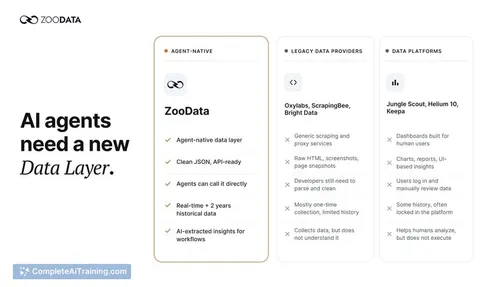
ZooData is an AI infrastructure tool that converts any URL into agent-ready JSON. It strips away navigation, ads, and boilerplate so AI agents receive structured data instead of raw HTML or markdown. The service also includes pre-analyzed e-commerce intelligence for Amazon and TikTok, covering competitor, market, traffic, and consumer signals.
Review
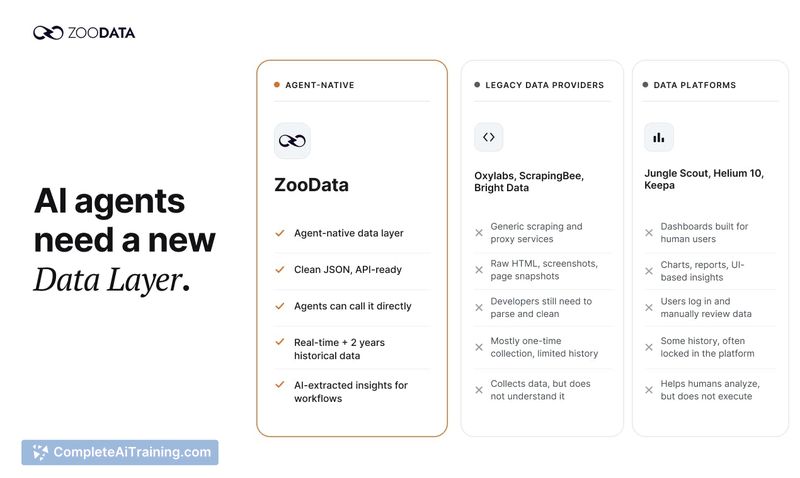
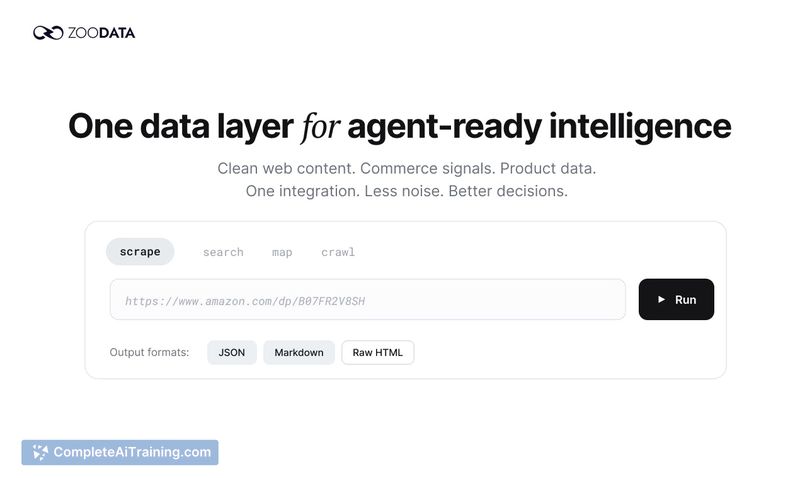
Launched this week, ZooData positions itself as the data layer for AI agents. The core idea is simple: agents shouldn't waste tokens parsing bloated markdown or guessing at page structure. ZooData handles the extraction step directly, returning JSON with only the fields an agent needs, and it doesn't charge for extraction credits - you pay only for the fields you use.
Key Features
- URL-to-JSON extraction without per-site parsers or schema definitions
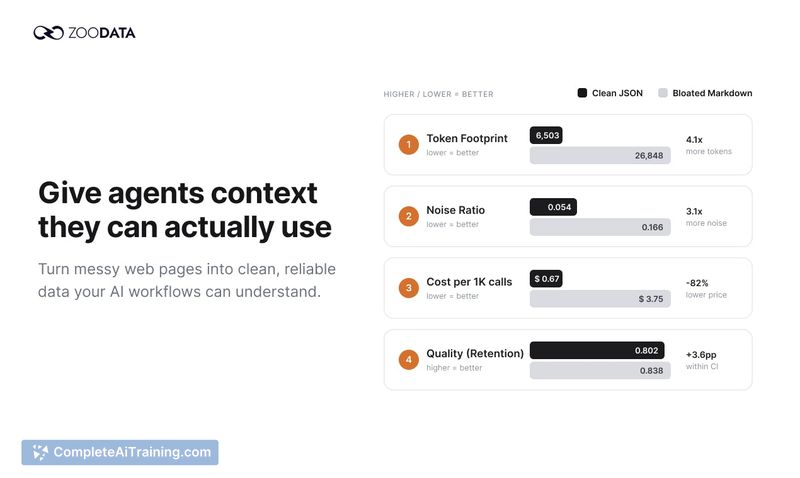
- Roughly 75% fewer LLM tokens compared to raw markdown for the same page
- Per-field billing: extraction itself doesn't consume credits, only the fields you actually request
- Pre-analyzed e-commerce intelligence for Amazon and TikTok - competitor, market, traffic, and consumer insights available via API
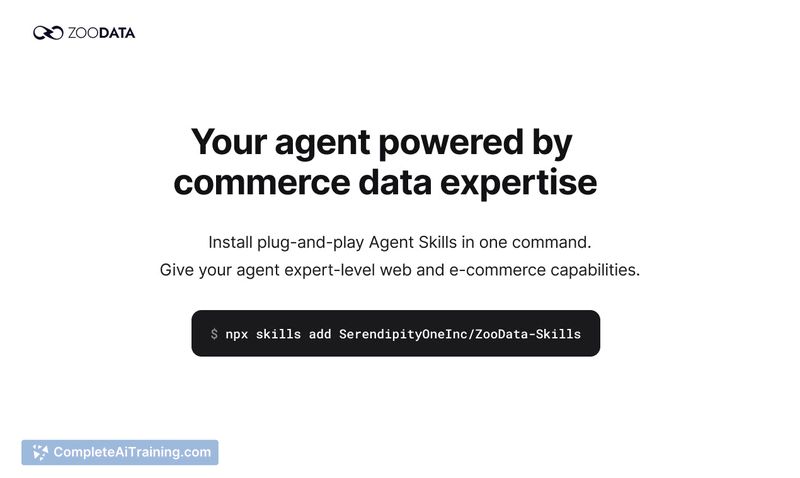
- API, CLI, and MCP server integration, so it can drop into existing agent stacks
Pricing and Value
ZooData offers 1,000 free credits with no card required. Credits are consumed only when a call successfully returns data - a captcha wall or block doesn't incur a charge. Beyond the free tier, the exact pricing structure isn't yet defined on the public page. The billing model revolves around paying for fields used, not for the extraction attempt itself.
Pros
- Deterministic extraction: a value is either pulled from the page or returned as null; the system never invents data to fill a slot
- Token savings are concrete - the team claims about 1/5 the cost of other extractors on the same page, which matters at scale
- Scrape and realtime endpoints force a live fetch on every call, so data freshness is guaranteed at the moment the agent asks
- Layout changes trigger automatic escalation to full model extraction rather than returning a wrong value silently
- The free tier is generous enough to test against real-world pages without upfront commitment
Cons
- No per-field confidence scores are exposed today - the feature is on the roadmap, but an agent currently has no signal about whether a value was sourced from a labeled element or inferred
- JSON payloads are sparse by design: absent fields mean "not obtained," which can cause shape drift for strongly-typed glue code that expects a fixed key set
- Not well suited for developers who need a stable, full-schema JSON response with explicit nulls for every possible field on every call
ZooData fits agent workflows where token cost and data trustworthiness are primary concerns. It's a practical choice for teams scraping e-commerce platforms or any site where layout changes frequently, because the extraction fails loudly rather than silently. Developers who rely on traditional API contracts with rigid schemas might find the sparse, variable-key payloads a mismatch, but for LLM-native agents, the design aligns with how models naturally handle missing fields.
Jobs ZooData suits
We checked ZooData against 500+ jobs; these get the most out of it.
Alternatives to ZooData
Other tools that do the same main job. Our AI compared ZooData with similar tools and kept the ones you could use instead.