AI app for science and research · no coding needed
Multi-source research synthesis and reporting workspace
Reduce manual research assembly while keeping every claim traceable to a source.
Made for: Research teams and analysts producing evidence-backed reports from multiple sources
What it does for you
The problem
Research is scattered across many tools, so gathering, summarizing, citing and reporting take repeated manual work and citations drift from sources.
What it gives you
Reviewer-approved evidence-backed reports with linked citations
What you give it
Permitted documentsdatasetsimagesweb sources
Build your own version of Inquisite, Tyles and more
One app with what these 10 AI tools do, yours to keep and change: Inquisite, Tyles, Sider 5.0: Deep Research with Wisebase, Perplexity Deep Research, Kompas AI, ChatGPT Deep Research, Sonar by Perplexity, Tavily, ayraa 2.0, Genspark.
Everything these tools do, in one app
- Automated research Automatically conducts searches and gathers information from multiple sources based on user prompts.Found in Perplexity Deep Research, ChatGPT Deep Research, Tavily and 1 more
- Content summarization Condenses lengthy documents and articles into concise summaries highlighting key points.Found in Inquisite, Sider 5.0: Deep Research with Wisebase, Sonar by Perplexity
- Report generation Creates detailed, structured reports from analyzed data and research findings.Found in Inquisite, Tyles, Perplexity Deep Research and 1 more
- Source citations Automatically generates citations and references to help users verify information credibility.Found in Sider 5.0: Deep Research with Wisebase, Perplexity Deep Research
- Collaboration tools Enables sharing, editing, and annotation of research findings for team projects.Found in Inquisite, Sider 5.0: Deep Research with Wisebase, ayraa 2.0
- Data visualization Provides charts and graphs to represent data visually for clearer communication.Found in Inquisite
- Customizable templates Offers pre-designed templates that can be tailored for different types of analyses and presentations.Found in Inquisite, Kompas AI, ayraa 2.0
- Multi-format analysis Analyzes and synthesizes data from diverse formats including text, images, and PDFs.Found in ChatGPT Deep Research
- Advanced search filters Allows precise queries and refined results through advanced filtering options.Found in Sider 5.0: Deep Research with Wisebase
- Interactive follow-ups Supports follow-up questions to refine search results and deepen exploration.Found in Sonar by Perplexity
- Content generation Generates articles, reports, or storylines from organized research data.Found in Tyles, Kompas AI, ayraa 2.0
- Task automation Automates routine tasks to reduce manual workload and improve efficiency.Found in ayraa 2.0
- Third-party integrations Connects with popular platforms and services to streamline workflow and content distribution.Found in Inquisite, Kompas AI, ayraa 2.0 and 1 more
- Real-time editing Provides real-time suggestions and editing assistance to improve grammar and clarity.Found in Kompas AI
- Community contributions Allows users to create, fork, and comment on content, fostering a collaborative environment.Found in Genspark
- Quality control Undergoes plagiarism checks and moderation to maintain accuracy and reliability.Found in Genspark
- Analytics dashboard Monitors productivity and performance through a dedicated dashboard.Found in ayraa 2.0
How it works, step by step
- Run automated searches across permitted sources from a research brief
- Summarize long documents into key points
- Generate structured report drafts from analyzed findings
- Attach source citations to every claim
- Support shared editing, annotation and comments
- Render charts and graphs from supplied data
- Apply customizable report templates
- Analyze text, images and PDFs together
- Filter and refine searches with advanced options
- Answer follow-up questions to deepen exploration
- Generate articles and storylines from organized data
- Automate routine research and formatting tasks
- Connect to approved external platforms and destinations
- Offer real-time grammar and clarity suggestions
- Support forking and commenting on shared content
- Run plagiarism and moderation checks
- Show a productivity and performance dashboard
- Compare the reviewed result with the recorded baseline and value assumptions
- Capture corrections and named-owner approval before consequential use
- Export a versioned reviewer-approved evidence-backed report with source references and unresolved questions
Jobs this app suits
Our AI checked this app against 500 jobs; these get the most out of it. Each job links to its learning path.
Build it yourself with your AI system
Build this app yourself, no coding needed
Start with a quick version you can try in a few minutes. Like it? Then build the full app by copying and pasting our step-by-step instructions: everything is prepared for you.
Sign in to see how to build it yourself
Build a quick version to try, or get the full app pack for Multi-source research synthesis and reporting workspace with the step-by-step building instructions. You don't need any technical skills: you copy, paste and answer a few questions. Both are included in the membership.
4 Have it built for you days to a few weeks
Rather not do it yourself, or want it fully tailored to your data, your way of working and your brand? Nexibeo builds Multi-source research synthesis and reporting workspace with you.
What's in the app pack
Included in the Complete AI Training membership.
- The building instructions your AI follows, step by step
- The questions your AI will ask you about your business before it starts
- A clickable demo you can open in your browser, to see how it should work
- A detailed blueprint of the screens, the information it keeps and the checks it runs
Become a member to get the app packAlready a member? Sign in
The files, for the technically curious
- START-HERE.mdHow to build it with your own AI (read first)3 KB
- README.mdOverview and links5 KB
- questions.mdQuestions to answer before you build3 KB
- prompt-cloudflare.mdThe full build prompt, hosted on Cloudflare26 KB
- prompt-vps.mdThe same build on your own server (Docker)26 KB
- spec.jsonData model, API, AI pipeline, acceptance criteria13 KB
- demo/index.htmlThe working demo on sample data199 KB
Questions
Do I need to know how to code?
No. You copy and paste the prompts on this page into ChatGPT or Claude, and the AI does the building. When it asks you something, you answer in your own words.
What does it cost?
The quick version, the app pack and the step-by-step instructions are for members: you pay the membership price, not a price per app (see the plans). Building the full app uses your own ChatGPT or Claude subscription. Putting it online is often cheap or no cost at the start, and your AI tells you before anything costs money.
How long does it take?
The quick version: about two minutes. The real app: an afternoon for a first version you can use, longer if you want every feature.
Can I change it to fit my business?
Yes. Tell your AI what to change in plain words, like “add a column for the price” or “use our logo and colours”. Or have Nexibeo build and customise it for you.
More detailsHow the AI works, safeguards and what to build first
Reduce manual research assembly while keeping every claim traceable to a source. For research teams and analysts producing evidence-backed reports from multiple sources, convert permitted documents, datasets, images and web sources into reviewer-approved evidence-backed reports with linked citations. The benefit is a testable hypothesis, measured through accepted report sections per research hour and citation corrections after review; do not assume that AI output alone produces business value.
Confirm the buyer's problem and scope, collect permitted documents, datasets, images and web sources, then follow this sequence: 1. Run automated searches across permitted sources from a research brief. 2. Summarize long documents into key points. 3. Generate structured report drafts from analyzed findings. 4. Attach source citations to every claim. Resolve uncertain cases with qualified reviewers, approve reviewer-approved evidence-backed reports with linked citations, and measure accepted report sections per research hour and citation corrections after review against a documented baseline.
How the AI works
Use AI to interpret permitted inputs, suggest structured mappings and generate candidate outputs for the stated task modules. Use deterministic code for arithmetic, schema validation, hard constraints and reproducible tests. Review source-linked explanations and uncertainty before accepting results. Final interpretation, citation checks and publication decisions remain with qualified researchers. A model suggestion is never a verified fact, professional decision or authorization to act.
Safeguards
Preserve source attribution, quotation accuracy and usage permissions. Researchers approve substantive claims and publication scope. One research domain and one approved source set; final interpretation and citation checks remain with qualified researchers. Keep all consequential actions under authorized human control and do not fabricate missing inputs, permissions, professional judgments or market evidence.
What to build first
Pilot scope: One research domain and one approved source set; final interpretation and citation checks remain with qualified researchers. Implement one approved input format, a bounded representative case set and the first four task modules: run automated searches across permitted sources; summarize long documents; generate structured report drafts; attach source citations. Support the remaining modules with operator review. Include source references, corrections, basic organization access, approval states, export and value measurement. Use managed operator assistance for unresolved exceptions. The cost estimate covers this narrow prototype, not unrestricted multi-tenant scale, complex production integrations, specialist certification or physical operations.
What it can connect to
Author-owned documents, permitted datasets and licensed research sources. Cloud storage, document import/export and publishing destinations. Start with file exchange and validate destination specifications before promising direct publishing. Start with authorized file exchange. Validate current provider access, usage rights and schema behavior before promising a connector.
The screens in detail
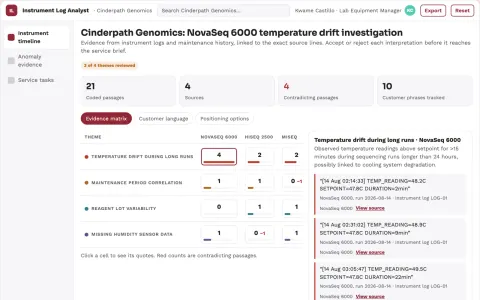
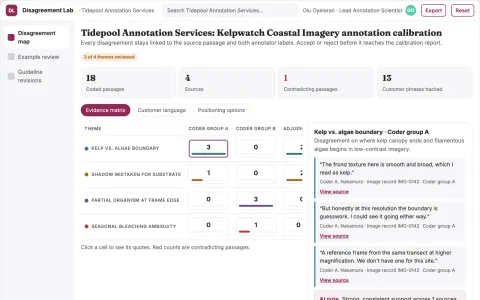
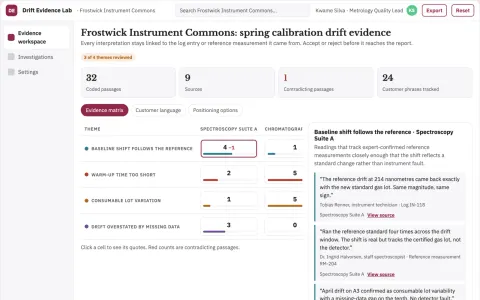
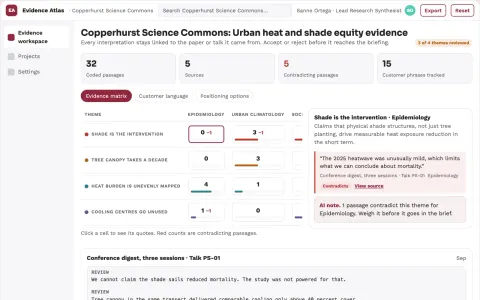
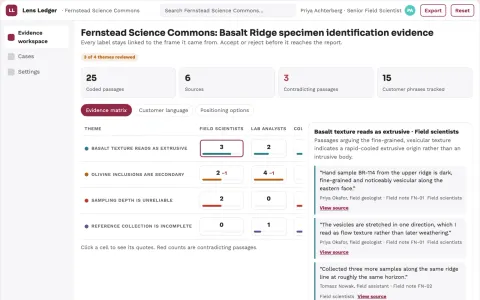
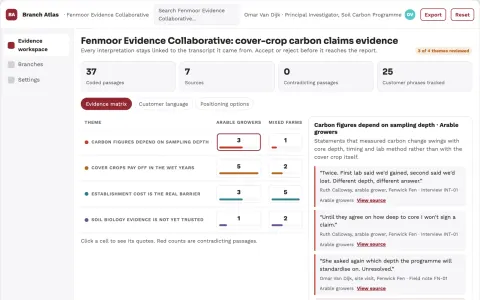
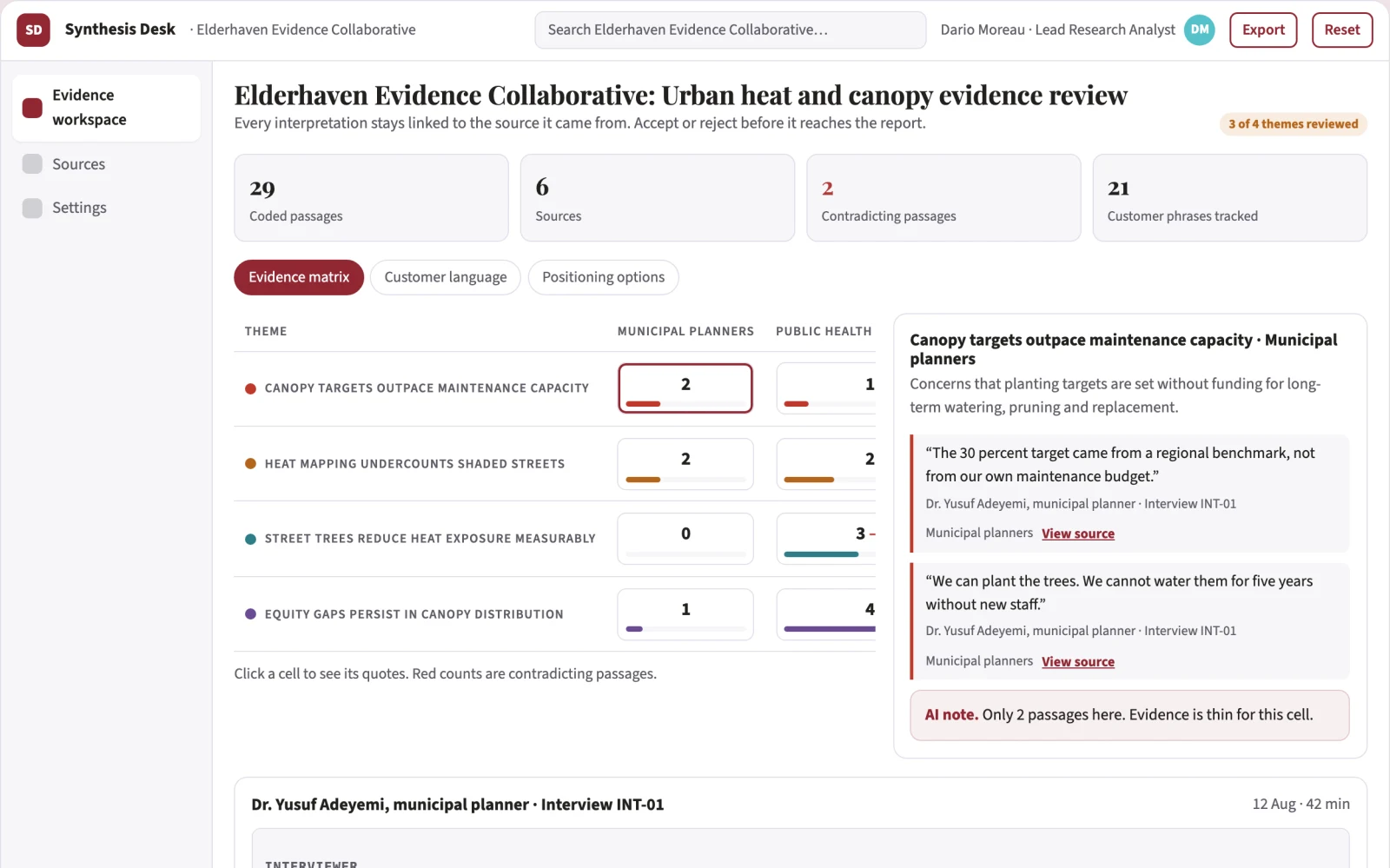
Primary screens: Research brief and sources, Editable report workspace, Review and delivery. Use a thumbnail gallery for projects, a large central editing canvas, and a right-hand panel for sources, citations, constraints and comments. Let users compare versions side by side. Display draft, changes requested and approved states. Provide a client preview link with comments anchored to the relevant claim. Make the task-specific outcome reviewer-approved evidence-backed reports with linked citations visible beside its evidence, review state and value baseline.