AI Copilot on Snowflake Cortex AI: Customer 360 & Call Analytics (Video Course)
Learn how to build a real AI copilot on Snowflake Cortex AI that unifies your customer data, boosts cross-sell revenue, and scores every call for quality,so agents sell smarter, faster, with full visibility for QA and compliance.
Related Certification: Certification in Building AI Copilots for Customer 360 & Call Analytics
Also includes Access to All:
What You Will Learn
- Design a Snowflake-native agent copilot architecture
- Extract life-event signals from multi-source customer data with Cortex AI
- Build explainable propensity scores and ranked product recommendations
- Generate personalized scripts and a Streamlit Customer 360 for agents
- Analyze calls end-to-end (transcription, sentiment, entities, coaching)
- Run pilots, close the feedback loop, and measure ROI
Study Guide
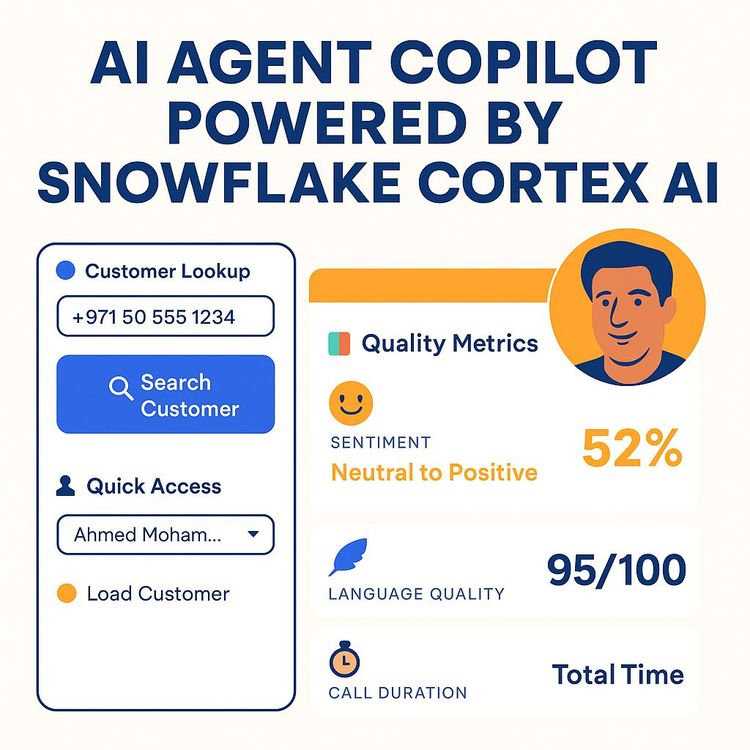
# Building an AI Agent Copilot on Snowflake Cortex AI: The Complete Learning Guide ## Introduction Let's be honest about something. The insurance industry,and frankly, most customer-intensive industries,has a dirty little secret hiding in plain sight. Your sales agents are drowning in disconnected systems, your customer data is sitting in silos that never talk to each other, and your call quality assurance team is still spot-checking maybe two percent of interactions while hoping the rest are fine. That's not a strategy. That's a gamble. This course changes that equation entirely. We're going to build something genuinely transformative: an AI-powered agent copilot that sits right next to your sales force and guides them before, during, and after every single customer interaction. Not as a replacement for human judgment, but as an intelligent partner that prepares your agents with the right information, recommends the right products at the right moment, and then evaluates every call for quality and coaching opportunities. The platform of choice is Snowflake Cortex AI, and here's why that matters more than you might think. We're not bolting together a dozen different vendors and hoping the integration holds. We're building the entire solution,database, AI processing, frontend application, orchestration,natively inside one governed data platform. Your sensitive customer data never leaves the environment. No external API keys to manage. No data exfiltration risks. Just a unified system that works. Now, let me be clear about what you're going to learn here. This isn't a theoretical overview. This is a deep, practical dive into a production-grade architecture that has been deployed in real insurance markets. We're going to cover the business problem from every angle, dissect the technical architecture piece by piece, walk through real use cases with actual propensity scores and recommendation logic, and examine the call quality analytics engine in granular detail. By the time we're done, you'll understand exactly how to design, build, and deploy this system in your own organization. Whether you're a data architect trying to figure out the technical blueprint, a sales enablement leader looking for ways to supercharge your frontline teams, or a quality assurance manager tired of manual call reviews, this course gives you the complete picture. Let's start at the beginning, because the beginning matters more than you'd think. --- ## Section 1: The Business Problem,Why Cross-Selling Fails and What It Costs You ### The Three Systemic Problems Plaguing Insurance Sales Walk into any insurance sales floor and you'll see the same scene playing out across every desk. An agent is logged into four different systems simultaneously. They're squinting at a CRM, cross-referencing a policy administration database, digging through claims history, and trying to piece together a customer profile from fragments. The customer is on hold. The clock is ticking. And the agent hasn't even started the conversation yet. This is the reality of insurance sales operations, and it's broken in three specific ways. The first problem is information overload. Not in the sense that there's too much data,there's too much data scattered across too many places. Sales agents routinely toggle between CRM platforms, policy administration systems, and claims databases just to assemble a basic customer profile. Think about what that means operationally. Every time an agent has to switch contexts, they lose mental momentum. Every minute spent hunting for data is a minute not spent building rapport, uncovering needs, or closing a sale. The research consistently shows that agents spend a disproportionate amount of their time on data discovery rather than on revenue-generating conversation. And that's not a small inefficiency. That's a fundamental structural problem. The second problem is perhaps more insidious: missed opportunities from static data. Here's what I mean by that. Even when organizations invest in sophisticated systems that make customer data readily available, that data is overwhelmingly static. It's a snapshot of who the customer was when they bought their policy, not who they are right now. Meanwhile, customers are constantly emitting real-life signals. They're buying new properties. They're purchasing high-value vehicles. They're getting married, having children, expanding their families. They're planning international travel. All of these life events create insurance needs, and all of them are invisible in a static data view. Let me give you a concrete example of what this looks like in practice. A customer bought a health insurance policy five years ago. Since then, they've gotten married, bought a home in a premium neighborhood, and acquired a luxury vehicle. If your agent calls this customer with just the static policy data, they'll try to sell them another health product. Maybe a wellness rider. Maybe a dental add-on. But this customer doesn't need more health coverage,they need home insurance for that new property, and they need umbrella liability coverage for that expensive car. The life events are sitting there in the data, but without intelligent processing, they remain buried and invisible at the moment of interaction. The third problem is the generic approach. Many organizations still deploy what I call the "one script fits all customers" strategy. The agent has a script, and that script is the same for every customer regardless of their circumstances, needs, or buying readiness. Now let's be fair,this approach has a certain appeal. It's simple. It's scalable. It doesn't require sophisticated data analysis. But in modern insurance markets, it's significantly reducing conversion effectiveness. Customers can tell when they're getting a generic pitch. They sense when the conversation isn't tailored to their situation. And in an era where personalization is the expectation, not the exception, the generic script is a liability. ### The Business Value Proposition So what's the upside of solving these problems? The solution we're building delivers three distinct and measurable business values. First, operational efficiency. By automating the data discovery process, we dramatically reduce call preparation time. Instead of toggling between five systems for fifteen minutes before a call, the agent gets a comprehensive, AI-enriched customer view instantly. That time savings translates directly into more calls handled, more customers served, and more productive selling hours. Second, revenue growth. By detecting life events and computing propensity scores, the system uncovers hidden sales opportunities that agents currently miss. We're not just making the existing sales process faster,we're expanding the set of opportunities that agents can act on. Every customer interaction becomes a chance to cross-sell and upsell based on genuine, data-backed needs. Third, comprehensive quality assurance. This is where the paradigm shift happens. Traditional call quality monitoring samples a tiny fraction of interactions,maybe two to five percent of calls get reviewed manually. Our system automates the analysis so that a hundred percent of interactions are evaluated. Every call gets sentiment analysis, script adherence scoring, entity extraction, and coaching insights. That's not just an improvement in quality assurance. It's a fundamental change in what compliance monitoring means. The solution serves three distinct audiences within an organization. Frontline sales agents get deal-closing intelligence that makes them more effective in every conversation. Call center representatives get guidance for managing complex customer queries with confidence. And quality assurance or compliance managers get complete visibility into conversation outcomes, with automated insights that would take a team of human reviewers weeks to produce manually. --- ## Section 2: The Solution Architecture,An Intelligent Assistant Layer ### The Core Concept Here's the mental model I want you to adopt. Think of this not as a dashboard, and not as a reporting tool, but as a real-time partner for your sales workforce. The system creates an intelligent layer that sits right next to your sales agent and guides them before, during, or after every interaction with the customers. The architecture is elegant in its simplicity. On the input side, we aggregate raw customer data from multiple sources. That data flows through an AI signal extraction engine built on Snowflake Cortex AI. And on the output side, we deliver a comprehensive Customer 360 view with dynamic scores, product recommendations, and conversation scripts. Let me walk through each layer in detail. ### The Input Layer: What Data Goes In The system ingests raw customer information from a variety of sources. This isn't just policy data,it's a complete picture assembled from every touchpoint your organization has with the customer. Demographic data forms the foundation: age, income, contact information, credit scores. These are the basic facts that define who the customer is at a structural level. Policy data adds the insurance context: vehicle details extracted from auto policies, property details from property policies. This tells us what the customer currently owns and how they're protecting it. Customer support interaction data brings in the behavioral dimension: previous quote requests, change requests, service interactions. This is where the life event signals start to emerge. When a customer updates their address, that's a potential home insurance trigger. When they call to ask about adding a new vehicle, that's a motor insurance opportunity. When they request information about travel coverage, that's a signal for travel insurance. The key insight here is that we're not just collecting data,we're collecting signals. Every piece of information is a potential indicator of a customer need, and the AI engine's job is to extract those signals from the raw data. ### The Processing Layer: The AI Signal Extraction Engine This is where the magic happens. The raw data passes through an AI signal extraction engine built on Snowflake Cortex AI. This engine performs four critical functions. First, it analyzes customer sentiment. Not just on the current interaction, but across the customer's entire history with your organization. Are they satisfied? Frustrated? Neutral? Sentiment is a leading indicator of both churn risk and cross-sell readiness, and the engine captures it systematically. Second, it generates contextual answers. When the agent needs to know something specific about the customer's situation, the AI can provide instant, context-aware responses. This is the "copilot" aspect of the system,it's not just showing data, it's answering questions and providing intelligence on demand. Third, it extracts structured data from unstructured or messy text. Customer notes, call transcripts, email communications,all of this unstructured information gets processed and structured into actionable data points. This is invaluable because so much customer intelligence lives in free-form text that traditional systems can't parse. Fourth, and most importantly, it generates propensity scores. This is the mathematical engine that determines the optimal product to offer each customer at a specific point in time. The propensity score answers the question: "Given everything we know about this customer, how likely are they to purchase this product?" It's not a guess and it's not a generic recommendation,it's a calculated probability based on all available signals. ### The Output Layer: The Customer 360 View The processed data emerges as a comprehensive Customer 360 view that combines static demographic data with dynamic intelligence. This is where the agent sees the full picture. Static components include the demographic profile, contact information, income, and credit scores. These are the foundational facts. Dynamic components are where the real intelligence lives. The affluent score measures customer wealth and spending capacity, informing premium product recommendations. The Net Promoter Score quantifies customer loyalty and satisfaction. The sentiment score captures the emotional trajectory of the customer relationship. The cross-selling readiness indicator tells the agent whether the customer is in a receptive state for additional offers. And then there are the propensity scores with confidence levels. Each product recommendation comes with a score indicating purchase likelihood, plus a confidence level that tells the agent how reliable that prediction is. The system also surfaces discount opportunities based on no-claim records and customer loyalty,because a customer with a clean claims history is both lower risk and more deserving of preferential pricing. --- ## Section 3: The AI Recommendation Engine in Depth ### How Product Ranking Works The recommendation engine is the revenue engine of the entire system. It processes all customer data,both static and dynamic,through the Cortex AI engine, and the output is a ranked set of product recommendations. Here's how the ranking works. Each potential product gets a propensity score. That score determines where it falls in the priority list. The system doesn't present the agent with a buffet of options,it presents a focused, ranked set of recommendations starting with the highest propensity score. Let me give you a concrete example from an actual use case. In one demonstration scenario, the system generated the following recommendations for a single customer: Home insurance came in with an eighty-eight percent propensity score. The driving signals were an address change and a high-value property purchase. The system detected that this customer had recently moved to a premium neighborhood, which substantially increased their need for home coverage. Motor insurance followed with a seventy-two percent propensity score. The key signal here was ownership of high-value vehicles. This customer had expensive cars, and the system recognized that their current coverage might be inadequate for those assets. Travel insurance was also recommended, driven by recognition of the customer as a frequent traveler with multiple past travel insurance purchases. The system had visibility into the customer's travel patterns and knew this was a product they'd buy again. Each recommendation was tagged as high or medium priority and included a detailed rationale the agent could review. This is critical,the agent doesn't have to trust the recommendation blindly. They can see exactly why the system made each suggestion, which builds confidence and enables more informed conversations. ### Recommendation Transparency: Showing the Why I want to emphasize the explainability aspect because it's the difference between a tool that gets adopted and a tool that gets ignored. The system doesn't just say "offer home insurance." It breaks down the contributing factors. In another demonstration scenario, home insurance received a seventy-eight percent propensity score. The explanation panel revealed the contributing factors: a quote request two weeks prior, relocation to a premium villa in Dubai Marina, ownership of high-value cars, and a zero-claim history that also unlocked discount opportunities. Think about what that explanation does for the agent. It's not just telling them what to sell,it's giving them the conversation. The agent can say to the customer, "I noticed you requested a home insurance quote a couple of weeks ago, and now that you've moved to Dubai Marina, I think I can help you protect that investment." That's a conversation starter that feels personal and relevant because it is. Travel insurance appeared as the second recommendation, justified by frequent travel patterns, demographic match, and affluent score. Life insurance followed based on age and family formation factors. Each recommendation carries its own rationale, and the agent can choose which to pursue based on their read of the customer's receptiveness. ### AI Script Generation: From Insight to Action Here's where the system truly functions as a copilot rather than just an analytics tool. For each recommendation, the AI generates a conversation script. Not a generic script,a tailored script that incorporates the specific signals and circumstances driving the recommendation. The script generator enables agents to either copy the generated script for immediate use, send it via email or WhatsApp, or use it as the foundation for a direct sales call. This bridges the critical gap between insight and action. It's one thing to know that a customer should buy home insurance. It's another thing entirely to know exactly what to say to them about it. The script incorporates the key signals, addresses potential objections proactively, and includes the discount opportunities the customer qualifies for. It's a complete sales enablement package delivered in seconds. --- ## Section 4: The Customer 360 View,A Tour of the Agent Experience ### The Agent Dashboard When a sales agent logs into the Streamlit-based application, they're greeted with a personalized dashboard that gives them everything they need to manage their portfolio effectively. The dashboard shows their progress metrics,how many customers they've attended, their coverage areas, and the total premium or revenue they've generated. This gives agents a clear picture of their performance and what they've accomplished. Customers are organized by region or product focus, so an agent handling life insurance sees their life insurance book, while a vehicle insurance specialist sees their auto portfolio. This organization makes it easy to prioritize outreach and manage the day's workload. ### Customer Search and Selection Finding a specific customer is straightforward through either name search or phone number lookup. The phone number search is emphasized because duplicate names are common in customer databases, and phone numbers provide a more reliable identifier. This might seem like a minor feature, but think about it from a usability perspective. If an agent has a missed call from a customer, they can punch in the number and immediately pull up the full profile. No guessing, no wading through potential matches. Just instant access to the customer view. ### The Customer 360 Display Once a customer is selected, the dashboard presents a comprehensive view of everything the agent needs to know. Basic information comes first: client age, policy count, and current premium. This gives immediate context about who the customer is and what they already have. The affluent score is displayed prominently. This informs the agent's approach,a high-affluent customer can be pitched premium products, while a lower-affluent customer might be more receptive to value-oriented options. Upcoming policy renewal dates are surfaced so the agent knows when there's a natural touchpoint for conversation. Customer tenure with the company is shown, which can inform loyalty-based offers and discounts. And then there's the life event detection display. This is where the system surfaces the dynamic intelligence that makes the difference. The dashboard shows detected life events such as a recent move to Dubai Marina, prior home insurance requests, frequent traveler status, and ownership of multiple high-value vehicles. Let me pause here and emphasize how powerful this is. Before this system, an agent would have had no idea that a customer had recently moved to a premium neighborhood. They would have called, asked how things were going, and missed the massive home insurance opportunity sitting right in front of them. With this system, the life event is right there on the screen, ready to be turned into a conversation. --- ## Section 5: Call Quality Analytics,The Complete Picture ### The Four Analytical Lenses Once the agent engages with the customer, the system shifts into evaluation mode. The call quality analytics component examines completed calls through four distinct analytical lenses, each providing crucial intelligence. The first lens is transcription. Audio files are converted to text through ASR technology, and the system can translate the transcript into multiple languages. This is essential for global operations and multilingual markets. In the UAE market deployment example, a call conducted in Arabic was automatically transcribed, translated into English, and made available for download. The agent and QA manager could review the conversation in their preferred language. The second lens is quality metrics. The system measures sentiment analysis, script adherence scoring, and talk time balance. Let me break down what each of these means in practice. Sentiment analysis tracks the emotional trajectory of the call. In the demonstration example, the call showed a fifty-two percent sentiment score, ranging from neutral to positive. The system can show how sentiment shifted over the course of the conversation,starting neutral, moving positive as rapport was built, perhaps dipping during objections, and recovering by the close. Script adherence scoring measures how closely the agent followed the recommended script. In the demonstration, the score exceeded ninety percent, which was rated as "excellent." This is a critical metric because it tells you whether the AI-generated guidance is actually being used and whether it's effective. Talk time balance indicates whether the agent pitched effectively while allowing customer participation. If the agent talks for ninety percent of the call, that's a monologue, not a conversation. If the customer dominates, the agent might be missing opportunities to guide the interaction. The balance metric captures this dynamic. The third lens is entity extraction. The system automatically identifies key conversational elements: products mentioned, pricing discussions, policy types, and other salient details. In the demonstration call, the system detected that home insurance was mentioned, identified the pricing discussion (two thousand four hundred dirhams per year or two hundred dirhams per month), and classified the policy type as comprehensive home insurance. This might not sound revolutionary, but think about the operational implications. Entity extraction enables automated tagging of every call with the products discussed, the prices quoted, and the outcomes achieved. That enables powerful analytics across your entire call volume. The fourth lens is coaching insights. This is where the system moves from measurement to action. The AI generates specific, actionable feedback highlighting what went well and what requires improvement. ### Coaching Insights in Action Let me walk through the coaching insights from the demonstration call to show you what strong feedback looks like. On the positive side, the system identified that the agent had a natural conversational flow. The call didn't feel scripted or robotic,it felt like a genuine conversation between two people. The agent demonstrated effective objection handling, addressing customer concerns without getting defensive or dismissive. Rapport building with the client was strong, with the agent creating a connection that made the conversation feel personal. And the agent communicated the next steps clearly, so the customer knew exactly what would happen after the call. On the improvement side, the system provided four specific recommendations. First, additional discovery questions should have been asked. The agent relied heavily on pre-loaded information rather than probing for new needs. Even though the system had provided a comprehensive customer view, there were likely additional needs that would have emerged through better questioning. Second, competitor comparisons should be introduced earlier in the conversation. The agent waited too long to position the offering against alternatives. Introducing competitive differentiation earlier would have shaped the customer's frame of reference more favorably. Third, stronger urgency creation was needed. The system suggested highlighting a ten percent discount available for only two days. This kind of time-limited offer creates a reason for the customer to act now rather than delaying. Fourth, customer testimonials should be included to strengthen the sales pitch. Social proof is a powerful persuasion tool, and the agent wasn't using it. Now, here's what I want you to notice about these coaching insights. They're not generic. They're not "improve your communication skills" or "be more persuasive." They're specific, actionable, and tied to observable behaviors in the call. That's the difference between feedback that helps an agent grow and feedback that gets ignored. --- ## Section 6: Why Snowflake,Platform Selection Deep Dive ### The Strategic Advantages The entire solution is built natively within the Snowflake ecosystem. This wasn't an arbitrary choice,it was driven by several strategic advantages that make Snowflake the right platform for this architecture. The first advantage is the unified data platform. Snowflake provides native SQL support combined with a cost-effective architecture for large-scale data processing. You get the power of a modern data warehouse without the complexity of managing infrastructure. For a solution that processes customer data, runs AI models, and delivers real-time recommendations, this foundation is critical. The second advantage is native application support. Streamlit integration enables the creation of rich, interactive user interfaces without external tools. The agent dashboard, the customer 360 view, the call analytics interface,all of these are built in Streamlit and run natively within Snowflake. This eliminates the need for a separate frontend stack and reduces the integration complexity dramatically. The third advantage is performance. The system achieves sub-millisecond latency, ensuring fast application responsiveness and real-time user interactions. When an agent searches for a customer or pulls up a recommendation, the response is instantaneous. This might seem like a nice-to-have, but in a sales environment, lag kills momentum. Agents won't use a tool that makes them wait. The fourth advantage is security. No external API calls are required,which eliminates API key management and ensures sensitive data never leaves the Snowflake environment. This is a massive security win. You're not sending customer data to an external LLM provider. You're not managing API keys that could be compromised. Everything stays within your governed data platform. The fifth advantage is single-vendor simplicity. All components,database, LLM processing, frontend, and orchestration,operate under one roof. This means one vendor to manage, one security model to enforce, one platform to learn. The operational simplicity is hard to overstate. ### The Technology Stack Let me break down the specific technologies used in this solution. The database layer is Snowflake Database itself. This handles all data storage, management, and SQL processing. Customer data, policy data, call transcripts, sentiment scores,everything lives here. The AI and LLM processing layer is Snowflake Cortex AI. This provides the large language model capabilities that power sentiment analysis, script generation, entity extraction, and contextual answering. Because Cortex AI runs natively within Snowflake, you get these capabilities without data leaving the platform. The frontend application is built with Streamlit. This is why the agent dashboard and customer 360 view are interactive and responsive. Streamlit lets you build Python-based web applications quickly, and its native integration with Snowflake means the data flows directly into the UI. The backend processing uses Snowpark Python. This enables programmatic data processing and orchestration within the Snowflake environment. Snowpark gives you the flexibility of Python without sacrificing the governance and security of Snowflake. The key insight here is that this entire stack operates within one environment. No external services, no complex integrations, no data movement between systems. That's the architectural advantage that makes this solution both powerful and secure. --- ## Section 7: The End-to-End Workflow,How It All Fits Together ### The Operating Model Let me walk you through the complete operational workflow, from raw data ingestion to call quality assessment. This is the sequence that ties everything together. The first step is customer data ingestion. Raw customer information is loaded into the AI engine. This includes demographic data, policy holdings, claims history, and support interactions. The data comes from multiple source systems and is consolidated into a unified view. The second step is Customer 360 generation. The AI engine processes the raw data and produces a comprehensive customer view with dynamic scores. Affluent score, NPS, sentiment, propensity scores, discount opportunities,all of these are calculated and presented in an integrated dashboard. The third step is product recommendation. Based on the synthesized data, the AI generates ranked product recommendations with explanatory signals. Each recommendation includes a propensity score, the life events driving the recommendation, expected premium estimates, and available discounts. The fourth step is agent outreach. Sales agents place calls using the AI-generated scripts and the Customer 360 dashboard. They have the full customer picture, the ranked recommendations, and the conversation script,everything they need for an effective call. The fifth step is call recording and processing. Completed call recordings are returned to the AI engine for LLM-based analysis. The audio is transcribed, translated if necessary, and processed through the quality analytics pipeline. The sixth step is quality assessment. The system produces call analytics, including sentiment, script adherence, and coaching recommendations. Quality assurance managers get complete visibility into every call, with actionable insights that drive agent development. ### The Feedback Loop Here's what makes this system truly powerful: it's not a one-way pipeline. It's a continuous feedback loop. The call analytics feed back into the system. When the AI identifies that certain scripts perform better than others, that intelligence can inform future script generation. When the system detects that certain recommendations are more likely to convert, that learning improves the propensity scoring model. When coaching insights reveal common agent weaknesses, that information can shape training programs. This creates a virtuous cycle where the system gets smarter over time. Every call analyzed improves the next recommendation. Every coaching insight improves the next agent performance. The system doesn't just automate existing processes,it continuously enhances them. --- ## Section 8: Practical Use Cases and Real-World Scenarios ### Use Case One: Life Event Detection for Home Insurance Let me walk you through a complete use case to show you how the system works in practice. A customer holds only health and medical insurance with the company. Recently, they updated their address in the system. On the surface, this seems like a minor administrative change. But the AI system detects this as a life event signal. The system researches the new locality and identifies it as Pacific Heights,a premium neighborhood with high property values. This is exactly the kind of signal that indicates a home insurance opportunity. The AI flags this life event and generates a home insurance recommendation with a calculated propensity score. It also provides expected premium estimates and, if applicable, discount opportunities based on the customer's claim history and loyalty. The agent sees all of this in the Customer 360 view. The recommendation includes the rationale,the address change, the premium neighborhood identification, the property value assessment. The agent can now call the customer with a specific, relevant conversation starter. This is the difference between reactive service and proactive advisory selling. The system didn't wait for the customer to ask about home insurance. It detected the need and armed the agent with the intelligence to act on it. ### Use Case Two: High-Value Asset Protection Here's another scenario that demonstrates the system's ability to identify coverage gaps. A customer holds vehicle insurance for a high-value car but subscribes to only a standard coverage level. The AI flags this as a gap. The vehicle's value suggests that standard coverage is inadequate,if the customer is in an accident that totals the car, their standard coverage might not fully protect them. The system recommends umbrella or excess liability coverage based on the vehicle's value. It generates a propensity score for this recommendation and provides additional context, including expected premium and available discounts based on the customer's claims history and loyalty status. This is exactly the kind of opportunity that gets missed in traditional sales processes. The agent sees the vehicle on the policy, but without the AI's analysis, they don't recognize that the coverage level is inadequate for the vehicle's value. The system makes the gap visible and provides the conversation framework to address it. ### Use Case Three: The Multi-Factor Recommendation Logic The recommendation engine doesn't operate on single signals,it processes multiple signals simultaneously to build a complete sales picture. In one illustrative case, the system generated three recommendations for a single customer. Home insurance scored eighty-eight percent propensity, driven by an address change and high-value property purchase. Motor insurance scored seventy-two percent, driven by ownership of high-value vehicles. Travel insurance was recommended based on the customer's frequent travel patterns and past travel insurance purchases. Each recommendation includes priority tags and detailed rationales. The agent can see that home insurance is the highest-priority opportunity, but they also know that motor and travel insurance are viable offers. This multi-factor approach is what separates sophisticated recommendation systems from simple ones. It's not just matching products to customer attributes,it's understanding the constellation of signals that indicate a customer's readiness to buy. --- ## Section 9: Key Insights and Transferable Principles ### What This Architecture Teaches Us Now that we've covered the system in detail, let me distill the key insights that make this architecture work. These are the principles you should carry forward into your own implementations. Consolidated intelligence beats scattered data. The most significant agent productivity gains come from eliminating the time spent toggling between disconnected systems and replacing it with a single, AI-enriched customer view. The value isn't just in having data,it's in having data that's been processed, analyzed, and turned into actionable intelligence. Life events are the strongest sales triggers. Real-time detection of customer life signals,moves, purchases, family changes, travel,unlocks cross-selling opportunities that static data analysis permanently misses. The system's ability to detect these events and surface them at the moment of interaction is its most powerful feature. Propensity scoring transforms recommendation credibility. Mathematical scoring provides agents with data-backed confidence about which product to offer. Instead of relying on intuition or generic scripts, the agent has a calculated probability that this customer will buy this product at this time. Explainability drives adoption. The system's ability to show why a recommendation was made,the key signals and contributing factors,builds agent trust and enables more informed conversations. Agents don't just follow recommendations; they understand them, which makes them more likely to use the system and more effective when they do. Automated call analytics scales quality assurance. Moving from manual spot-checking to one hundred percent automated analysis fundamentally changes the economics and effectiveness of compliance monitoring. You get complete audit trails, consistent quality scoring, and actionable coaching insights for every single interaction. Platform consolidation enhances security. Keeping all data, processing, and applications within a single secure environment like Snowflake eliminates data exfiltration risks and key management complexity. The security advantages of this approach are substantial. Scripts must be dynamic, not static. AI-generated scripts tailored to each customer's specific circumstances outperform one-size-fits-all approaches. The script is a conversation guide, not a rigid format, and it's customized to the customer's situation. Coaching feedback must be specific. Generic "improve performance" feedback is far less valuable than precise, actionable insights such as "introduce competitor comparison earlier" or "create urgency with time-limited discounts." Specificity is what makes coaching effective. --- ## Section 10: Implementation Roadmap and Action Items ### For Organizations Evaluating Similar Solutions If you're considering implementing this kind of system, there are several steps you should take before you write a single line of code. First, audit your existing data fragmentation. Document the systems your agents currently toggle between and quantify the time spent on data discovery versus customer conversation. This baseline measurement is essential for building the business case and for measuring success after implementation. Second, define life-event taxonomies. Work with sales leadership to identify the customer signals most predictive of insurance needs in your market. Property changes, vehicle purchases, family milestones, travel patterns,these are the signals that drive sales. You need to know which ones matter in your context. Third, start with propensity scoring pilots. Implement propensity-based recommendations for a limited product portfolio and one agent team before expanding enterprise-wide. This lets you refine the models, validate the approach, and build internal confidence before scaling. Fourth, involve QA and compliance early. Engage quality assurance stakeholders during the design phase to ensure call evaluation metrics align with regulatory requirements and internal standards. The last thing you want is to build a call analytics system that doesn't meet your compliance obligations. ### For Solution Architects If you're designing the technical solution, prioritize these considerations. Prioritize explainable AI. Ensure your recommendation engine surfaces the contributing signals and rationale. Transparency is critical to agent trust and adoption. If agents don't understand why a recommendation was made, they won't trust it, and they won't use it. Design for multilingual environments. Build transcription and translation capabilities from the start, particularly for global or multi-region operations. Adding language support later is always more expensive and more complicated than designing for it initially. Leverage platform-native capabilities. Prefer native AI, application, and database services within your chosen data platform to minimize security risks and operational complexity. The Snowflake approach,everything under one roof,reduces integration burden and security exposure. ### For Sales Enablement Leaders Pair recommendations with scripts. Product recommendations should be accompanied by ready-to-use conversational scripts to bridge the gap between insight and action. An insight without a script is just information; an insight with a script is a sales action. Incorporate discount intelligence. Layer loyalty-based and claims-history-based discount recommendations into the sales workflow to improve conversion. Discounts are powerful persuasion tools, and the system should identify when and how to use them. Create feedback loops. Use call analytics insights to continuously refine both the recommendation engine and agent training programs. The system should get smarter over time, and the training should reflect what the analytics reveal. ### For Quality Assurance Leaders Move from sampling to full coverage. Use automated call evaluation to analyze one hundred percent of interactions rather than a statistical sample. The economics of automated analysis make full coverage both feasible and necessary. Standardize coaching feedback. Develop templates for actionable insights that identify specific behaviors,such as timing of competitor mentions, urgency creation, and discovery questioning,rather than general performance ratings. Specific feedback drives specific improvement. --- ## Conclusion We've covered a lot of ground in this course, and I want to wrap up by stepping back and looking at the big picture. What we've built here is more than just a technical architecture. It's a demonstration of a new operating paradigm for customer-facing organizations. In this paradigm, AI doesn't replace human judgment,it enhances it. The system prepares the agent with comprehensive intelligence, guides them through the conversation with tailored scripts, and evaluates the interaction with granular analytics. The human remains in control, but they're a better, more effective human because of the AI partnership. The business value is clear. Efficiency gains from automated data discovery. Revenue growth from detecting life events and computing propensity scores. Quality improvements from automated call analysis that covers every interaction. These aren't incremental improvements,they're fundamental changes in what's possible. The technical approach is equally clear. By building natively within Snowflake, we get a unified environment where data, AI processing, and application development coexist securely. No external dependencies. No data exfiltration risks. No integration complexity. Just a governed platform that works. The design principles we've explored are transferable beyond insurance. Any customer-intensive industry,banking, healthcare, retail, telecommunications,can apply this blueprint. The specifics change, but the pattern remains: consolidate data, detect signals, compute propensity, generate scripts, analyze conversations, provide coaching feedback. The organizations that successfully integrate such intelligent agent copilots will gain meaningful advantages in sales efficiency, customer satisfaction, and compliance reliability. The blueprint we've covered provides a practical, proven foundation for transforming customer intelligence into measurable business outcomes. Now, here's my final piece of advice. Don't treat this as a theoretical exercise. Go build something. Start with a pilot, measure the results, and iterate. The technology is mature enough. The architecture is proven. The business case is compelling. What's left is execution. The future of customer engagement belongs to organizations that can operationalize artificial intelligence at the point of interaction. This course has given you the blueprint. The rest is up to you.Frequently Asked Questions
How to use this FAQ resource
This FAQ is built as a practical reference for anyone exploring AI-powered agent copilots and call quality analytics on Snowflake Cortex AI. It answers the questions that surface most often when teams evaluate, design, and implement this type of solution,whether you're a sales leader, a data engineer, or a compliance officer. The questions progress from foundational concepts through technical architecture, practical application, and into advanced implementation considerations. Use it as a starting point to understand the core ideas, then dive deeper into the sections that matter most for your specific role and use case. The goal is to give you clarity on how this technology works, what it delivers, and what it takes to bring it into your organization.
Core Concepts
Q1: What is an AI agent copilot?
An AI agent copilot is an intelligent software layer that sits alongside customer-facing personnel,such as sales agents and call center representatives,and provides real-time guidance before, during, and after customer interactions. Rather than replacing human judgment, the copilot enhances it by delivering data-driven recommendations, conversation scripts, and performance insights at the moment they are needed. In the context of this insurance industry solution, the copilot supplies agents with a complete view of the customer, mathematically derived product recommendations, and actionable talking points before they even place a call. It then analyzes the recorded conversation to evaluate quality and suggest improvements.
Q2: Who are the intended users of this solution?
The solution is designed for three distinct audience groups. First, frontline sales agents who need to close deals efficiently and effectively. Second, call center representatives who handle complex customer queries and need access to context-rich information during conversations. Third, quality assurance and compliance managers who require visibility into conversation quality, agent adherence to scripts, and overall customer satisfaction metrics. Each user group interacts with the same underlying data but through different lenses and workflows.
Q3: What are the three primary business values delivered by this solution?
The solution focuses on three measurable business outcomes. The first is efficiency: it reduces call preparation time by automating data discovery, eliminating the need for agents to manually search across multiple systems. The second is revenue: it uncovers hidden sales opportunities by analyzing customer data for cross-selling signals that agents would otherwise miss. The third is quality analysis: it moves call quality assessment from spot-checking a small percentage of calls to a 100% automated, fully compliant review system.
Q4: What exactly is the "intelligent assistant layer" and how does it work?
The intelligent assistant layer is the conceptual core of this architecture. It sits between raw customer data and the sales agent, acting as a processing engine that transforms unstructured information into actionable intelligence. Raw data flows in from multiple sources,demographic records, policy systems, claims history, and service interactions. The AI signal extraction engine then processes this data through several operations: sentiment analysis, response generation, structured data extraction from unstructured text, and propensity score computation. The output is a complete Customer 360 view that agents can act on immediately. This layer is what turns scattered data points into a coherent, decision-ready picture for the agent.
Problem Context
Q5: Why is cross-selling so difficult for insurance sales agents?
Cross-selling in insurance fails for three primary reasons. First, there is the problem of information overload: agents toggle between CRMs, policy systems, and claims histories, spending most of their time searching for data rather than engaging with customers. Second, there is the problem of missed opportunities: even when data is available, it is often static while customers are emitting real-life signals,such as buying a new property, acquiring a high-value vehicle, getting married, having children, or planning international travel. These signals are buried within the data and typically go unnoticed. Third, there is the problem of a generic approach: many organizations use a single script for all customers, which fails to account for individual customer circumstances and needs.
Q6: What kinds of "life signals" does the system detect?
The system identifies events and patterns in customer data that indicate a sales opportunity. Examples include a change of address, which may signal a need for home insurance; the ownership of high-value vehicles, which may indicate a need for umbrella or excess liability coverage; frequent international travel patterns, which suggest a need for travel insurance; and life milestones such as family formation, which may trigger life insurance recommendations. These signals are extracted from customer records, policy data, and prior service interactions, then used to drive targeted product recommendations.
Certification
About the Certification
Become certified in building AI copilots on Snowflake Cortex AI. You'll unify customer 360 data, boost cross-sell revenue, and automate call scoring for QA and compliance,helping agents sell smarter, faster.
Official Certification
Upon successful completion of the "Certification in Building AI Copilots for Customer 360 & Call Analytics", you will receive a verifiable digital certificate. This certificate demonstrates your expertise in the subject matter covered in this course.
Benefits of Certification
- Enhance your professional credibility and stand out in the job market.
- Validate your skills and knowledge in cutting-edge AI technologies.
- Unlock new career opportunities in the rapidly growing AI field.
- Share your achievement on your resume, LinkedIn, and other professional platforms.
How to complete your certification successfully?
To earn your certification, you’ll need to complete all video lessons, study the guide carefully, and review the FAQ. After that, you’ll be prepared to pass the certification requirements.
Other AI Video Courses
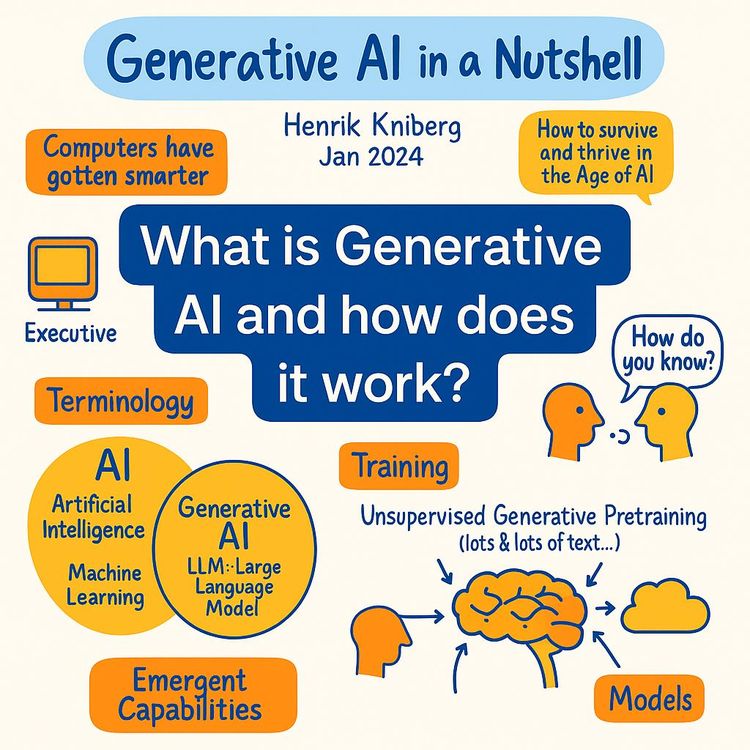
Video Course: What is Generative AI and how does it work?

Video Course: How to Use ChatGPT from Beginner to Professional

Video Course: How to Use Google Gemini for Google Workspace to Boost Productivity

Video Course: How to Use Claude 3.7 AI - Tips for Beginners!

Video Course: ChatGPT for Data Analytics: Full Course - from Beginners to Professional

Video Course: Generating Images and photos With ChatGPT?

Video Course: Generating Images & Photo's with MidJourney

Video Course: Generating Design's with Microsoft Designer and AI

Video Course: Generating Design's with Canva.com and AI
Join 20,000+ Professionals, Using AI to transform their Careers
Join professionals who didn’t just adapt, they thrived. You can too, with AI training designed for your job.