Pydantic Crash Course: Data Validation for Python & AI Apps (Video Course)
Ship fewer bugs and cleaner code by making data contracts explicit. Learn Pydantic from basics to advanced validators, nested models, FastAPI, and LLM output,so your Python and AI apps fail fast, log clearly, and actually hold up in production.
Related Certification: Certification in Building and Validating Data Models with Pydantic

Also includes Access to All:
What You Will Learn
- Define and validate Pydantic BaseModel schemas (coercion vs strict)
- Apply Field constraints, custom validators, computed fields, and serializers
- Model nested data, discriminated unions, and polymorphic payloads
- Load and validate configuration with pydantic-settings and SecretStr
- Integrate Pydantic with FastAPI for validated requests, responses, and OpenAPI
- Validate and repair LLM outputs into structured objects with retry loops
Study Guide
Pydantic Crash Course - Build Reliable Python & AI Applications
Here's the uncomfortable truth: most bugs aren't logic problems. They're data problems. You expected a number; you got a string. You expected a list; you got an empty object. Your code keeps going until,right when it matters,it crashes. That's not a fun way to run software or a business.
Pydantic fixes that. It takes Python's type hints (which are usually just documentation) and turns them into a contract your code can trust. You define the shape of your data once, then Pydantic validates everything that touches it. Upfront. Loudly. Predictably. That's why it underpins frameworks like FastAPI and why AI teams use it to force structure out of LLMs that like to "express themselves."
This course walks you from zero to building resilient Python and AI systems with Pydantic. You'll learn the core model patterns, the advanced validators most devs skip, nested data (the real-world stuff), settings management, and how to use Pydantic to turn unstructured LLM output into clean, validated objects you can put into production. We'll start simple, build up complexity fast, and end with playbooks you can implement today.
The Core Problem: Dynamic Typing Isn't a Free Lunch
Python's flexibility is incredible,until you rely on external data. Variables can change types mid-flight: an integer, then a string, then a list. That's fine in a notebook. It's fatal when you're processing orders, taking payments, or consuming third-party APIs.
Example - delayed failure:
age = "unknown"
# Somewhere else in the code...
discount = 0.1 if age >= 65 else 0.0 # Kaboom: TypeError
Without validation at the entry point, bad data roams through your system. When it finally breaks, the error points nowhere near the source. You lose hours chasing ghosts.
Example - external API risk:
# You expect: {"id": 1, "price": 19.99}
payload = {"id": "1", "price": "N/A"} # Looks harmless, breaks later
# Later someone tries round(payload["price"]) and everything collapses.
Pydantic changes the game: you define a model, feed in raw data, and it either becomes a clean object or throws a clear ValidationError right away. Your code only runs with data it can trust.
Type Hints: The Language Pydantic Speaks
Type hints are the grammar. Pydantic is the enforcement. If you're comfortable with typing basics, you're already halfway there.
Basic types:
name: str
age: int
price: float
is_active: bool
Container types:
tags: list[str]
scores: dict[str, int]
dimensions: tuple[int, int]
Optional values:
middle_name: str | None
# or Optional[str] if you prefer the older style
Literal choices:
from typing import Literal
status: Literal["draft", "published", "archived"]
Union types (either/or):
identifier: int | str
By themselves, hints don't do anything at runtime. Pydantic uses them to parse, coerce, and validate,so your "documentation" becomes executable rules.
Your First Pydantic Model
Pydantic models inherit from BaseModel. Define fields with type hints. Instantiate with raw data. Pydantic cleans it up or stops you immediately.
Example - basic model with validation:
from pydantic import BaseModel, ValidationError
class User(BaseModel):
id: int
name: str
email: str
age: int | None = None
user = User(id=1, name="Alice", email="alice@example.com") # OK
try:
User(id="one", name="Bob", email="bob@example.com")
except ValidationError as e:
print(e) # Clear error: id should be a valid integer
Example - type coercion vs strict mode:
class Product(BaseModel):
price: float # "19.99" will be coerced to 19.99 by default
Product(price="19.99") # OK by default
# Strict mode (global) to forbid coercion
from pydantic import ConfigDict
class StrictProduct(BaseModel):
model_config = ConfigDict(strict=True)
price: float
# Or strict types per field
from pydantic import StrictInt
class Order(BaseModel):
quantity: StrictInt # "3" will fail
Rules of thumb:
- Fields without defaults are required.
- Fields with | None are optional.
- Defaults make fields optional with a defined value.
Example - required, optional, defaults:
class APIConfig(BaseModel):
api_key: str # Required
model: str = "gpt-4o" # Default
temperature: float | None = 0.7 # Optional
cfg = APIConfig(api_key="secret")
assert cfg.model == "gpt-4o"
Controlling What Gets In: Extra Fields, Immutability, and From-Attributes
You get to decide how strict your models are about unknown fields, whether they're mutable, and how they read from ORM objects.
Example - extra fields policy:
from pydantic import BaseModel, ConfigDict
class StrictUser(BaseModel):
model_config = ConfigDict(extra="forbid") # "ignore" | "allow" | "forbid"
id: int
name: str
# {"id":1,"name":"A","role":"admin"} will raise if role is unknown
Example - immutable models:
class ImmutableConfig(BaseModel):
model_config = ConfigDict(frozen=True)
api_key: str
# Any assignment after creation raises an error
Example - parse from ORM objects:
class UserOut(BaseModel):
model_config = ConfigDict(from_attributes=True)
id: int
email: str
# Works with ORM instances exposing attributes instead of dicts
Serialization and Deserialization Without Pain
Moving data in and out of models is frictionless: to dict, to JSON, from dicts, even from raw JSON strings.
Example - validate from dict, dump to dict and JSON:
class User(BaseModel):
id: int
name: str
email: str
raw = {"id": 10, "name": "Charlie", "email": "c@example.com"}
user = User.model_validate(raw)
d = user.model_dump() # dict
j = user.model_dump_json(indent=2) # JSON string
Example - include/exclude, aliases, and None filtering:
from pydantic import Field, ConfigDict
class PublicUser(BaseModel):
model_config = ConfigDict(populate_by_name=True)
user_id: int = Field(alias="id")
email: str
bio: str | None = None
u = PublicUser(id=1, email="e@example.com")
u.model_dump(by_alias=True, exclude_none=True) # {'id': 1, 'email': 'e@example.com'}
Tip: Need the schema for interop or docs? model_json_schema() gives you JSON Schema for the model.
Example - JSON Schema:
schema = PublicUser.model_json_schema()
# Ship this to tooling or feed it to OpenAPI generators
Advanced Validation: Field Constraints, Custom Validators, and Smart Types
Once you've got the basics, you'll want constraints, business rules, and readable error messages. This is where Pydantic shines.
Example - Field constraints for strings and numbers:
from pydantic import Field
class Product(BaseModel):
name: str = Field(min_length=3, max_length=50)
price: float = Field(gt=0, description="Positive price")
tags: list[str] = Field(default_factory=list, max_length=10)
Example - built-in types for common formats:
from pydantic import EmailStr, HttpUrl, SecretStr
class Profile(BaseModel):
email: EmailStr
website: HttpUrl | None = None
api_secret: SecretStr
Example - custom field validators:
from pydantic import field_validator
class UserSignup(BaseModel):
username: str
password: str
@field_validator("username")
def no_spaces(cls, v):
if " " in v:
raise ValueError("Username cannot contain spaces")
return v.lower()
@field_validator("password")
def strong_password(cls, v):
if len(v) < 8:
raise ValueError("Password too short")
return v
Example - model-level validators (before/after):
from pydantic import model_validator
class Cart(BaseModel):
items: list[dict]
total: float
@model_validator(mode="after")
def check_total(cls, m):
calculated = sum(i["price"] * i.get("qty", 1) for i in m.items)
if abs(m.total - calculated) > 0.01:
raise ValueError("Total does not match items")
return m
Example - Enums and Literals for choices:
from enum import Enum
from typing import Literal
class Status(Enum):
draft = "draft"
published = "published"
class Post(BaseModel):
status: Status | Literal["archived"]
Example - date/time and Decimal:
from datetime import datetime
from decimal import Decimal
class Invoice(BaseModel):
issued_at: datetime
amount: Decimal = Field(gt=Decimal("0"))
Best practices:
- Use Field constraints for simple rules, validators for business rules.
- For security-critical inputs, prefer strict mode or Strict types.
- Keep business logic minimal inside models; focus on validation and normalization.
Nested Models: Real-World Data Is Hierarchical
Nesting models lets you describe complex objects clearly and validate them recursively: the parent, every child, and every list item.
Example - order with nested items:
from pydantic import EmailStr, Field
class OrderItem(BaseModel):
product_id: str
name: str
quantity: int = Field(gt=0)
price: float = Field(gt=0)
class Order(BaseModel):
order_id: str
customer_email: EmailStr
items: list[OrderItem]
order = Order.model_validate({
"order_id": "ORD123",
"customer_email": "a@b.com",
"items": [
{"product_id": "P1", "name": "Laptop", "quantity": 1, "price": 1200.0},
{"product_id": "P2", "name": "Mouse", "quantity": 2, "price": 25.5},
],
})
Example - discriminated unions for polymorphic data:
from typing import Literal, Annotated
class CardPayment(BaseModel):
type: Literal["card"]
last4: str = Field(min_length=4, max_length=4)
class WalletPayment(BaseModel):
type: Literal["wallet"]
provider: Literal["apple", "google"]
Payment = Annotated[CardPayment | WalletPayment, Field(discriminator="type")]
class Checkout(BaseModel):
payment: Payment
# Pydantic routes to the right model based on "type"
Tip: Use discriminators when incoming payloads have a "type" field. It prevents ambiguous unions and improves error clarity.
Performance and Bulk Validation
When you're validating large lists, avoid instantiating models one by one in a loop. Use TypeAdapter for speed and clarity.
Example - batch-validate a list of models:
from pydantic import TypeAdapter
class Event(BaseModel):
id: int
ts: int
adapter = TypeAdapter(list[Event])
events = adapter.validate_python([{"id": 1, "ts": 123}, {"id": 2, "ts": 456}])
Example - validate primitives at scale:
ids_adapter = TypeAdapter(list[int])
ids = ids_adapter.validate_python(["1", "2", 3]) # Coerces by default
Clean Output: Computed Fields and Custom Serialization
Sometimes you want derived fields or custom JSON output (e.g., Decimal to string, masking secrets). Pydantic gives you control without hacks.
Example - computed field:
from pydantic import computed_field
class Metrics(BaseModel):
success: int
failure: int
@computed_field
def total(self) -> int:
return self.success + self.failure
Example - custom serializer for Decimal:
from pydantic import field_serializer
from decimal import Decimal
class Money(BaseModel):
amount: Decimal
@field_serializer("amount")
def serialize_amount(self, v: Decimal):
return str(v) # Avoid float rounding issues
Configuration Management with pydantic-settings
Hardcoding secrets is a security leak waiting to happen. pydantic-settings loads environment variables, validates them, and fails fast on startup if anything is missing or malformed.
Example - load settings from .env:
# .env
OPENAI_API_KEY="sk-..."
DEBUG_MODE=True
MAX_CONNECTIONS=50
Example - settings model:
from pydantic_settings import BaseSettings, SettingsConfigDict
class AppSettings(BaseSettings):
model_config = SettingsConfigDict(env_file=".env", env_prefix="")
openai_api_key: str
debug_mode: bool = False
max_connections: int
settings = AppSettings()
# If OPENAI_API_KEY is missing, you get a ValidationError immediately
Example - env prefix and nested settings:
class DBSettings(BaseSettings):
model_config = SettingsConfigDict(env_prefix="DB_")
url: str
pool_size: int = 10
db = DBSettings() # Reads DB_URL and DB_POOL_SIZE
Best practices:
- Use SecretStr for sensitive values to avoid accidental logs.
- Keep a single settings module; inject where needed.
- Fail on startup, not at first database call.
Pydantic + FastAPI: Bulletproof APIs With Minimal Code
FastAPI builds on Pydantic. You write models once, and they power request parsing, response validation, and docs generation.
Example - request and response models:
from fastapi import FastAPI
from pydantic import BaseModel, EmailStr, Field
app = FastAPI()
class CreateUser(BaseModel):
email: EmailStr
name: str = Field(min_length=2)
class UserOut(BaseModel):
id: int
email: EmailStr
name: str
@app.post("/users", response_model=UserOut)
def create_user(payload: CreateUser):
return {"id": 1, **payload.model_dump()}
Example - query params and enums:
from enum import Enum
class Sort(str, Enum):
asc = "asc"
desc = "desc"
@app.get("/products")
def list_products(limit: int = 10, sort: Sort = Sort.asc):
return {"limit": limit, "sort": sort}
Best practices for APIs:
- Always use response_model to validate and document output.
- For database objects, use from_attributes=True in output models.
- Forbid extra fields on inputs for tighter contracts.
- Use aliases to keep external field names stable while refactoring internals.
Pydantic for AI: Enforcing Structured Output From LLMs
LLMs speak in paragraphs; your app wants structured objects. Pydantic is the bridge. You define the schema, the LLM returns JSON that must match it, and you either get a clean object or an error you can feed back for retry.
Example - structured output with an LLM SDK:
from typing import Literal
from pydantic import BaseModel, Field
from openai import OpenAI
client = OpenAI()
class ProductInfo(BaseModel):
name: str = Field(description="Product name")
price: float = Field(description="Product price")
category: Literal["Electronics", "Books", "Clothing"]
text = "The new MacBook Pro is available for $1999."
response = client.chat.completions.create(
model="gpt-4o",
messages=[{"role": "user", "content": f"Extract product info: {text}"}],
response_model=ProductInfo,
)
product: ProductInfo = response
# Validated Pydantic object or an exception you can handle
Example - manual validation and repair loop:
from pydantic import ValidationError
import json
def extract_product(text: str) -> ProductInfo:
prompt = f"Return JSON with name, price, category from: {text}"
raw = client.chat.completions.create(model="gpt-4o", messages=[{"role":"user","content":prompt}])
try:
data = json.loads(raw.choices[0].message.content)
return ProductInfo.model_validate(data)
except (json.JSONDecodeError, ValidationError) as e:
# Retry with the error fed back to the model
repair = client.chat.completions.create(
model="gpt-4o",
messages=[
{"role":"system","content":f"Fix this JSON to match schema: {e}"},
{"role":"user","content":raw.choices[0].message.content}
]
)
data = json.loads(repair.choices[0].message.content)
return ProductInfo.model_validate(data)
Best practices for AI output:
- Always validate the model output before using it.
- Provide clear field descriptions to guide the LLM.
- Keep categories constrained with Literal or Enum.
- Implement a retry/repair loop using the error messages from Pydantic.
ETL and Data Pipelines: Validate at Every Stage
In data pipelines, corruption spreads quietly. Validate on ingest, after transformation, and before load. Fail fast, log clearly, keep the pipeline clean.
Example - stage-by-stage validation:
class RawCustomer(BaseModel):
id: int | str
email: EmailStr | str
joined_at: str
class CleanCustomer(BaseModel):
id: int
email: EmailStr
joined_at: datetime
def transform(raw: RawCustomer) -> CleanCustomer:
return CleanCustomer.model_validate({
"id": int(raw.id),
"email": str(raw.email),
"joined_at": raw.joined_at,
})
Example - validating large CSVs:
from pydantic import TypeAdapter
class Row(BaseModel):
sku: str
qty: int = Field(ge=0)
adapter = TypeAdapter(list[Row])
rows = adapter.validate_python(parse_csv_to_dicts(...))
Best practices:
- Emit the first few validation errors with the row index; skip or quarantine bad rows.
- Version your schemas explicitly (e.g., schema_version on payloads) to support migrations.
- Keep IO boundaries strict and typed.
Design Principles and Modeling Tips
Good models reduce cognitive load and errors. Treat them like contracts.
Tips that save you time:
- One source of truth: define models once and reuse across layers (DTOs).
- Keep coercion minimal at trust boundaries; use strict inputs, permissive internals if needed.
- Use aliases to maintain stable external APIs while refactoring internals.
- Provide descriptions on fields; they help both humans and LLMs.
- Prefer discriminated unions over generic unions for clarity.
- Use model_copy(update=...) for partial updates instead of mutating in place.
Example - partial updates safely:
class Profile(BaseModel):
name: str
bio: str | None = None
p = Profile(name="Ana")
p2 = p.model_copy(update={"bio": "Writer"})
Example - alias generator for consistent casing:
from pydantic import ConfigDict
def to_camel(s: str) -> str:
parts = s.split("_"); return parts[0] + "".join(p.title() for p in parts[1:])
class CamelModel(BaseModel):
model_config = ConfigDict(alias_generator=to_camel, populate_by_name=True)
created_at: datetime
m = CamelModel(created_at=datetime.utcnow())
m.model_dump(by_alias=True) # {"createdAt": ...}
Error Handling Like a Pro
Catching ValidationError early turns chaos into clarity. Use the error details to inform users, log precisely, or guide a repair loop.
Example - handling and logging errors:
from pydantic import ValidationError
try:
User(id="x", name="A", email="bad")
except ValidationError as e:
for err in e.errors():
print(f"path={err['loc']}, type={err['type']}, msg={err['msg']}")
Example - returning readable API errors:
# In FastAPI, raising HTTPException with details is common.
# But often you just let FastAPI surface Pydantic's error payload automatically.
Security and Reliability Considerations
Validation is a security feature. Don't accept untrusted input without checks. Don't log secrets. Don't rely on coercion for critical boundaries.
Checklist for safety:
- Use StrictInt/StrictBool for sensitive fields.
- Forbid extra fields where spoofing is possible.
- Validate URLs/emails with built-ins (HttpUrl, EmailStr).
- Use SecretStr/SecretBytes for tokens and passwords.
- Freeze config models to avoid runtime changes.
Applying Pydantic in Real Projects: Patterns You'll Reuse
Make these patterns your defaults. They scale with you.
For API endpoints:
- Define request and response models for every endpoint.
- Use Field constraints generously for better docs and fewer bugs.
- from_attributes=True for output models consuming ORM instances.
- extra="forbid" on input models to block garbage.
For AI applications:
- Every extraction/classification task gets a Pydantic model.
- Use Literal/Enum to keep outputs tight.
- Implement a retry-and-repair loop using validation errors.
- Log the invalid payloads for model/ prompt iteration.
For application settings:
- One BaseSettings, fail fast on startup.
- Secrets via environment, not source code.
- Different env prefixes for subsystems (DB_, S3_, etc.).
For DTOs between services:
- Use models as explicit contracts.
- Version them (e.g., message_version).
- Generate and share JSON Schema to sync with non-Python teams.
Deep Dive: Aliases, Populating by Name, and Interop
You'll often need one internal name and one external name. Aliases and populate_by_name give you both without pain.
Example - dual naming strategy:
class ExternalUser(BaseModel):
model_config = ConfigDict(populate_by_name=True)
user_id: int = Field(alias="id")
full_name: str = Field(alias="name")
u = ExternalUser(id=5, name="A B")
u.model_dump(by_alias=True) # {"id": 5, "name": "A B"}
u.model_dump() # {"user_id": 5, "full_name": "A B"}
Example - interoperating with JSON Schema consumers:
schema = ExternalUser.model_json_schema()
# Publish this to clients to lock the contract
ORMs and Data Layers
Most apps fetch data from ORMs or other classes. Pydantic can read attributes directly and keep your output models clean.
Example - from_attributes with SQLAlchemy model:
class UserEntity:
def __init__(self, id, email):
self.id = id; self.email = email
class UserDTO(BaseModel):
model_config = ConfigDict(from_attributes=True)
id: int
email: EmailStr
dto = UserDTO.model_validate(UserEntity(1, "a@b.com"))
Example - serialize only what you need:
dto.model_dump(include={"id"}) # {"id": 1}
Strictness Dial: When to Coerce, When to Refuse
Coercion makes integration smoother; strictness increases safety. Choose based on risk.
High-trust internal use:
- Coercion OK: "1" -> 1, "true" -> True
- Use defaults to simplify logic
Low-trust external edges (public APIs, webhooks):
- strict=True globally or Strict types per field
- extra="forbid"
- Narrow unions and use discriminators
Testing Models: Confidence Without Drama
Models are easy to test and should be part of your unit test suite.
Example - simple tests:
def test_user_valid():
u = User(id=1, name="A", email="a@b.com")
assert u.id == 1
def test_user_invalid_email():
with pytest.raises(ValidationError):
User(id=1, name="A", email="not-email")
Example - property-based sanity with randomized inputs:
# Even a small fuzz loop catches edge cases
for invalid in ["", None, 123]:
with pytest.raises(ValidationError):
User(id=1, name="A", email=invalid)
Mini Project: AI-Powered Product Intake Service
Let's wire together what you've learned: ingest unstructured product descriptions, extract structured data via an LLM, validate with Pydantic, and store safely.
Step 1 - define models:
from pydantic import BaseModel, Field
from typing import Literal
class ProductIn(BaseModel):
description: str = Field(min_length=10)
class ProductOut(BaseModel):
sku: str
name: str
price: float = Field(gt=0)
category: Literal["Electronics", "Books", "Clothing"]
Step 2 - extraction function with repair:
def extract_structured(desc: str) -> ProductOut:
prompt = f"Extract sku, name, price, category from: {desc}. Return JSON only."
raw = client.chat.completions.create(model="gpt-4o", messages=[{"role":"user","content":prompt}])
data = json.loads(raw.choices[0].message.content)
try:
return ProductOut.model_validate(data)
except ValidationError as e:
repair_prompt = f"Fix this JSON to match schema and errors: {e}. Only JSON."
repair = client.chat.completions.create(model="gpt-4o", messages=[{"role":"user","content":repair_prompt}])
return ProductOut.model_validate(json.loads(repair.choices[0].message.content))
Step 3 - API endpoint:
@app.post("/ingest", response_model=ProductOut)
def ingest(p: ProductIn):
prod = extract_structured(p.description)
# store_product(prod) # persist to DB
return prod
Step 4 - settings:
class ServiceSettings(BaseSettings):
model_config = SettingsConfigDict(env_file=".env")
openai_api_key: str
db_url: str
settings = ServiceSettings()
Result: a small, reliable microservice that converts messy text into clean, validated objects. Failures are explicit and actionable.
Common Pitfalls and How to Avoid Them
These trip up a lot of teams. Dodge them and you'll save days.
Pitfall - putting business logic in models:
Models should validate and normalize. Keep domain logic in services/use-cases.
Pitfall - over-coercion at the edge:
Coercing "true" to True is friendly, but it hides bad clients. Be strict on public APIs.
Pitfall - giant "god" models:
Split large payloads into coherent nested models. Validate each piece.
Pitfall - inconsistent naming across layers:
Use aliases and alias_generator. Keep external names stable.
Broader Applications You Can Ship Right Now
API development:
- Auto-validate requests/responses with Pydantic models.
- Generate clear OpenAPI docs and client SDKs through FastAPI.
- Use discriminated unions for polymorphic endpoints.
AI and LLM integration:
- Structured extraction and classification with Literal/Enum.
- Robust repair loops using ValidationError messages.
- Safer automated actions by refusing invalid outputs.
Configuration management:
- Centralized, validated settings with pydantic-settings.
- Strict defaults, clear secrets handling, fast failures.
Data processing pipelines:
- Validate at ingestion and before load.
- Use TypeAdapter for large batches.
- Quarantine bad records with precise error trails.
Two More Patterns Worth Learning
These don't get enough attention, but they're practical.
Pattern - RootModel for "naked" lists/dicts:
from pydantic import RootModel
class IntList(RootModel[list[int]]):
pass
ints = IntList.model_validate(["1", 2, 3])
Pattern - DTOs with versioning:
class EventV1(BaseModel):
version: Literal["1"] = "1"
id: str
occurred_at: datetime
# Future versions can coexist; routers can dispatch by version
Practical Checklists
New endpoint checklist:
- Input model: constraints, extra="forbid", clear descriptions.
- Output model: from_attributes=True, include/exclude fields as needed.
- Response validation: always set response_model.
- Aliases: match public API names; use populate_by_name for internal refs.
New AI task checklist:
- Define the schema with Literals/Enums where possible.
- Add field descriptions in the model to guide the LLM.
- Validate and repair on failure; log invalid outputs.
- Keep a test suite of tricky prompts.
New pipeline checklist:
- Separate raw input model from clean model.
- Validate at stage boundaries.
- Bulk-validate with TypeAdapter.
- Include row indices in error logs.
New settings module checklist:
- BaseSettings with env_file and prefixes as needed.
- Secrets in env, not code.
- Freeze settings models (frozen=True) if you never want runtime changes.
- Validate on app startup.
More Examples to Cement the Concepts
Example - strict boolean parsing:
from pydantic import StrictBool
class Flags(BaseModel):
enabled: StrictBool
# "true" will fail; True will pass
Example - regex constraint for IDs:
class Item(BaseModel):
id: str = Field(pattern=r"^[A-Z]{3}-\d{4}$")
Item(id="ABC-1234") # OK, "abc-1234" fails
Example - transform on validate:
class Slug(BaseModel):
raw: str
@field_validator("raw")
def to_slug(cls, v):
return v.strip().lower().replace(" ", "-")
Example - merging configs safely:
class BaseCfg(BaseModel):
timeout: int = 30
def merge(base: BaseCfg, override: dict) -> BaseCfg:
return base.model_copy(update=BaseCfg.model_validate(override).model_dump())
Key Insights & Takeaways
- Pydantic makes Python data reliable by validating at the boundary,right when data enters your system.
- Models are the single source of truth for data structures. One definition powers validation, docs, and developer experience.
- You get both simplicity and depth: basic types for easy wins; Field, validators, discriminated unions, and serializers when the real world gets messy.
- It integrates everywhere that matters: FastAPI for APIs, pydantic-settings for config, and LLM workflows for structured output from unstructured text.
- Use it across the stack: APIs, AI, pipelines, settings, DTOs. Your future self (and your team) will thank you.
Conclusion: Make Data Contracts Non-Negotiable
You don't need more clever logic. You need cleaner inputs. Pydantic turns type hints into guardrails that keep your application sane, your APIs honest, and your AI outputs useful. Once you adopt it, you'll write less defensive code, debug faster, and ship with confidence. That's the compounding effect you want in your engineering practice: simple decisions that prevent entire classes of problems.
Start by modeling one external payload. Then your settings. Then your API requests and responses. Once your surfaces are validated, plug in an LLM and force it to respect your schema. You'll feel the difference the next time production stays quiet during a big launch because your data contracts did their job.
Keep it strict at the edges, expressive in the middle, and clear across teams. That's how you build reliable Python and AI applications with Pydantic,today.
Frequently Asked Questions
This FAQ is a practical reference for anyone evaluating, adopting, or leveling up with Pydantic in Python and AI projects. It anticipates questions from first-time users and experienced developers, covers common pitfalls, and shows how to apply models to real business workflows,from APIs and data pipelines to LLM outputs and configuration management. Use it to clarify concepts fast, reduce defects caused by messy data, and ship more reliable Python and AI applications.
Fundamentals
What is Pydantic and what primary problem does it solve?
Pydantic validates and parses data at runtime using Python type hints.
Pydantic solves the "unexpected data" problem that comes from dynamic typing. In Python, a variable can shift types without warning. That's fine for quick scripts, but dangerous when ingesting data from APIs, forms, files, or AI outputs. Pydantic lets you define data models (classes) that declare the exact shape and constraints of your data. When you instantiate a model, it checks types, applies conversions (if allowed), and raises clear validation errors if something's off. The benefit: errors surface early and locally, not deep in business logic. Example: a payments service can ensure amount is a positive Decimal, currency is a valid code, and timestamps are parseable,before executing a charge. Result: fewer production bugs, faster debugging, and confidence that downstream logic only sees valid data.
How does Pydantic relate to standard Python type hints?
Type hints describe expectations; Pydantic enforces them.
Python type hints are informational by default. They help editors and static analyzers but don't block bad data at runtime. Pydantic reads the same hints (like str, int, list[str]) and turns them into runtime validation rules. When you create a model instance, Pydantic parses the input, attempts safe conversions (unless strict), and raises precise errors when something doesn't match. This bridges the gap between documentation and execution. For business teams, this means contracts with external systems are not "trust-based",they're checked on every call. Use type hints to define the schema; let Pydantic enforce it to prevent surprises in production.
What is the difference between a Pydantic model and a standard Python dataclass?
Dataclasses reduce boilerplate; Pydantic adds validation and parsing.
A Python @dataclass generates init/eq/repr but does not validate or convert types at runtime. Pydantic's BaseModel adds a validation layer: it reads type hints, enforces constraints, parses inputs, and yields helpful error messages. While both organize data, Pydantic is meant for boundary points,API requests, webhooks, forms, LLM results, config,where you cannot fully control input quality. Dataclasses work great for internal, trusted data structures. Rule of thumb: use Pydantic for untrusted/external data and dataclasses for simple, internal containers.
What does "type coercion" mean in Pydantic?
Type coercion is automatic, safe conversion from compatible types.
By default, Pydantic tries to convert values to the declared type when it makes sense,like "25" to int, or 99 to float 99.0. This is extremely helpful with APIs and forms that send everything as strings or mixed types. If you need strict type matching (no conversions), enable strict mode globally or per field. For business cases, choose based on risk tolerance: intake endpoints might benefit from coercion to reduce friction, while financial calculations might require strict Decimal-only inputs. Coercion reduces friction; strict mode maximizes correctness,use each where it fits.
Creating and Using Models
How do I create a basic Pydantic model?
Inherit from BaseModel and declare typed fields.
Create a class that extends BaseModel; add attributes with type hints like id: int, email: str. Instantiating the class with data triggers validation and parsing. If required fields are missing or types are wrong, you'll get a clear error explaining what failed and why. This is ideal at API boundaries: define a Request model for inputs and a Response model for outputs. Tip: keep models focused,don't overload them with business logic; use them to guard data quality and simplify downstream code.
How do I define optional fields and fields with default values?
Use None for optional and assign defaults directly.
To make a field optional, declare type | None (or Optional[type]) and optionally default it to None. For defaults, assign a value (e.g., status: str = "active"). Pydantic will require any field without a default and not typed as optional. This mirrors real forms: required inputs must be provided; optional ones can be omitted. For business configs, give sensible defaults to reduce setup time, but validate critical secrets (like API keys) as required. Required = no default; Optional = type | None; Defaults = assign a value in the class.
How can I convert a Pydantic model instance to a dictionary or a JSON string?
Use model_dump() for dict and model_dump_json() for JSON.
These methods serialize your validated model for storage, logging, or transmission. You can include/exclude fields, use aliases, and control nested structures. This consistency is powerful for integrations,your internal shape remains stable while outputs can adapt to each partner's format. Example: dump a customer record to JSON for a data lake, while excluding secrets and internal-only fields. Serialization is built-in, flexible, and consistent across your app,no custom mappers needed.
How do I create a Pydantic model instance from a dictionary or JSON data?
Use model_validate(data) or instantiate with **data.
model_validate() is explicit and can handle variations; dict unpacking (**data) is concise. Both routes apply the same parsing and validation rules. For API consumers, feed raw payloads into model_validate() and handle ValidationError to return friendly messages or trigger retries. For ETL, validate each record before loading into downstream systems. Always validate at boundaries; don't pass unvalidated dicts around your codebase.
Advanced Validation
How can I add constraints beyond basic types, such as number ranges or string lengths?
Use Field() to add numeric, length, and pattern constraints.
Field supports gt/ge/lt/le for numbers, min_length/max_length/pattern for strings, and descriptions for documentation. This makes business rules explicit and self-documenting in the model. For example: price must be greater than 0, SKU must match a pattern, and name must have a minimum length. These rules prevent bad data from ever touching your core logic. Think of Field as a contract that both humans and machines can read,and that Pydantic enforces every time.
What if I need validation logic that Field doesn't provide?
Write a @field_validator for per-field custom checks.
Validators let you enforce domain rules (no spaces in usernames, normalize casing, valid business hours, etc.). Return the transformed value or raise ValueError with a helpful message. For inter-field rules (like start_date < end_date), use model-level validators (see below). In product contexts, this is how you encode the "tribal knowledge" of your domain directly into the data layer. Make invalid states unrepresentable,and give clear reasons when they arise.
Does Pydantic have built-in types for common formats like emails or URLs?
Yes,use EmailStr, HttpUrl, SecretStr, and more.
These types include format-aware validation so you don't reinvent the wheel. EmailStr ensures a valid email; HttpUrl checks protocol, host, and structure; SecretStr hides sensitive values in logs. For business apps, these defaults raise quality across the board: fewer regex bugs, cleaner logs, safer handling of credentials. Built-in types reduce custom code and align your app with best practices out of the box.
How does strict mode work?
Strict mode disables type coercion; types must match exactly.
Enable strict at the model level (ConfigDict(strict=True)) or per field (e.g., StrictInt). With strict on, "101" won't pass for int 101. Use this where ambiguity is dangerous,finance, compliance, audit trails. Elsewhere, allow coercion to improve interoperability. The key is intentionality: pick strictness based on the cost of wrong assumptions in that context. Use strict where correctness trumps convenience; allow coercion where input formats vary.
Complex Data Structures
What are nested models and how are they used?
Nested models model hierarchical data like orders, customers, and items.
Use one BaseModel inside another (e.g., Order has a Customer and a list of Items). Pydantic validates the entire tree and pinpoints exactly where errors occur. This mirrors real entities and keeps validation local to the correct layer. In e-commerce, an Order can validate item quantities, prices, and customer email,all in one place. Model your business as it is; Pydantic ensures each layer stays clean.
Can I have a list of models in a Pydantic model?
Yes,use list[SubModel] (or List[SubModel]).
Pydantic validates each element against the submodel. This is perfect for arrays of line items, addresses, features, or events. Combine with constraints (min_length) to enforce minimum counts (e.g., at least one item in a cart). For analytics pipelines, validate batches of records to fail fast and skip or quarantine bad rows. Lists plus nested models let you validate complex payloads with minimal code.
Applications and Ecosystem
What is pydantic-settings used for?
It loads and validates configuration from environment variables and .env files.
Define a settings class with BaseSettings. You get automatic mapping from env vars, type conversion, defaults, and validation. This prevents misconfigurations from silently booting your app with wrong values. For example, require openai_api_key, set debug_mode default to False, and cap max_connections with a numeric constraint. Fail early at startup with helpful errors instead of failing in production under load.
How is Pydantic used with Large Language Models (LLMs)?
Pydantic turns free-form LLM text into validated, structured objects.
Use structured output/function calling with a Pydantic schema. The LLM returns JSON that matches your model (or you validate it after). If validation fails, feed the error back for a retry. This is the difference between "a nice answer" and data you can actually use in automation,like extracting product info, classifying leads, or drafting invoices. Define the schema once; reuse it across prompts, retries, and systems.
How do Literal types and Field descriptions benefit LLM integration?
Literals constrain outputs; Field descriptions clarify intent.
Literal["POSITIVE","NEGATIVE","NEUTRAL"] forces valid classification labels. Field(description="...") gives the model context to fill fields correctly. Together, they reduce ambiguity and improve accuracy. For routing logic, a strict set of states prevents downstream errors. For extraction tasks, descriptive fields guide the model to produce what you need the first time. Constrain where you can; explain where you must,LLMs respond well to both.
Intermediate and Advanced Topics
Certification
About the Certification
Get certified in Pydantic data validation for Python and AI apps. Prove you can design strict models, write advanced validators, build schema-safe FastAPI APIs, validate LLM output, fail fast with clear logs, and ship production-ready services.
Official Certification
Upon successful completion of the "Certification in Building and Validating Data Models with Pydantic", you will receive a verifiable digital certificate. This certificate demonstrates your expertise in the subject matter covered in this course.
Benefits of Certification
- Enhance your professional credibility and stand out in the job market.
- Validate your skills and knowledge in cutting-edge AI technologies.
- Unlock new career opportunities in the rapidly growing AI field.
- Share your achievement on your resume, LinkedIn, and other professional platforms.
How to complete your certification successfully?
To earn your certification, you’ll need to complete all video lessons, study the guide carefully, and review the FAQ. After that, you’ll be prepared to pass the certification requirements.
Other AI Video Courses
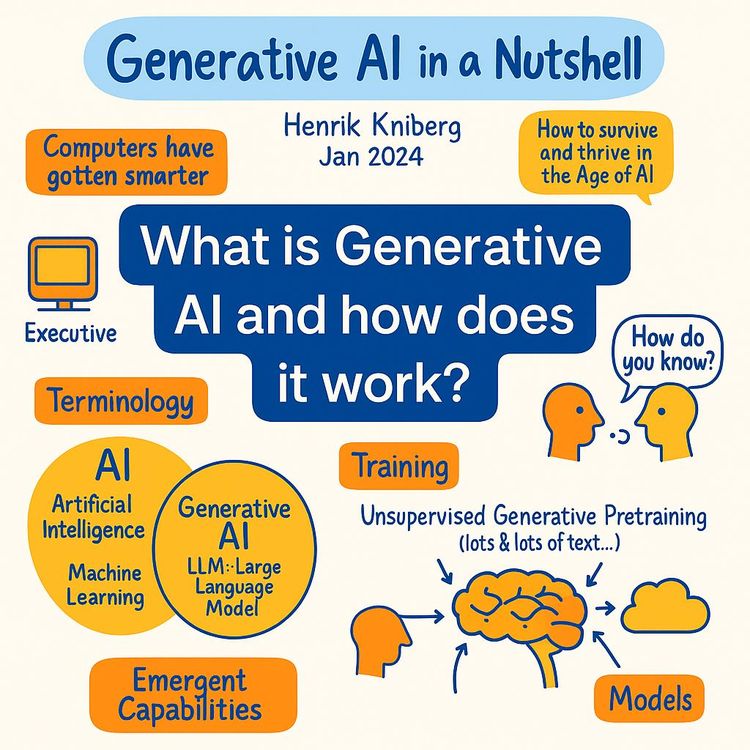
Video Course: What is Generative AI and how does it work?

Video Course: How to Use ChatGPT from Beginner to Professional

Video Course: How to Use Google Gemini for Google Workspace to Boost Productivity

Video Course: How to Use Claude 3.7 AI - Tips for Beginners!

Video Course: ChatGPT for Data Analytics: Full Course - from Beginners to Professional

Video Course: Generating Images and photos With ChatGPT?

Video Course: Generating Images & Photo's with MidJourney

Video Course: Generating Design's with Microsoft Designer and AI
Video Course: Generating Design's with Canva.com and AI
Join 20,000+ Professionals, Using AI to transform their Careers
Join professionals who didn’t just adapt, they thrived. You can too, with AI training designed for your job.