MCP server · Finance and crypto
Ethereum Validator Queue MCP server
by kukapay
Lets your AI check Ethereum validator activation and exit queues, plus the status of any validator.

This is a small helper that connects your AI to live information about Ethereum's validator queues. It shows how many validators are waiting to join the network, how many are waiting to leave, and how long each wait is. It is handy if you follow Ethereum staking and want quick numbers without digging through block explorers.
What is an MCP server? The 30-second version
On its own, your AI can only chat with you using what it already knows. An MCP server is a small helper program that gives your AI a new skill or a connection to an app or service. This one connects your AI to Ethereum validator queue data, so when you ask a question, the AI can look up the current numbers for you instead of guessing. You just talk in plain words, and the helper does the fetching behind the scenes.
What this MCP server does
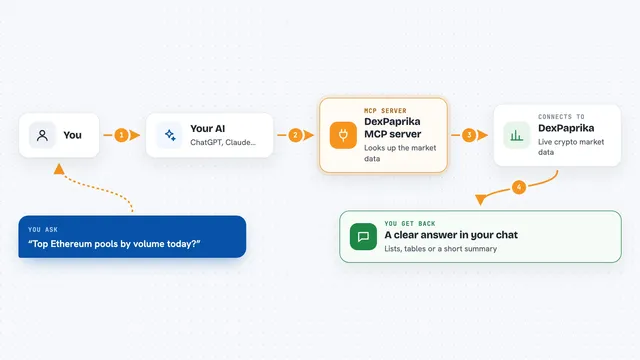
You ask your AI something like how long the Ethereum validator exit queue is right now. The AI passes your question to this helper program. The helper talks to a public Ethereum data source, pulls the current queue statistics, and hands them back. Your AI then turns those numbers into a clear answer in the chat. It can also look up one specific validator if you give its public key.
 Click to zoom
What you can do with it
- Check how many validators are waiting to join the network
- Check how many validators are waiting to leave
- See the total number of active validators
- Get the estimated wait time for activation or exit
- Look up the status of one validator by its public key
- Ask your AI to analyze what the queue trends might mean
Try asking your AI
- “Show me the current Ethereum validator activation queue status.”
- “What's the status of the Ethereum validator exit queue right now?”
- “Check the status of the validator with public key 0x93247f2f...”
- “Analyze the current Ethereum validator queue trends and what they might mean.”
What it gives back to you
You get plain numbers and short summaries in the chat. For a queue, that includes the queue length, total active validators, the balance of validators in the queue, and an estimated wait time in days. For a single validator, you get its status, effective balance, activation epoch, and exit epoch. If you ask for analysis, your AI writes a short explanation based on those numbers.
Before you start
What you need
- Python version 3.10 or higher
- uv, a Python package manager (free to install)
- An MCP-compatible app such as Claude Desktop
- The public key of a validator if you want to look up one specific validator
Good to know
The wait times are estimates based on an assumed number of activations or exits per day, so treat them as rough figures rather than exact predictions.
Install it with your AI
Add Ethereum Validator Queue MCP server to your AI, no technical skills needed
You don't install anything by hand. You copy one prompt, paste it into an AI that can work on your computer, and it checks, installs and connects the server for you, asking you when it needs something.
Sign in to get the install prompt
Members get a ready-made prompt that lets the Claude desktop app check Ethereum Validator Queue MCP server, install it and connect it for them, step by step. You don't need any technical skills: you copy, paste and answer a few questions. Your connected AI can also find and install any of the 4,609 MCP servers here for you.
Who it's for
People who follow Ethereum staking, crypto analysts, and anyone curious about validator queues who wants quick answers without using a block explorer.