MCP server · Developer tools
VibeKit MCP server
by VibeKit-Bot
Let your AI build, deploy, and manage hosted VibeKit apps and chat with their agents.

VibeKit is a service that hosts small web apps for you and gives each one a live web address plus its own AI helper you can chat with. This MCP server is the bridge that lets your AI assistant work with VibeKit for you. It is handy if you want to spin up an app, put it online, and keep an eye on it without learning a hosting dashboard.
What is an MCP server? The 30-second version
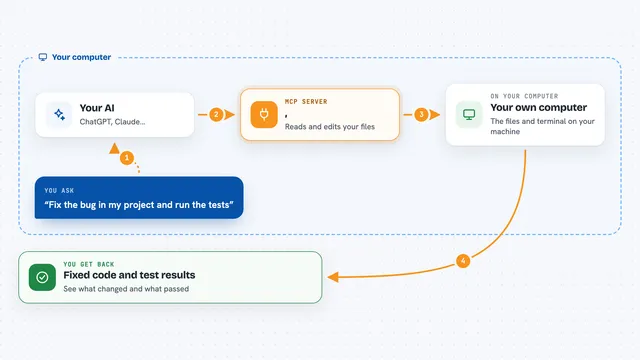
On its own, your AI can only chat with you. An MCP server is a small helper program that gives your AI a new skill or a connection to another service. This one connects your AI to VibeKit, so when you ask it to create an app, deploy it, or check its logs, your AI can actually do that on VibeKit for you. You just talk in plain words, and the helper handles the back and forth with VibeKit.
What this MCP server does
You ask your AI something like create a new app from a template, or deploy my project. Your AI passes that request to this helper, which sends it to VibeKit using your API key. VibeKit does the work, like building the app, giving it a live web address, or starting its AI agent. Then the helper brings the result back, and your AI tells you what happened in the chat.
 Click to zoom
What you can do with it
- Create a new hosted app from a starter template
- Deploy a project and get a live web address
- Chat with an app's own AI agent about changes
- Check logs, restart, stop, or start an app
- See recent deploys and roll back to an earlier one
- Turn on a database and look at its tables and rows
- Run automated QA tests and see the results
Try asking your AI
- “Create a new VibeKit app from a template and give me its live URL”
- “Deploy my project to VibeKit and tell me when it is ready”
- “Show me the logs for my app and restart it if there are errors”
- “Enable a database for my app, then show me the schema and the users table”
- “List my recent deploys and roll back to the last working one”
What it gives back to you
You get answers in the chat, like a list of your apps with their live web addresses, the status of a deploy, or a summary of recent logs. For databases, it can show the schema or a table of rows. If it changes something, like restarting an app or rolling back a deploy, it tells you what it did.
Before you start
What you need
- A VibeKit API key (starts with vk_; you can get one free with a single web request, no signup)
- Node.js installed if you use the local install (the remote option needs nothing)
- An MCP client like Claude Desktop, or a client that accepts a remote MCP URL
Good to know
It can change real things on your VibeKit account, like deleting an app, changing settings, or running tasks that may use your credits, so check before you say yes.
Install it with your AI
Add VibeKit MCP server to your AI, no technical skills needed
You don't install anything by hand. You copy one prompt, paste it into an AI that can work on your computer, and it checks, installs and connects the server for you, asking you when it needs something.
Sign in to get the install prompt
Members get a ready-made prompt that lets the Claude desktop app check VibeKit MCP server, install it and connect it for them, step by step. You don't need any technical skills: you copy, paste and answer a few questions. Your connected AI can also find and install any of the 4,609 MCP servers here for you.
Who it's for
People who want to build and run small hosted apps with AI help, without learning a hosting dashboard.