
AI news ·
1 in 5 young Americans turn to AI chatbots for mental health advice, study finds
One in five U.S. teens seek mental health advice from AI chatbots, per JAMA Pediatrics research. While 92% find it helpful, psychologists warn the tools mimic empathy without providing real clinical care.
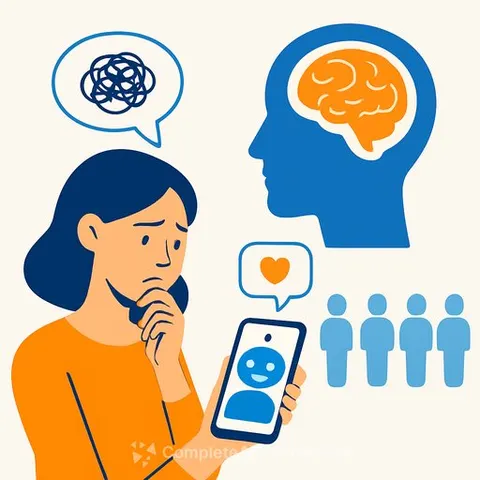
One in five U.S. teens now seek mental health advice from AI chatbots
About 20% of Americans aged 12 to 21 have turned to ChatGPT and similar AI chatbots for mental health guidance, according to research published in JAMA Pediatrics. Among those who do, 43% consult the bots at least monthly, and 92% report finding the advice somewhat or very helpful.
The trend reflects how quickly these tools have embedded themselves in teen life. But pediatric psychologists warn the apparent helpfulness masks a genuine risk: teens may replace human support with pattern-matching algorithms that mimic empathy without providing it.
Why teens find AI advice appealing
Dr. William Leever, a pediatric psychologist at Nationwide Children's Hospital, said newer AI models are significantly more engaging and unpredictable than earlier versions. "It feels like they're being supported. It feels like they're being understood because these models are very good at mimicking human empathy," Leever said. "But in reality, they're just pattern recognition robots."
The technology's accessibility matters. Teens can ask questions anonymously, instantly, without scheduling delays or fear of judgment. For young people already reluctant to seek help, that low barrier can feel safer than talking to a parent or counselor.
The clinical concern
Leever said the real danger emerges when AI advice displaces actual human connection. Mental health treatment requires clinical judgment, continuity of care, and the ability to adjust treatment based on a patient's response. Chatbots provide none of these.
Parents and caregivers should practice what Leever calls "co-prompting"-working through AI interactions alongside teens to verify information and interpret results. Setting clear boundaries helps too. "You can let them use the AI with the direct guidance and supervision they need to actually understand what they're dealing with," he said.
A broader gap in AI literacy
The mental health trend occurs alongside a larger problem. A Common Sense Media survey found that nearly half of all children have never discussed AI safety with a parent.
For healthcare professionals, this represents both a gap and an opportunity. Clinicians can educate patients about AI's limitations while helping families establish healthier relationships with these tools. AI for Healthcare requires understanding not just how the technology works, but how people actually use it-and when human care remains irreplaceable.