3 in 10 companies plan AI-related replacements next year - here's your HR playbook
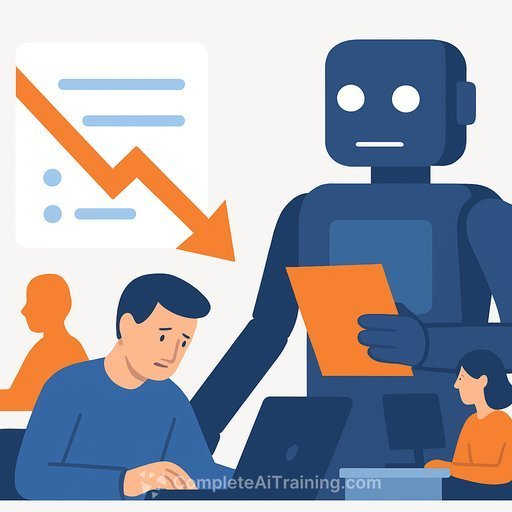
A new report from AIResumeBuilder.com says three in 10 companies plan to replace employees with AI next year. Among leaders expecting AI-related layoffs, 59% think the tech will replace 10% or more of their current workforce; 10% expect 50% or more. The survey polled 1,250 U.S. business leaders across functions.
There's pressure on costs too. U.S. employers announced 153,074 job cuts in October, up 175% year over year. Cost-cutting drove 50,437 of those cuts; AI was cited for 48,414, according to Challenger, Gray & Christmas.
What the data says
- 3 in 10 companies plan to replace employees with AI in the next year (AIResumeBuilder.com).
- Of leaders expecting AI-related reductions: 59% project 10%+ of roles replaced; 10% project 50%+.
- Nearly 1 in 5 CFOs say they've eliminated roles due to AI, most often in accounting (88%), FP&A (38%), and treasury (33%), per Egon Zehnder.
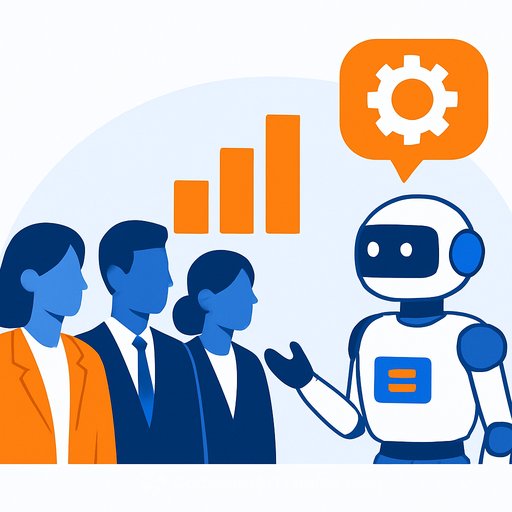
- Finance leaders are taking phased approaches: "building literacy and capability so AI can augment human expertise rather than replace it."
Career advisor Rachel Serwetz puts it plainly: leaders should focus on "how their people can still be leveraged to be strategic without AI having to replace them." Automate the repetitive; reassign people to higher-value work.
Industries and roles most exposed
- Industries: Information technology, computer software, banking and financial services, accounting, human resources, manufacturing, retail.
- Roles at risk: Customer service, administrative/clerical, IT and technical support.
HR playbook for the next 12 months
- Run a task-level automation scan. Inventory repetitive, rules-based tasks within each role. Flag candidates for AI assistance vs. full automation.
- Model impact by team. Estimate hours saved, throughput gains, and quality improvements. Tie each change to a business metric (cost per ticket, days to close, error rate).
- Redesign roles, not just headcount. Split roles into "automation core" tasks and "human core" tasks (judgment, relationship, exception handling). Update job architecture and competencies.
- Build an internal mobility lane. Pre-approve transition pathways from at-risk roles into data, AI ops, compliance, and customer success. Set clear criteria and timelines.
- Upskill with intent. Offer short, job-aligned AI training and labs; certify proficiency. If you need a curated starting point, see AI courses by job.
- Be explicit about selection criteria. Use objective thresholds (volume, repeatability, accuracy) to choose tasks for automation. Document to reduce bias risk.
- Codify human-in-the-loop. Define approval gates, escalation paths, and sample audits for AI outputs. Protect customer data and brand voice.
- Update policies and controls. Refresh acceptable use, data privacy, vendor risk, and model output review. Partner with legal, security, and procurement.
- Align incentives. Reward teams for redeployment and skill acquisition, not just headcount reduction. Fund short courses and shadow assignments.
- Prepare a humane reduction plan (if needed). Standardize severance, reskilling stipends, and job placement support. Communicate early and clearly.
Function-by-function expectations
- Accounting: High exposure in AP/AR, reconciliations, close checklists; expect role consolidation and reallocation to analytics and controls (mirrors the 88% CFO stat).
- FP&A: Scenario modeling and variance analysis shift to AI-assisted workflows; analysts focus more on business partnering.
- Treasury: Cash positioning, forecasting, and matching see automation lifts; oversight and exception management remain human-led.
- HR: Admin, scheduling, and tier-1 inquiries are automatable. Strategic workforce planning, change management, employer branding, and ER remain human-heavy.
- IT/support: Tier-0/1 support and runbooks move to AI; complex incidents, security, and architecture stay with specialists.
Metrics that keep you honest
- % of roles with task-level automation maps and RACI updates.
- Redeployment rate from at-risk roles; time-to-productivity in new roles.
- Training participation and pass rates for AI skills.
- Throughput, accuracy, and customer satisfaction deltas post-automation.
- Audit results: data privacy incidents, bias checks, and exception rates.
Communication cues for HR
- Lead with what will change at the task level, then explain what stays human.
- Share the timeline, decision criteria, and support available (training, mobility, severance).
- Publish channels for feedback and issues; respond with visible fixes.
Bottom line
AI will reshape work next year. Some roles will shrink; many will shift. The gap between disruption and value is how quickly HR can map tasks, reskill people, and rebuild roles with clear guardrails. Start with one team, measure everything, and scale what works.
Your membership also unlocks: