
AI news ·
Abu Dhabi Biobank partners with BioTwin to develop AI-powered virtual human twins
Abu Dhabi Biobank partners with BioTwin on AI virtual twins for early diagnosis. The twins integrate genomic data to predict disease and simulate treatments.
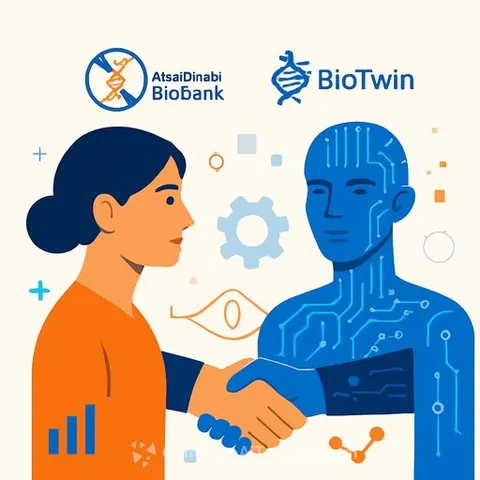
Abu Dhabi Biobank has signed a strategic partnership with BioTwin to expand AI-powered Virtual Human Twin technology in the emirate, a move that targets early diagnosis, disease prevention, and precision medicine. The agreement, announced at the BIO International Convention 2026 in San Diego, combines BioTwin's longitudinal biomarker platform with the biobank's biological, genomic, and clinical datasets to accelerate clinical research and shift healthcare from reactive treatment to proactive prevention.
How the virtual twin builds a predictive model
Virtual Human Twin technology creates a digital replica of a person's organs and biological systems. It integrates genomic profiles, continuous health data from blood tests and wearable sensors, and clinical records. Machine-learning algorithms compare this individual data against large-scale population datasets to detect subtle health changes and generate predictive insights long before symptoms appear.
The models enable several practical applications. Physicians can simulate drug effects and dosage levels on the digital twin to assess efficacy and reduce side-effect risks. Surgeons can rehearse complex cardiac or neurosurgical procedures on a patient's virtual twin before the actual operation. Predictive models also flag chronic diseases and cancers early, allowing intervention when outcomes are typically better. These capabilities depend on the Abu Dhabi Biobank's infrastructure and the emirate's AI for Healthcare initiatives that link population-scale genomic programmes with advanced health data.
Gene-editing and genomics deals expand the ecosystem
Alongside the BioTwin agreement, the Department of Health - Abu Dhabi signed a Memorandum of Understanding with Arbor Biotechnologies, a company specialising in next-generation gene-editing technologies and targeted genetic therapies. The two sides will explore research and clinical development in gene editing, with a focus on innovative treatments for rare and inherited diseases.
The department also signed an MoU with Novartis Middle East FZ-LLC to collaborate on genomics research, scientific capacity building, and advanced therapies. These agreements strengthen the connection between global scientific expertise and one of the world's largest population genomics programmes, building on the emirate's work in AI for Science & Research.
Dr. Noura Khamis Al Ghaithi, Undersecretary of the Department of Health - Abu Dhabi, said: "Abu Dhabi has successfully built a pioneering smart life sciences ecosystem by integrating population-scale genomics programmes, advanced longitudinal health data, real-world evidence, and agile regulatory frameworks. Together, these elements form a comprehensive, future-ready ecosystem capable of driving the next generation of healthcare innovation."
Why this matters for Healthcare
Virtual Human Twin projects signal a concrete shift in how health systems use patient data. Rather than reacting to illness, clinicians can work with a living digital model that forecasts disease progression and tests treatments virtually. For healthcare professionals, this means diagnostic timelines compress, treatment plans become more personalised, and surgical risk assessment gains a new layer of precision. The Abu Dhabi initiative shows how biobank-scale data, when paired with AI-driven modelling, can turn prevention from a general principle into a patient-specific tool.