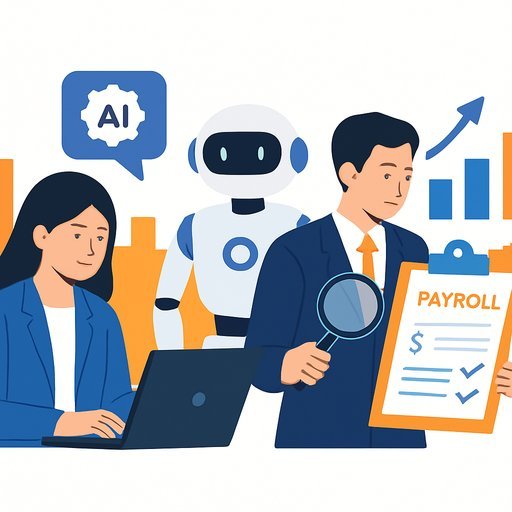
AI in HR 2026: What HR Leaders Need to Act On Now
ADP's 2026 HR Trends Guide makes the direction clear: AI for HR is moving from pilots to core HR operations, with Singapore out in front. The guide focuses on four areas HR leaders should tackle now-capabilities, governance, skills, and payroll.
The mandate is simple: upgrade platforms, retrain teams, and set guardrails. Do it before AI use cases multiply across your org.
Singapore's edge-and the pressure to keep up
Singapore's Smart Nation push keeps accelerating digital adoption across enterprises. Jessica Zhang, ADP's senior vice president for APAC, puts it simply: "In 2026, the workplace will be intelligent and interconnected."
That means budget for modern HR tech, AI skills, and practical change management-not just experiments. The benefit: faster cycles, fewer errors, and better employee experiences.
Agentic AI moves HR from manual to proactive
AI is now seen as essential for efficiency across HR. ADP's earlier findings show more than half of Singapore organisations already view AI as key to improving payroll productivity.
By 2026, expect Agentic AI to automate onboarding, handle routine HR inquiries, and clean up data flows between HRIS, ATS, and payroll. The upside is accuracy and response times that meet employee expectations without adding headcount.
Governance first: fairness, transparency, and human oversight
Singapore's Model AI Governance Framework sets a strong reference point for responsible AI in HR. Use high-quality data, document decisions, and keep a human in the loop for sensitive calls like hiring, pay, and performance.
ADP's guidance also stresses HR-IT collaboration. Treat AI like any critical system: risk reviews, audit trails, vendor due diligence, and clear accountability; IT leaders can consult the AI Learning Path for CIOs for governance and oversight approaches.
Skills, job design, and pay clarity
The report notes many Singapore employees feel unprepared for advancement. Fix that with updated skill taxonomies, role redesign, and visible paths to progression.
Pay transparency is rising too. Set clear ranges, explain how pay is determined, and communicate changes proactively-especially as AI touches compensation workflows.
If you're building an upskilling plan, browse practical, role-focused learning options such as the AI Learning Path for Training & Development Managers.
Cross-border HR: standardise the core, localise where it matters
Managing teams across markets adds legal and payroll risk. Establish core standards for contracts, time capture, leave, and payroll accuracy, then apply local adaptations for tax, benefits, and reporting.
This dual approach protects workers' rights and keeps compliance tight without slowing the business.
12-month action plan for HR leaders
- Form an HR-IT AI council with clear decision rights and a monthly cadence.
- Prioritise 3-5 AI use cases with measurable ROI (e.g., onboarding, HR helpdesk, data quality).
- Select platforms with audit logs, access controls, and model explainability.
- Stand up a data quality pipeline for HRIS and payroll (definitions, lineage, monitoring).
- Pilot Agentic AI for onboarding workflows and standard employee requests; document exceptions.
- Run a skills inventory, map gaps to roles, and fund short, stackable learning paths.
- Train HR and people managers on AI oversight, bias awareness, and reviewing AI-generated outputs.
- Publish a pay transparency roadmap: ranges in postings, leveling guides, and communication plans.
- Create a cross-border compliance playbook covering contracts, benefits, and payroll audits.
- Set quarterly metrics: time-to-hire, payroll accuracy rate, case resolution time, and employee trust scores.
Risks to watch
- Bias from poor data quality or unclear features in models that touch hiring and pay.
- Incorrect AI outputs presented as facts-require reviews for sensitive decisions.
- Shadow AI tools used by teams without approval; add policy, enable safe alternatives, and monitor usage.
- Over-automation that removes human judgment; define clear escalation paths.
- Vendor risk: request documentation on data use, retention, and model updates.
The bottom line
AI is becoming part of HR's operating system. Leaders who invest in governance, skills, and the right use cases will cut cycle times, improve accuracy, and earn employee trust-without losing the human core of HR.
Your membership also unlocks: