
AI news ·
AI agents shift checkout from marketing tool to commercial infrastructure
AI agents making purchases on behalf of users are pushing merchants to strip friction from checkout. An 84% majority of shoppers already rank one-click checkout as a key factor in where they buy.
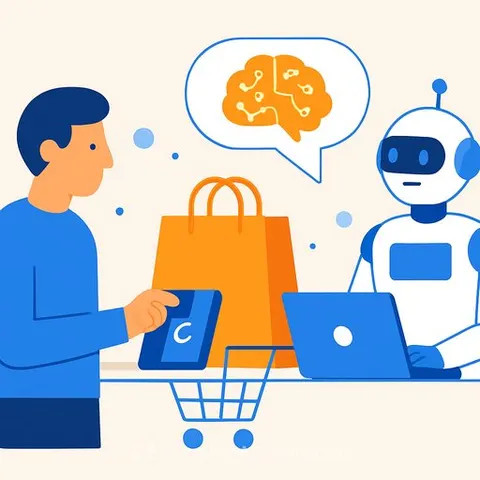
Checkout Is Becoming the Critical Layer in AI-Driven Commerce
As artificial intelligence agents begin making purchasing decisions on behalf of users, the competitive advantage in digital commerce is shifting from visibility to friction reduction. Every unnecessary click, login, or delay now weakens a company's position in an increasingly machine-driven marketplace.
Research from the Checkout Paradox Tracker found that 84% of global shoppers consider one-click checkout important when choosing where to shop. Ninety-four percent expressed strong interest in innovations that smooth the checkout and payment experience. The difference: this time, machines are doing the choosing.
Why AI Changes the Economics of Friction
Humans tolerate friction. They wait for pages to load, fill out forms, and navigate authentication screens because they value brand loyalty, price, or convenience. AI agents don't work that way.
When an intelligent system compares two merchants, it prioritizes machine-readable pricing, standardized payment credentials, and predictable fulfillment systems. A competitor with fewer authentication barriers wins-even if price differences are marginal. Each additional prompt, redirect, or verification step introduces computational friction that influences automated decision-making.
Consumers may still care about trust and quality. But the systems acting on their behalf will optimize for structured data, accuracy, and transactional efficiency. Emotional resonance alone won't secure selection in automated marketplaces.
Checkout as Infrastructure, Not Just Payment
Leading merchants are already reframing checkout as ongoing infrastructure rather than a terminal transaction event. They're reducing authentication burdens, accelerating payment authorization, and integrating loyalty mechanisms directly into transaction flows.
The shift requires technical compatibility at scale. Businesses need systems capable of supporting machine-to-machine commerce through interoperable APIs, seamless integrations, and low-friction design. This is less about marketing and more about building the connective layer between intent and fulfillment.
For product and development teams, the implication is clear: checkout infrastructure must be optimized for machine readability, not just human usability. Data standardization, API design, and payment system compatibility have become competitive requirements.
The Structural Advantage Shifts
In traditional e-commerce, winners attracted and retained consumer attention. In an AI-mediated economy, winners will be those that remove the most friction from commercial interactions.
Consumers may not consciously choose the companies with the lowest friction every time. But when AI agents consistently prefer them, those companies increasingly dominate.
The strongest businesses may therefore resemble infrastructure providers as much as retailers. Their competitive advantage will come from systems capable of efficient execution at scale-not persuasion.