
AI news ·
AI and unified electronic records form foundation of UAE healthcare
The UAE expects a fully integrated AI-powered digital health model by 2026, linking electronic medical records across emirates via platforms like Riayati.
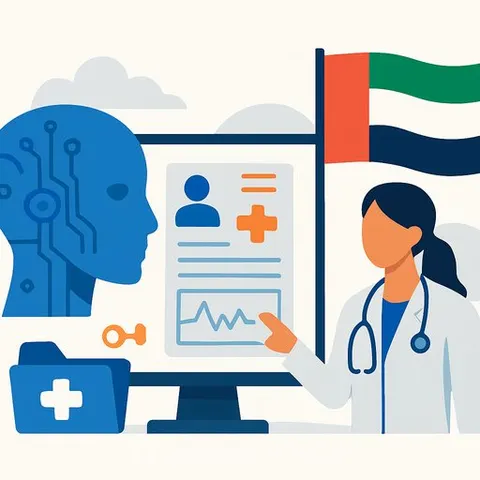
The United Arab Emirates has woven artificial intelligence into its national healthcare infrastructure, connecting electronic medical records across emirates to help physicians detect diseases earlier, predict complications, and tailor treatment plans. A network of platforms - Riayati, Wareed, Malaffi, and NABIDH - now links patient data from federal and local providers. By 2026, the government expects a fully integrated, AI-powered digital health model to be operational.
AI in clinical workflows
AI tools in UAE hospitals already analyse medical images, process large-scale datasets, and support precision medicine. According to the Ministry of Health and Prevention, the technology helps healthcare providers:
- Analyse medical images
- Enable earlier disease detection
- Predict health complications
- Process large-scale medical datasets
- Support precision medicine
- Improve diagnostic accuracy
- Deliver personalised healthcare to individual patients
- Assist in clinical decision-making
These applications represent a practical shift toward AI for Healthcare, where machine learning augments diagnostic accuracy and care personalisation. The UAE said the technologies feed continuous improvements in service quality and operational efficiency.
Unified electronic health records
The country's digital backbone rests on several interconnected systems. Riayati, operated by the Ministry of Health and Prevention, enables secure health data exchange between facilities nationwide. Wareed, run by Emirates Health Services, manages electronic medical records and clinical operations across its hospitals and integrates with Riayati. At the emirate level, Malaffi handles health information exchange in Abu Dhabi, while NABIDH serves as the medical record exchange platform in Dubai. All four are connected, giving healthcare professionals immediate access to patient histories and reducing duplicate tests.
Telemedicine and digital access
Patients now reach a broad set of services online, including appointment booking, telemedicine consultations, prescription management, electronic sick leave certificates, personal health records, and lab results. Telemedicine has widened access to follow-up appointments without requiring visits to facilities, which the government says helps optimise resources while maintaining continuity of care.
Why this matters for healthcare professionals
Clinicians and hospital staff across the UAE will increasingly work within AI-augmented environments where unified patient records and predictive tools inform everyday decisions. Familiarity with these platforms - and the ability to interpret AI-driven insights - will shape how effectively teams prevent complications, reduce unnecessary procedures, and deliver timely care. As the 2026 deadline approaches, the skill set required for modern practice includes comfort with data-informed workflows and the secure exchange protocols that underpin them.