HR in 2026: AI moves from concept to practical results
AI isn't a side project anymore. According to ADP's 2026 HR Trends Guide, organisations are redesigning work around skills, applying agentic AI to real HR workflows, and tightening governance to keep decisions fair and defensible.
The signal is clear: leaders expect gains without replacing people. In ADP's Market Pulse Study (April 2025), 84% of large companies, 76% of midsized, and 73% of small businesses agreed AI can streamline processes without cutting headcount.
See the full ADP 2026 HR Trends Guide
People trends: From job titles to skills portfolios
HR teams are auditing skills, mapping them to business outcomes, and redesigning roles. This shift makes hiring more precise, development more targeted, and mobility faster.
Mindset matters. "Helping people adopt a mindset of technology collaboration is important to successful AI adoption... They can focus less on individual tasks and more on solving for people's needs," said Tiffany Davis, chief talent acquisition, inclusion and diversity officer, ADP.
- Build a clear skills taxonomy and connect it to roles, pay bands, and progression.
- Use skills data to staff projects, not just jobs-start with critical workflows.
- Offer hands-on AI training and pilots so employees learn by doing.
Responsible AI in HR: Practical, transparent, human-led
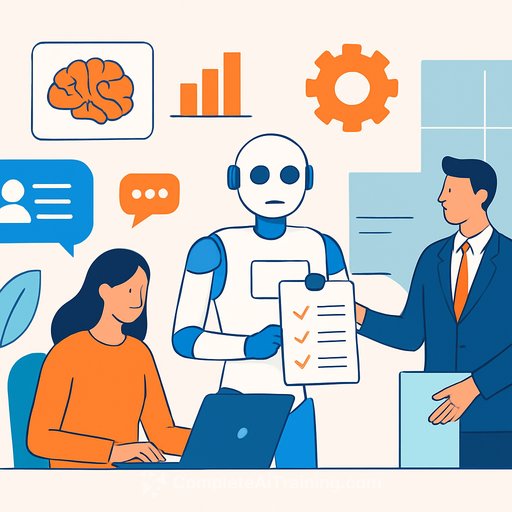
Agentic AI is moving into core HCM: automating onboarding steps, validating payroll inputs, and surfacing insights with recommended actions. The goal isn't full autonomy-it's dependable co-work.
"Agentic AI unlocks new frontiers of automation, coordinating multistep work and adapting to real-world variability... Together, they deliver scalable automation that's trustworthy, compliant and resilient when conditions change," said Amin Venjara, Chief Data Officer, ADP.
- Start with contained use cases: onboarding checklists, payroll error checks, HR helpdesk triage.
- Keep human approval on sensitive actions (offers, pay changes, terminations).
- Document prompts, decision criteria, and escalation paths for auditability.
AI guardrails: What to approve, limit, and ban
Regulators are drawing lines. The EU AI Act sets stricter requirements for systems used in employment and bans certain practices outright-like emotion analysis, social scoring unrelated to work, biometric profiling for misconduct risk, and systems that nudge employees into actions they wouldn't take.
"When evaluating any AI tool, consider whether it was developed using secure, high-quality data, whether it produces reliable and meaningful results and whether it helps streamline, rather than complicate, work processes," said Helena Almeida, Vice President, Managing Counsel, AI Legal Officer, ADP. She stressed human oversight, transparency, and ongoing monitoring.
- Stand up an AI review board to approve tools, tests, data sources, and usage limits.
- Run bias and drift testing before launch and on a set cadence post-launch.
- Publish plain-language notices to employees about where and how AI is used.
Learn more about the EU AI Act
Pay transparency: New EU rules by June 2026
EU member states will require gender-neutral, objective criteria for pay and progression. Larger employers must audit gender pay equity and report pay gaps, with extra actions if the gap exceeds 5%.
As Helena Almeida noted, employers should check internal and external competitiveness now and base pay ranges on clear, work-related criteria. Don't wait for the deadline-use 2025 to fix issues early.
- Standardise job architecture, levels, and criteria for progression.
- Run pay equity audits; address outliers with a funded remediation plan.
- Configure HRIS to produce required reports and employee disclosures.
Cross-border compliance: Consistency without guesswork
Global employers deal with shifting, location-specific rules. Policies must flex by jurisdiction while staying consistent in principles. That calls for clear governance and reliable systems.
- Adopt global standards with local addendums for pay, privacy, and AI use.
- Centralise regulatory tracking; assign owners and review cycles.
- Bake controls into workflows: eligibility checks, approvals, and logs.
Data foundations for agentic AI
Agentic systems depend on clean, connected, and governed data. ADP's analysis shows governance is in motion: processes exist in 20% of small businesses, 50% of midsized, and two-thirds of large companies.
- Prioritise data quality (schemas, validation rules) and lineage tracking.
- Segment sensitive data; enforce least-privilege access and audit trails.
- Create a model and prompt registry with owners, use cases, and risk level.
HR × IT: One team, shared delivery
As agentic AI expands, HR needs IT's depth on integrations, security, and scale-and IT needs HR's view of adoption, change, and human impact. The partnership is now the operating model.
"IT is definitely a bigger part of the decision-making... What they care about are things like user management, data security, integrations and how the integrations work," said Tonya James, Vice President of Product Management, Global Payroll, ADP.
- Set a joint RACI for AI tools, integrations, and model lifecycle management.
- Keep a shared backlog for HR use cases with clear value metrics.
- Standardise integration patterns and testing before scaling across regions.
Your 90-day plan
- Weeks 1-2: Inventory skills, AI use cases, current tools, and data sources.
- Weeks 3-4: Draft AI and pay transparency policies; define approval thresholds and employee notices.
- Weeks 5-8: Pilot 1-2 agentic workflows (onboarding or payroll checks). Measure accuracy, time saved, and employee feedback.
- Weeks 9-12: Run a pay equity analysis; fix top gaps; publish ranges and criteria. Expand pilots with human-in-the-loop controls.
Where to go next
- ADP 2026 HR Trends Guide for the full analysis and practitioner insights.
- AI courses by job to upskill HR, Payroll, and Talent teams on practical AI use.
- AI Design Courses for teams building skills to design agentic HR workflows and governance.
Your membership also unlocks: