AI Is Changing How We Learn at Work: Four Provocations for Leaders
Leaders see AI reshaping tasks, processes, and outputs. What's less clear is how it's changing how people grow-the hard-won learning that builds judgment, empathy, and identity.
When change outpaces sense-making, answers are rare. Conversations aren't. Use the prompts below to run better discussions and design choices that keep human development at the center.
1) When shortcuts erase the path to mastery
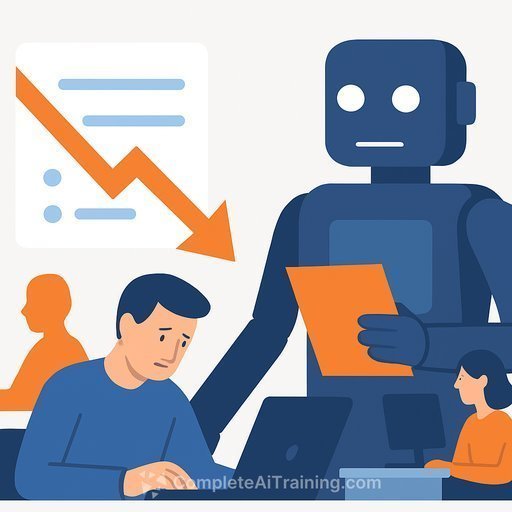
Many leaders built their expertise through repetition, frustration, feedback, and real stakes. AI now handles much of that early work-first drafts, quick analysis, ideation-removing the "desirable difficulties" that forged capability.
Acceleration boosts output. Development rewires identity. Those are different goals. Protect the experiences that form judgment, not just the deliverables.
- Questions: Which first reps must remain human? Where will we keep the struggle on purpose?
- Practices: Time-boxed "no-AI" reps on core tasks; rotating apprenticeship sprints (shadow, attempt, feedback, repeat); feedback logs tied to specific challenges, not just outcomes.
- Guardrail: Label tasks as Learn, Perform, or Automate. Only automate Perform work. Keep Learn work human by default.
2) Are we drowning out calm?
Pandemic tools made meetings easy-and meeting time spiked. AI makes content easy-and content is exploding. Slide decks, summaries, and drafts multiply faster than anyone can think about them.
The result: more noise, less depth. Learning needs quiet focus, not just throughput.
- Questions: What will we stop producing? Where will we slow down to think?
- Practices: Weekly "calm blocks" (90-120 minutes, no chat, no meetings, no AI); content budgets (X decks or memos per project); a single "decision doc" per initiative with human synthesis.
- Gate: Replace "Can AI do this?" with "Does this add value?" If not, don't ship it.
For context on meeting overload and digital work trends, see Microsoft's Work Trend Index research. For the cost of switching and multitasking, the APA summary is useful here.
3) Are we dulling what makes us human?
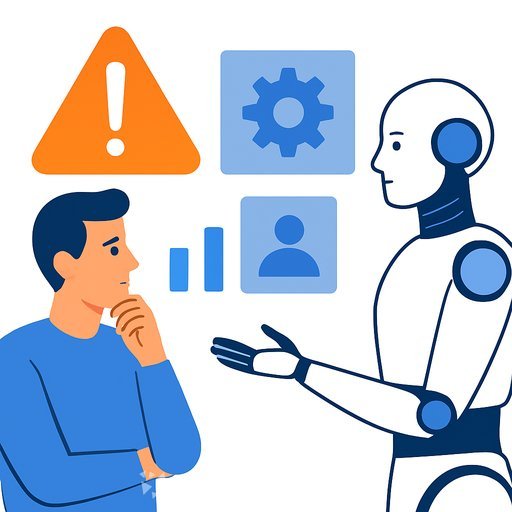
Leaders prize discernment, intuition, moral reasoning, and empathy. AI can simulate parts of empathy (detecting tone, mirroring emotion). It can't care, and it can't practice caring for us.
Empathy grows through exposure and friction-misreads, hard conversations, repairing trust. If tools buffer all the mess, people miss the reps that build maturity.
- Questions: Which interactions are too important to outsource? Where should people feel the tension and learn to respond?
- Practices: Quarterly "difficult conversation labs" with role-play and real stakes; peer-coaching circles (observe → attempt → reflect); managers log and review two tough conversations per month.
- Guardrail: AI may prep, but humans deliver. No AI intermediating performance talks, conflict, or care conversations.
4) Are we eroding choice and identity?
Recommendations, nudges, and automated next steps are convenient-and they can shrink agency. If the system chooses for people, they stop choosing. Skill fades without use.
Agency fuels growth. Protect it on purpose.
- Questions: Where must people decide, even if AI suggests? How do we make the "why" of choices visible?
- Practices: "Choice checkpoints" in workflows that require a human decision and rationale; option sets (AI proposes three, humans pick one and explain); "exploration budgets" for trying non-recommended paths.
- Guardrail: No auto-advance on career moves, task routing, or performance signals without human review and opt-out.
How to run a sense-making conversation (60-90 minutes)
- Pick one provocation. Keep the scope tight.
- Bring 2-3 real examples where AI helped and where it hurt.
- Map risks to learning: mastery, calm, empathy, agency.
- Choose two experiments and one guardrail. Assign owners and dates.
- Set a 30-day review with metrics and a keep/kill/scale decision.
Practical guardrails for AI-enabled learning
- Don't automate first reps. Early cycles are for learning. Keep them human.
- Label outputs. Tag drafts as AI-assisted vs. human-crafted, so expectations match.
- Friction budgets. Protect time for deep work and reflection every week.
- Human-in-the-loop by design. Require decisions, not passive approvals.
- Ethics and empathy practice. Train and rehearse, don't just lecture.
- Role clarity. Define what AI does, what people must do, and why it matters.
Metrics that actually signal development
- Hours in focus blocks per person per week.
- Number of human first reps before AI assist on core tasks.
- Mentoring and feedback cycles completed monthly.
- Documented difficult conversations and post-mortems.
- Decision autonomy index (how often humans choose vs. accept recommendations).
- Retention and internal mobility tied to skill growth, not just output.
Getting your teams ready
AI will keep making work faster. You decide whether it also makes people better. Protect the experiences that build craft. Create space for thought. Keep empathy in the room. Guard agency at the points that matter.
If you're setting up role-based development with AI in mind, you may find these resources useful: Design, Courses by Job and Popular Certifications.
The aim isn't more output. It's better humans doing meaningful work-with AI as a tool, not a crutch.
Your membership also unlocks: