
AI news ·
AI becomes top strategic priority for companies but data remains biggest challenge
AI is the top priority for CEOs, with services firms planning a 2.3 percentage point investment increase by 2027. Poor data quality remains the main barrier to scaling AI.
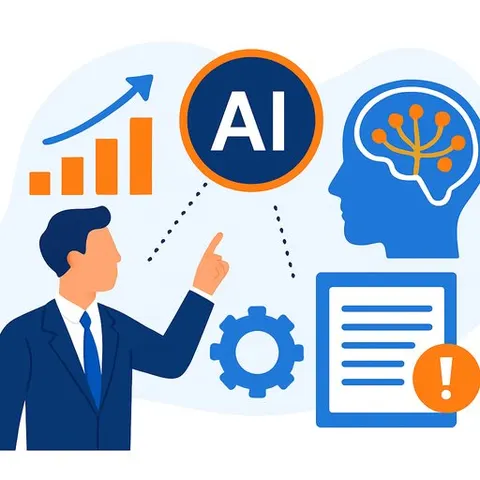
Artificial intelligence has become the number one strategic priority for chief executives globally, overtaking cost optimization and cybersecurity, according to a new study by international management consultancy Horváth. The research, however, reveals that the main barrier to scaling AI is not picking the right technology but the poor state of companies' data foundations.
AI investments climb as CEOs reorder priorities
The survey shows AI leads the strategic agenda for the coming years. Services firms plan to increase AI's share of investment by 2.3 percentage points between 2025 and 2027, while manufacturers expect a 0.3 percentage point rise. CEOs are reacting to geopolitical tensions, supply chain restructuring, and the need to reduce external dependencies-forces that are reshaping how businesses build competitive advantage.
After AI and digital transformation, the top strategic priorities executives identified include:
- Improving cost structures and profitability
- Cybersecurity
- Organizational and process redesign
- Human capital
- Innovation and R&D
Data quality, not AI, is the main obstacle
Large-scale AI deployment stalls when data is fragmented across systems, poorly governed, or simply unreliable. Respondents cited data quality, integration difficulties, and a shortage of AI-related skills as the chief hurdles. Without a clear data strategy, many AI initiatives never leave the pilot phase or deliver limited business value.
"Artificial intelligence can create value only when it is built on a solid foundation of data, processes, and governance. Otherwise, even the most advanced technologies risk remaining mere experiments with little real impact on business performance," said Maria Boldor, Partner and Managing Director of Horváth Romania.
Building that foundation demands more than a technology upgrade-it requires a strategic reorientation. Leaders who invest in AI for Executives & Strategy resources are better positioned to connect data, governance, and organizational design into a coherent plan.
Integrated transformation replaces isolated AI bets
Companies increasingly view AI, process digitalization, and workforce development as parts of a single transformation effort. The Horváth report concludes that competitive advantage will go to organizations that treat data as a strategic asset and build the infrastructure to support enterprise-wide AI adoption.
For chief executives, closing the skills gap is a practical starting point. A structured AI Learning Path for CEOs can help senior leaders gain the literacy needed to ask the right questions about data readiness and AI governance.
Why this matters for Executives and Strategy
The study makes clear that the AI race is not about who spends the most on models or tools. It is about who can turn scattered, inconsistent data into a reliable engine for decision-making. CEOs who focus on data quality, integration, and talent before scaling AI will avoid the trap of funding experiments that never reach the bottom line. The immediate step is to audit the company's data infrastructure and invest in executive-level AI literacy-not to chase the latest model release.