
AI news ·
AI boosts communications efficiency but risks diluting creativity and brand voice, industry voices warn
AI speeds up content drafting and media monitoring, but often misses tone, emotional weight, and audience context. Human judgment must guide final decisions-AI works best as a tool, not a replacement.
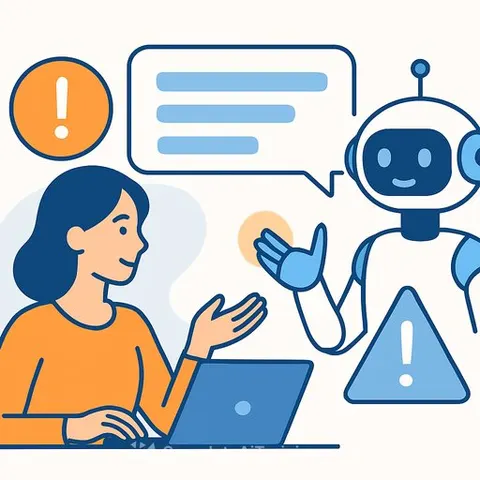
AI in Communications: The Maturity Question
AI has delivered tangible gains for communications teams. Content drafting, media monitoring, sentiment analysis, and data interpretation now happen in minutes instead of hours. For professionals managing multiple narratives across platforms, the efficiency is real.
But speed alone doesn't guarantee effectiveness. Many organizations are discovering a gap between what AI can produce and what actually works.
Where AI Falls Short
Communications demands nuance. It requires understanding audience sentiment, cultural context, and timing. It demands intent, relevance, and resonance. AI often misses these elements.
Consider a common scenario: a communications professional uses AI to draft a press statement or brand response to a sensitive situation. The structure looks polished. The grammar is clean. But the content frequently fails to grasp the underlying issue or the intended objective. It misses tone. It misses emotional weight. It misses what stakeholders actually expect to hear.
The result feels generic and disconnected-sometimes weakening credibility instead of strengthening it.
Another risk is brand voice dilution. If multiple organizations rely on similar AI-generated outputs, communication becomes uniform. Audiences expect authenticity and originality. Neither can be fully replicated through automation.
Overdependence on AI also stifles innovation. Communications have always been driven by bold, insightful, sometimes unconventional ideas. When outputs are based primarily on existing data patterns, new perspectives become less likely.
How AI Should Actually Work
Rejecting AI isn't practical. The answer is balance. AI should be an enabler, not a decision-maker. It should support the process, not define it.
The responsibility for shaping final narrative, tone, and intent must remain with humans. This requires treating AI as a tool that needs oversight, not a solution that works independently.
Organizations need to build clear guidelines for AI use. Teams should be trained not just in operating tools, but in questioning their outputs. A strong editorial lens is essential to ensure communication stays aligned with its actual purpose.
For communications professionals, this means developing skills in prompt engineering and strategic AI application. Understanding how to direct AI-and when to override it-separates effective use from wasteful deployment.
The Human Requirement
Communication is about meaningful connection. AI can amplify this effort. It cannot replace the human judgment needed to make it work.
As organizations integrate AI further, the focus must stay on preserving creativity, encouraging critical thinking, and ensuring technology complements rather than replaces human intelligence.
For more on this topic, explore resources on AI for PR & Communications.