
AI news ·
AI creates a two-track labour market where roles amplifying human expertise grow faster
AI splits the labor market as expert roles see 42% faster salary growth than jobs for non-experts. Entry-level jobs now require senior skills.
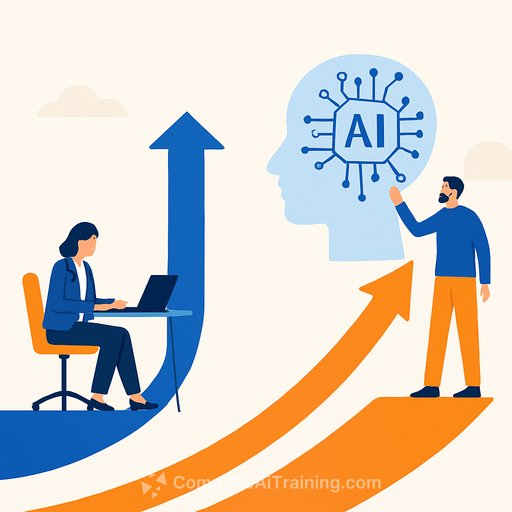
AI is splitting the global labour market into two distinct tracks, with professionalised roles-where technology amplifies human judgement and expertise-growing at twice the rate of democratised roles that make work easier for non-experts. That's the central finding from PwC's 2026 AI Jobs Barometer, which analysed over one billion job ads across six continents. For HR teams planning workforce strategies, the data signals a clear shift: the most valuable roles aren't the ones AI can take over, but the ones where AI makes human expertise more critical.
The two-track labour market
PwC's analysis divides AI-affected roles into two categories. Professionalised jobs-like radiologists and recruiters-use AI to automate routine tasks, which puts more weight on judgement, expertise and human capability. Democratised roles-such as IT service managers and medical secretaries-are those where AI makes the work accessible to people with less specialist knowledge. The gap is stark: professionalised roles see twice the growth in job openings and 42% faster salary growth compared to democratised roles.
The 'seniorisation' of entry-level work
The shift is also reshaping early-career opportunities. In the US, junior roles exposed to AI are now seven times more likely to demand senior-level skills such as leadership, creativity and face-to-face interaction. PwC calls these seniorised entry-level positions. Job openings for these roles have climbed 35% since 2019, while other entry-level roles have contracted by 10%. This suggests that as AI handles routine tasks, even new hires are expected to bring higher-order human skills from day one.
What the data means for talent strategy
For HR leaders, the Barometer offers a clear signal: the jobs that are growing fastest are those where AI complements, not replaces, human capability. That means recruitment, learning and development, and workforce planning need to focus on building and rewarding judgement, creativity, and interpersonal skills. The report also underscores that AI is not just changing what people do, but who can do it-and that has direct consequences for how employers design roles and set pay.
Why this matters for HR professionals
The PwC data makes clear that the safest career paths in the AI era aren't those that avoid technology, but those that use it to deepen human expertise. For HR teams, that means re-evaluating job architectures, pay structures, and early-career development to ensure they're building the skills that the market is rewarding most. It's not about training people to compete with AI, but to work in roles where AI makes their judgement more valuable. Resources like AI for Human Resources can help teams develop the capabilities needed to design these high-growth roles.