
AI news ·
AI-driven layoffs in healthcare carry distinct legal and patient safety risks, lawyers warn
Healthcare employers face growing legal exposure as AI-driven layoffs spread across the industry. Age discrimination, WARN Act compliance, and patient safety rules all create distinct risks when cutting staff tied to automation.
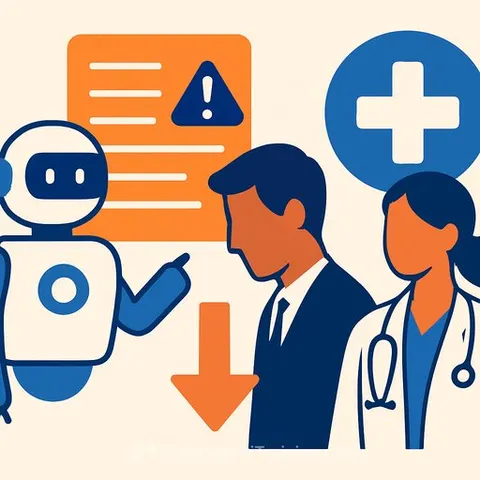
Healthcare Employers Face New Legal Risks From AI-Related Layoffs
Forrester projects that 6.1% of U.S. jobs-approximately 10.4 million positions-will disappear to AI and automation by 2030, with generative AI now accounting for half of expected losses. Healthcare organizations are not exempt. A Utah physician-owned group eliminated more than 10% of its workforce in November citing AI adoption, and CVS Health recently notified Connecticut regulators of 313 job cuts at Aetna tied to cost reductions tied to automation.
The legal terrain for these layoffs remains largely familiar. But AI-driven restructuring introduces novel risks that healthcare employers must navigate carefully, especially where patient safety, clinical oversight, and regulatory compliance intersect with employment law.
Core employment law obligations
Any workforce reduction must be anchored in established legal principles. Employers must ensure selection criteria are neutral, consistently applied, and documented. Statistical adverse impact analyses should run at the planning stage, not after layoffs occur.
Age discrimination poses heightened exposure. AI-related cuts often affect longer-tenured or higher-paid employees. Employers must provide OWBPA-compliant releases, complete decisional unit disclosures, and individualized consideration of accommodation or reassignment obligations.
WARN Act compliance matters, especially across staggered layoffs. Many job eliminations will occur in increments too small to trigger federal notice requirements, but state mini-WARN laws often have lower thresholds, longer notice periods, or additional severance mandates. New York state now requires employers to check a box on WARN Act forms indicating whether "technological innovation or automation" caused the layoffs.
Retaliation and whistleblower protections carry acute risk in healthcare. Employees who raise concerns about AI safety, accuracy, or regulatory compliance become protected whistleblowers. Any adverse action close in time to protected activity requires clear documentation of legitimate, non-retaliatory reasons.
Pay equity audits should precede role consolidation. Eliminating positions and redistributing responsibilities can create new pay differentials. Employers must audit compensation across gender, race, and other protected classifications.
Healthcare-specific constraints
Patient safety obligations, licensure regimes, and reimbursement rules impose stricter guardrails on restructuring than other industries face.
Clinical supervision and scope-of-practice laws limit flexibility. When AI handles triage, coding, note summarization, or diagnostic suggestions, role redesign must comply with minimum staffing requirements, accreditation standards, and medical staff bylaws. Reducing licensed staff without adequate oversight can trigger regulator and accreditor scrutiny.
Quality metrics matter legally. If care quality declines after staffing reductions tied to expected AI productivity gains, malpractice plaintiffs may argue the cuts were negligent given known AI limitations-particularly in populations underrepresented in training data.
HIPAA and data governance require reassessment. Workforce changes often expand access to protected health information as tasks shift to smaller teams or AI-assisted workflows. Employers must review role-based access controls, vendor business associate agreements, and monitoring protocols, especially where generative AI tools touch patient data.
Billing integrity and false-claims risk increase. AI that influences clinical documentation, coding, or utilization review affects reimbursement accuracy. Layoffs that remove experienced coders or auditors while introducing AI-assisted coding may raise error rates and false-claims exposure. Post-implementation audits should intensify during and after workforce changes.
State staffing laws are non-negotiable. Some states mandate nurse-to-patient ratios or staffing plan requirements. AI-enabled scheduling tools may not satisfy legal minimums. Layoffs that breach compliance invite enforcement action and private litigation.
Emerging state regulations on AI and employment decisions
California, Colorado, and Illinois have already restricted the use of AI in hiring and termination decisions. California's FEHA regulations, effective October 1, 2025, prohibit discrimination using automated decision systems and recognize an affirmative defense grounded in documented anti-bias testing.
Connecticut, New Jersey, and New York have pending legislation with similar intent. These laws will likely demand discovery into model logic, training data, and vendor documentation-raising thorny trade-secret versus transparency questions.
Anticipated litigation and enforcement
AI-related layoffs will likely spur multiple claim categories: disparate-impact and age-discrimination claims testing employers' statistical analyses; algorithmic-decision challenges demanding access to model internals; healthcare whistleblower and retaliation claims tied to patient-safety or billing concerns; and regulatory focus on false-claims liability and data-privacy lapses where new AI tools coincide with reduced human oversight.
How to communicate and execute defensibly
Message discipline matters. Public and internal statements should reflect accurate business rationale. Avoid sweeping claims that AI "replaces" clinicians or guarantees error-free performance. Overstatements become admissions in litigation.
Respect the process. Provide clear notice, severance consistent with policy and precedent, and meaningful transition assistance. For clinicians, consider tailored career pathways or retraining that align with patient safety needs.
Document everything. Preserve planning documents, selection matrices, validation studies, and adverse impact analyses. Schedule post-implementation legal and compliance reviews to identify and fix drift.
Update roles deliberately. Where positions are retained but transformed by AI, revise job descriptions, provide training, and re-evaluate essential functions. Document the interactive process for accommodation requests.
The bottom line
In healthcare, defensibility hinges on demonstrating that AI deployment and associated layoffs were undertaken carefully and equitably. The legal frameworks are familiar. Done well, AI can improve efficiency and care. Done hastily, it invites employment litigation and scrutiny from regulators, government officials, and constituents.
Healthcare employers should move deliberately. The stakes-legal, clinical, and institutional-demand it.
For those managing these transitions, understanding both AI for Healthcare and AI for Human Resources can help ensure that implementation and workforce decisions align with legal obligations and organizational values.