
AI news ·
AI-forged medical documents drive South Korea's insurance fraud to record 1.16 trillion won
AI-generated fake medical records and forged receipts are driving insurance fraud in South Korea to a record 1.16 trillion won. Insurers are deploying AI detection tools, but forgeries are improving faster than the defenses.
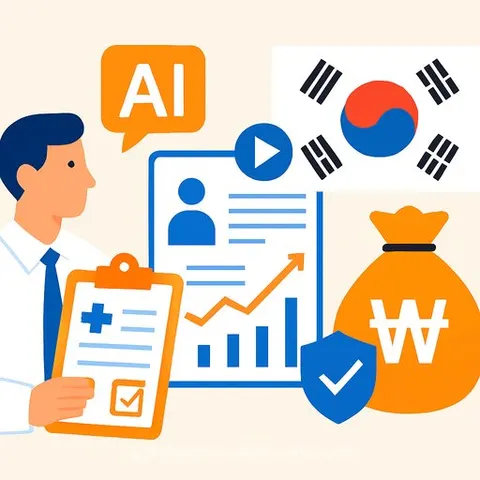
Insurance Fraud Using AI Is Growing Faster Than Detection Methods
Insurance companies across South Korea are catching more fraud cases involving generative AI, but the forged documents are becoming so convincing that some slip through undetected.
Two recent cases illustrate the problem. A woman submitted forged medical certificates and itemized receipts so sophisticated that an insurer struggled to identify them as fake. A man in his 30s created medical records with altered hospital seals and forged doctor signatures-the fraud only surfaced when the insurer noticed the documents differed from legitimate records the same hospital issued to other patients at the same time.
The Scale of the Problem
Insurance fraud detected in South Korea reached 1.1571 trillion won last year, a record high. The amount has climbed every year since first surpassing 1 trillion won in 2022.
The most common tactic targets medical claims. Fraudsters alter someone else's medical certificate, forge hospital receipts, or inflate treatment periods on inpatient and outpatient records. Overseas cases show more elaborate schemes: inflating photos of minor car damage into serious collisions or creating images of non-existent items to claim loss payouts.
How Insurers Are Responding
Major insurers have deployed AI systems to detect fraud. KB Insurance built automated systems that flag high-risk claims. Kakao Pay Insurance uses AI to analyze claim documents and identify repeat fraud patterns. DB Insurance operates a big data system designed to catch organized fraud rings.
These defenses work for now. But the gap between forgery and detection narrows as AI improves.
The Pressure on Premiums
If fraud reduces insurer revenue, ordinary policyholders pay the cost through higher premiums. That pressure is mounting as fraud detection struggles to keep pace with forgery techniques.
One insurance industry official said detection will grow harder as AI becomes more sophisticated. "Competition between forgery and detection techniques is inevitable," the official said.
The industry is pushing for a systemic solution: direct data links between hospitals and insurers that bypass consumer-submitted documents entirely. A system called Silsun24 already moves in this direction, but wider adoption would eliminate the main vulnerability fraudsters now exploit.
Until that happens, insurers will remain in a technology arms race they may not be winning.