
AI news ·
AI-generated patient replies increase physician editing workload
Dartmouth study finds AI-drafted patient replies increase physician editing work. Analysis of 146,000 conversations shows doctors spent more time correcting than writing.
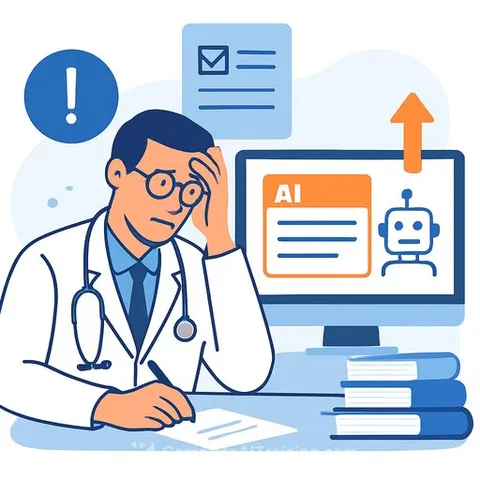
Dartmouth researchers presented a study at ACL 2026 showing that AI-drafted patient portal replies often increase the editing work physicians must do. The team analyzed 146,000 conversations from 10,105 patients and found that models like Claude, Gemini, ChatGPT, and Llama produced drafts with verbosity, missing follow-up questions, and irrelevant or inaccurate medical details. The finding challenges the simple productivity story for clinical large language models (LLMs).
Measuring the real editing burden
The paper, "How Much Would a Clinician Edit This Draft? Evaluating LLM Alignment for Patient Message Response Drafting," frames the problem as alignment with individual clinician responses, not just generic medical accuracy. According to Medical Xpress, the researchers evaluated drafts from six models and discovered common failures that forced physicians to spend more time correcting drafts than writing replies from scratch.
Key problems included overly long answers, omitted follow-up questions, and irrelevant clinical details. These failures undermine the workflow, even when the draft sounds fluent. The study's practical insight is that time saved on drafting can shift into verification and correction, netting no productivity gain.
Healthcare AI teams should adopt metrics that capture this hidden cost. Useful measures include edit distance, rates of omitted questions, unsafe or irrelevant details, and time-to-send after review. AI for Healthcare Courses often cover these evaluation techniques to help teams deploy clinical LLMs responsibly.
Adaptation helps but doesn't replace oversight
The research found that adapting model outputs to individual physicians improved accuracy by 33% and reduced editing by 26%. Despite these gains, the study's authors still emphasize the need for clinician oversight. Adaptation does not eliminate the risk of irrelevant or inaccurate information slipping through.
Future research should track prospective workflow data: actual editing time, patient satisfaction with final replies, and whether personalization holds up across specialties. The shift in focus - from answer quality to editing workload - is what makes this evidence directly useful for clinical LLM adoption decisions.
Why this matters for healthcare professionals
Health systems cannot count AI-drafted replies as automation wins without measuring the post-generation workload. The Dartmouth study shows that editing burden metrics - not just language fluency - determine whether clinical LLMs save time or create it. Before scaling patient-message assistants, teams should instrument edit distance, missing-question rates, and clinician-specific adaptation. The 33% accuracy boost from adaptation is promising, but it still requires physician review.